





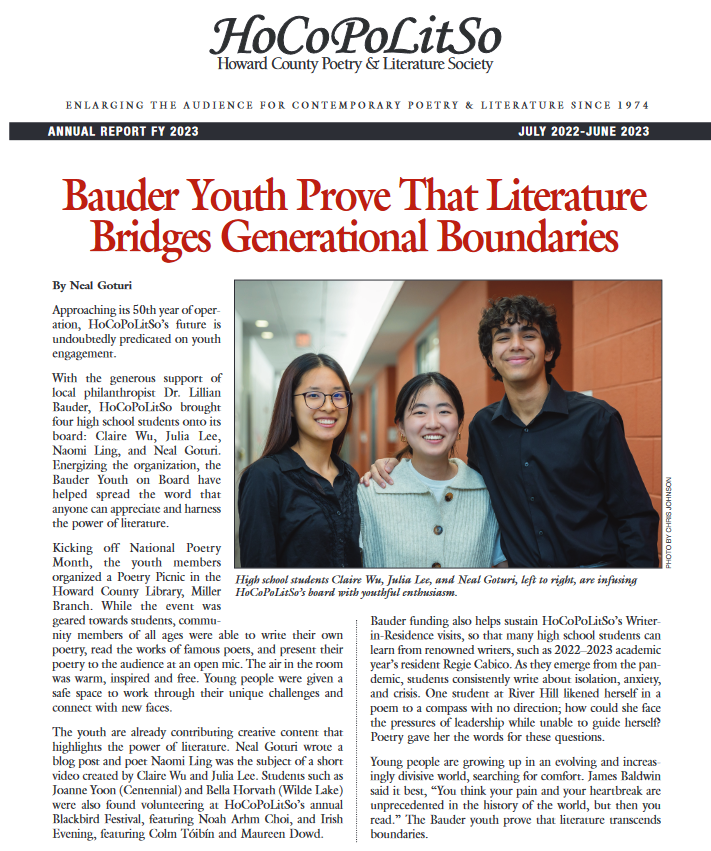
Read Our Annual Report
Howard County Youth Poet Laureate Applications Now Open!

Last year, HoCoPoLitSo announced the establishment of the first-ever position of Howard County Poet Laureate, created in partnership with the Office of County Executive Calvin Ball and the Howard County Arts Council. Today, we are excited to open applications for the first term of the Howard County Youth Poet Laureate position for all eligible young poets!
The Youth Poet Laureate, an honorary one-year position formally appointed by the County Executive, will act as an ambassador for literacy, arts, and youth expression in Howard County, demonstrating their passion for poetry, and its power to connect our local community through participation in public readings and civic events.
The next Youth Poet Laureate will serve from August 2024 – June 2025, and will receive an honorarium of $500 for their one-year term. The position is open to young writers, between the ages of 14–21 at the time of application, who either reside in or will be available to present at in-person events in Howard County— for example, those attending a college or university next year within commuting distance. Applications are open now, until May 30th, 2024. To learn more about the program please visit the HCAC program landing page here or review the complete program guidelines.
Eligible candidates may apply now by clicking HERE! The deadline for submissions is May 30, 2024.
Howard County Executive Calvin Ball Introduces World-renowned Poet Truth Thomas, Howard County’s Inaugural Poet Laureate

ELLICOTT CITY, MD – Howard County Executive Calvin Ball today announced Truth Thomas has been selected as Howard County’s inaugural Poet Laureate. In honor of National Poetry Month, Ball made the announcement during the Howard County Poetry and Literature Society’s (HoCoPoLitSo) Nightbird Reading at the 16th annual Blackbird Poetry Festival. Photos of the event can be seen here. Video of the event can be viewed here.
“We are incredibly fortunate to have such an active and vibrant literary arts community in Howard County. From our schools and gathering places, to our energized Downtowns and Main Streets, the arts are the heartbeat of our county, breathing life and meaning into our everyday lives,” said Ball. “I am thrilled to have the talented, terrific, transformative Truth Thomas serve as Howard County’s very first Poet Laureate. He brings a wealth of knowledge, experience, passion and creativity to this new role, and I am confident as Poet Laureate, he will elevate poetry in the consciousness of Howard County residents.”
A singer-songwriter, poet and photographer born in Knoxville, Tennessee and raised in Washington, D.C., Thomasstudied creative writing at Howard University and earned his Master of Fine Arts in poetry from New England College. The founder of Cherry Castle Publishing and creator of the “Skinny” poetry form, his collections include Party of Black, A Day of Presence, Bottle of Life, Speak Water and My TV is Not the Boss of Me. Winner of the 2013 NAACP Image Award for Outstanding Literary Work in Poetry, his poems have appeared in more than 150 publications including: Callaloo, The Newtowner, New York Quarterly, The Emerson Review, The Ringing Ear: Black Poets Lean South and The 100 Best African American Poems. His work focuses largely on matters of race and social justice, both nationally and worldwide. A former writer-in-residence for the HoCoPoLitSo, Thomas is currently a member of the Society’s Advisory Group.
“When I think about the blessing of being Howard County’s inaugural Poet Laureate, I celebrate most the opportunity to serve others through the arts–to honor the human dignity of all people. That is my literary prayer, to follow in the giant steps of great poets who have preceded me in that quest and—hopefully—leave a loving path for others to follow,” said Truth Thomas, Howard County’s Poet Laureate.
Ball first announced the launch of the County’s inaugural Poet Laureate program in partnership with the Howard County Arts Council and HoCoPoLitSo this past November. As the Howard County Poet Laureate, Thomas will serve as an ambassador for poetry, literature and the arts and contribute to Howard County’s poetic and literary legacy through public readings and participation in civic events. An honorary two-year position, Thomas will serve in this role from April 2024 through March 2026.
“I am delighted about Truth’s appointment as Howard County’s first Poet Laureate and look forward to working with him. Howard County has a proud history of influential poets and writers. Recognizing this, our inaugural Poet Laureate Review Panel emphasized the importance of the first appointee to be an exemplar for future poet laureates,” said Coleen West, Executive Director, Howard County Arts Council. “With the appointment of Truth, County Executive Ball has set the bar high. As a poet, writer, teacher and musician, Truth has already inspired so many. There is great power in his words, and he has so many stories to tell. In his new role as Howard County Poet Laureate, I am confident that Truth will have a profound impact on our community and on the next generation of aspiring poets as well.”
“HoCoPoLitSo celebrates the selection of Truth Thomas as the Inaugural Poet Laureate for Howard County and is grateful to County Executive Calvin Ball for embracing the role of the poet in public life. From its beginning, HoCoPoLitSo has sought to couple literary excellence with community engagement, to present authors whose revealing and penetrating work seeks to make a difference. Truth Thomas embodies HoCoPoLitSo’s 50th Anniversary theme, ‘Beyond Words, Beyond Borders,’ and we look forward to the many opportunities ahead for him to bring his inspiring voice to the community,” said Tara Hart, co-chair of HoCoPoLitSo Board of Directors.
Howard County Arts Council
The Howard County Arts Council was created in 1981 to serve the residents of Howard County by fostering the arts. The Arts Council is devoted to nurturing local artists and arts organizations, furthering the public’s appreciation of the arts and ensuring that the arts are accessible to all, regardless of age, ability, or economic status.
In his proposed Fiscal Year 2025 budget, Ball has included approximately $1.25 million in funding for the Arts Council to support its operations and its administration of local artist grant programs. In October, during his 2023 State of the County address, Ball announced that the Arts Council would be relocating its headquarters to the historic Circuit Courthouse located atop Historic Ellicott City. Following a full renovation and restoration of the historic building, it will be reopened as a new Center for Arts, Culture, and History in Ellicott City.
HoCoPoLitSo
Founded in 1974 by National Book Award finalist Ellen Conroy Kennedy, Prudence Barry and Jean Moon,HoCoPoLitSo engages the community with the literary arts by hosting events, offering literary workshops and producing local readings, lectures and presentations with critically acclaimed writers, including Nobel Laureates, U.S. Poets Laureate, and Pulitzer Prize and National Book Award winners.
HoCoPoLitSo also produces literary workshops for college and public school students, teachers, emerging writers and others. With support from Howard Community College’s Dragon Digital TV, HoCoPoLitSo produces The Writing Life, an award-winning writer-to-writer interview show available on YouTube and Maryland community college stations. This year marks the 50th Anniversary celebration of the organization.
Poet Laureate Truth Thomas to read at Books In Bloom Festival

Wilde Readers of May: Eric D. Goodman & Charles Rammelkamp

HoCoPoLitSo welcomes all to the May edition of the Wilde Readings Series, with Eric D. Goodman and Charles Rammelkamp, hosted by Linda Joy Burke. Join us at the Columbia Art Center on Tuesday, May 14th at 7 p.m., at 6100 Foreland Garth, Columbia, MD 21045. Please spread the word— bring your friends, family and students! Light refreshments will be served and books by the readers available for sale.
An open mic follows the featured authors and we encourage you to participate. Please prepare no more than five minutes of performance time, about two poems. Sign up when you arrive, or in advance by calling the Columbia Arts Center at (410)-730-0075.
Below, get to know Eric and Charles!
Who is the person in your life (past or present) that shows up most often in your writing?
Eric: That’s a hard question to answer because rather than base characters or situations on a specific person, I tend to base them on aspects of different people or occurrences. For example, a character may be inspired by traits or reactions or situations of a number of different people. Friends and family have certainly recognized themselves (or certain situations) in my fiction and poetry before.
Charles: My wife, Abby.
Where is your favorite place to write?
Eric: There have been times that I’ve written on the fly, in a cafe or bar, park or restaurant. But my favorite place to write (unless I’m on a writing retreat) is at my own desk in my own home. Portions of all my books have been written at the same simple, pine desk that used to belong to my father, although most of my writing now takes place at the desk in my home office where my computer awaits.
Charles: At the computer.
Do you have any consistent pre-writing rituals?
Eric: I do my best writing in the morning, after a cup (or two) of coffee. When I’m submerged in a project, I tend to do a little reading or research for an hour or so before jumping into the writing.
Charles: Not particularly.
Who always gets a first read?
Eric: I have a small group of about half a dozen writer friends who always get gifted (or burdened) with a first read— but not until I feel my first draft is reader-ready. I’ve come to depend on these beta readers because I do believe writing in isolation without a sounding board can make for less clear writing. If three or four readers independently think something isn’t working, it probably isn’t working no matter how much I may want it to.
Charles: Of my writing? I have a few penpals I try things out on, writers/poets themselves.
What is a book you’ve read more than twice (and would read again)?
Eric: There are many. I’m a big fan of Steinbeck and have read The Grapes of Wrath, Of Mice and Men, and East of Eden several times. I’m also a fan of George Saunders and have read Pastoralia and Tenth of December more than once. And some of the books of Alice Monroe, Jonathan Franzen, and David Mitchell. Reading a book that you loved again is like comfort food. Even though my list of new books to read never gets shorter, I still take time to read old books again.
Charles: Lolita by Vladimir Nabokov.
What is the most memorable reading you have attended?
Eric: I once participated in an anthology reading that had a negative audience-to-reader ratio. There were more readers than there were members in the audience. That was memorable, although not necessarily in a good way. We still had a fun time.
Charles: T.C. Boyle at AWP Minneapolis, 2015.
• Eric D. Goodman is author of seven books, including Faraway Tables (Yorkshire Publishing, forthcoming), Wrecks and Ruins (Loyola University’s Apprentice House Press, 2022), The Color of Jadeite (Apprentice House, 2020), Setting the Family Free (Apprentice House, 2019), Womb: a novel in utero (Merge Publishing, 2017), Tracks: A Novel in Stories (Atticus Books, 2011), and Flightless Goose (Writer’s Lair, 2008) and more than 100 published travel stories, short stories and articles. He’s also co-founder and curator of Baltimore’s Lit and Art Reading Series.
You can learn more about Eric and his writing at ericdgoodman.com, and on Facebook as edgewriter and Twitter @edgewrite.
• Charles Rammelkamp is Prose Editor for BrickHouse Books in Baltimore. His poetry collection, A
Magician Among the Spirits, poems about Harry Houdini, is a 2022 Blue Light Press Poetry winner. Another
poetry collection entitled Transcendence has also recently been published by BlazeVOX Books and a
collection of flash fiction, Presto, has just been published by Bamboo Dart Press. A collection of poems and flash called See What I Mean? will be published later this year by Kelsay Books.
Keeping it old-school, Charles does not maintain a personal website, but his books are available through Amazon and independent sellers, and a search for his name will turn up results in numerous online and print journals.
Wilde Readers of April: Nancy Naomi Carlson & Esperanza Hope Snyder

HoCoPoLitSo welcomes all to the April edition of the Wilde Readings Series, with Nancy Naomi Carlson and Esperanza Hope Snyder, hosted by Ann Bracken. Join us at the Columbia Art Center on Tuesday, April 9th at 7 p.m., at 6100 Foreland Garth, Columbia, MD 21045. Please spread the word— bring your friends, family and students! Light refreshments will be served and books by the readers available for sale.
An open mic follows the featured authors and we encourage you to participate. Please prepare no more than five minutes of performance time, about two poems. Sign up when you arrive, or in advance by calling the Columbia Arts Center at (410)-730-0075.
Below, get to know Nancy and Esperanza!
Who is the person in your life (past or present) that shows up most often in your writing?
Nancy: This is a great question! I’d have to say “me,” from my past and present life, as my work is deeply personal. It would be lovely to have the “me” from any past lives show up, but that would be an answer to a very different question.
Esperanza: Growing up in Bogotá I spent a great deal of time with my grandfather. He taught me about poetry. Memorizing poems and reciting them was our favorite pastime. My grandfather shows up a great deal in my writing because he was the first person who introduced me to the literary world. I feel he inspired me to pursue writing.
Where is your favorite place to write?
Nancy: I’m not one who can write or translate under a tree on a perfect spring day, nor can I write by a pool or lake. I can’t write “on demand” in a workshop or at a residency. Actually the only place I seem to be able to write is seated at my desk in my study (where I am right now), with everything I need at my fingertips. Even the necessary snacks.
Esperanza: I enjoy writing in my study, surrounded by my favorite books and photographs. It’s the space where I get the greatest inspiration for my work.
Do you have any consistent pre-writing rituals?
Nancy: Absolutely. I usually have to engage in a lot of pre-writing thinking, jotting down ideas (an image or thought; a possible title; a repeating line for a villanelle; a quote from a philosopher or writer, preferably French) on yellow stickies. This process can take days or weeks. I also pick up the pace of my journal reading, choosing ones that particularly inspire me, like The Southern Review, Prairie Schooner, APR, hoping to find the “missing link” that connects the many ideas in my head and on the yellow stickies. Typically the inspiration comes (or doesn’t) on a Friday night, when I go to my computer with hardly any expectations, armed only with chocolate and chips. Invariably, after several hours, a new poem starts to take shape.
Esperanza: My pre-writing ritual includes journaling, meditation and drinking coffee.
Who always gets a first read?
Nancy: One editor/friend of mine has seen the first draft of almost every poem I’ve written for over a decade. (I don’t show him my translations, as I know if they’re “there” or not.)
Esperanza: When I feel the piece I’m working on is ready to be shared and I want feedback, if it’s a poem, I send it to a poet with whom I work closely. If it’s prose, I send it to my editor.
What is a book you’ve read more than twice (and would read again)?
Nancy: Although I watch the same movies again and again, I don’t tend to re-read books, as there are so many I haven’t read yet.
Esperanza: I’m currently reading Emily Wilson’s translation of The Odyssey, and I would read it again. It’s wonderful. In graduate school I fell in love with Don Quixote and have often returned to Cervantes’s masterpiece. I’ve also read Jack Gilbert’s poetry book, Refusing Heaven, several times.
What is the most memorable reading you have attended?
Nancy: When I was in Calcutta conducting a master class in translation at the Seagull School of Publishing, I had the extreme pleasure of attending a reading by Palestinian poet Ghassan Zaqtan and his translator. His reading was electric.
Esperanza: Due to my connection with the Bread Loaf Writers Conference, I’ve been fortunate to attend many memorable readings. Ilya Kaminsky‘s poetry reading was one of them. Additionally, I’ll never forget Stanley Plumly‘s reading of his poem, “Cancer”.
• Nancy Naomi Carlson‘s translation of Khal Torabully’s Cargo Hold of Stars: Coolitude (Seagull Books, 2021) won the Oxford-Weidenfeld Translation Prize. Delicates (Seagull Books, 2023), her co-translation of Wendy Guerra with Esperanza Hope Snyder, was noted in The New York Times, as was An Infusion of Violets (Seagull, 2019), her second full-length poetry collection. Piano in the Dark (Seagull Books, 2023), another full-length poetry collection, was recently published. She serves as the Translations Editor for On the Seawall.
Nancy can be found online at www.nancynaomicarlson.com.
• Born in Bogotá, Colombia, Esperanza Hope Snyder is a poet, a novelist, and a playwright. Honors include the Donald Everitt Axinn Award in Poetry for Bread Loaf, and fellowships for The Gettysburg Review and The Kenyon Review. Assistant Director of Bread in Sicily, co-coordinator of the Lorca Prize, her poetry book, Esperanza and Hope was published by Sheep Meadow Press (2018). Her co-translation with Nancy Naomi Carlson, of Wendy Guerra’s poetry, was noted in The New York Times.
You can find more from Esperanza at www.esperanzahopesnyder.com, or on Instagram, @esperanza_hope_snyder.
Poetry, Speak Easy — HoCoPoLitSo’s 16th Annual Blackbird Poetry Festival
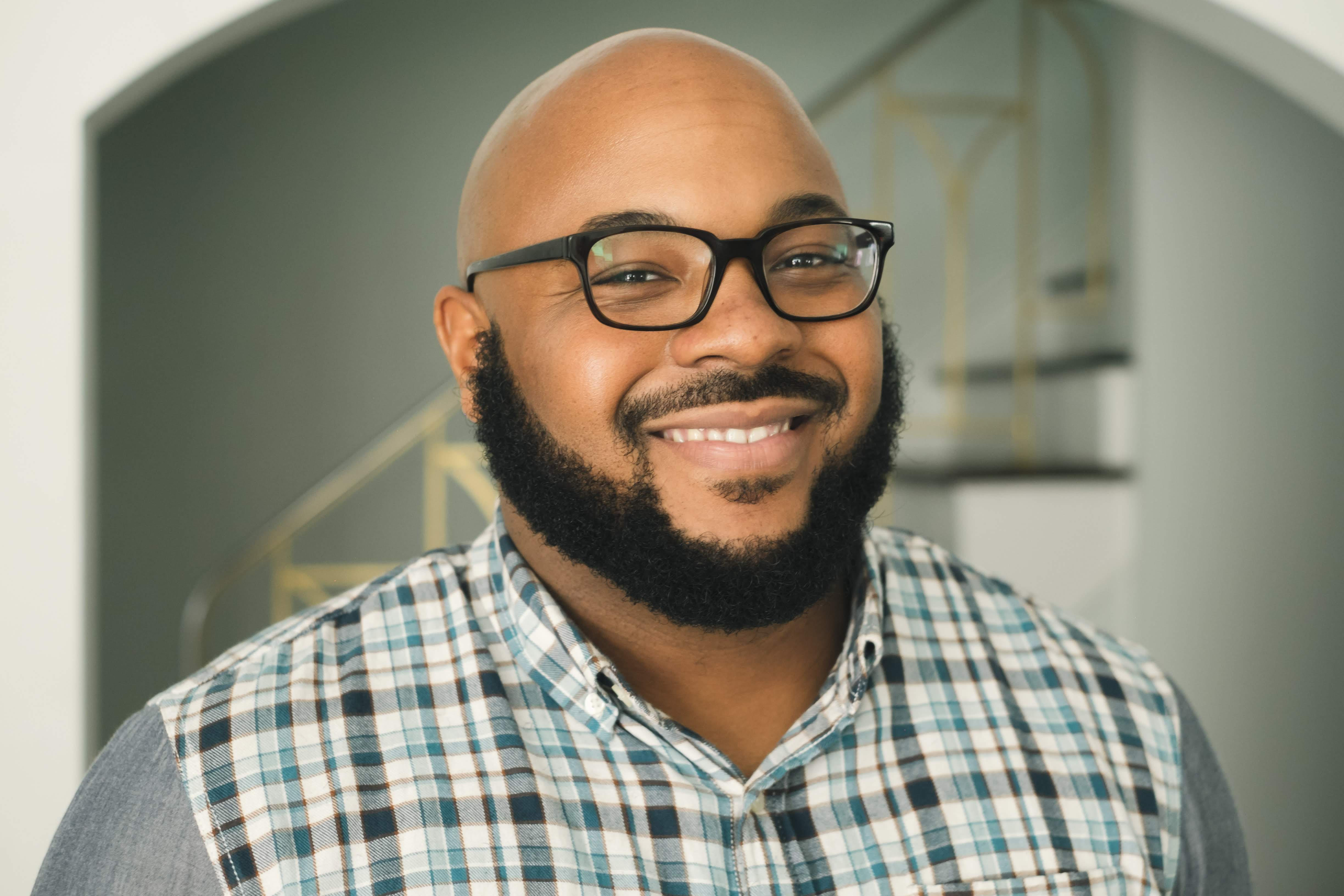
Nate Marshall headlines the Blackbird Poetry Festival to be held on April 25th, 2024, at Howard Community College (HCC). Now in its 16th consecutive year, the festival is a day devoted to verse, presented in partnership between HoCoPoLitSo and HCC, and including a student workshop, multiple poetry readings, HCC Poetry Ambassadors, a recording session of HoCoPoLitSo’s writer-to-writer talk show The Writing Life— and newly this year, the evening reading will welcome on-stage Howard County Executive Dr. Calvin Ball, to announce the inaugural Howard County Poet Laureate!
While the event is free and public, RSVP is required to attend the 7 p.m. Nightbird evening reading where the announcement will be made, available now through this link while limited seating lasts: bit.ly/blackbird16
The event kicks off with an 11 a.m. writing workshop in the Science, Engineering, and Technology Building room 101 (SET-101), led by HoCoPoLitSo’s 2023–2024 academic year Bauder Writer-in-Residence, Hayes Davis. The afternoon Sunbird Reading features guest artist Nate Marshall, local authors, and Howard Community College faculty and students, at 2 p.m. in the same space, SET-101.
Finally, the festival culminates its daylong celebration of poetry with the Nightbird Reading, in the Rouse Company Foundation Studio Theatre of the Peter and Elizabeth Horowitz Visual and Performing Arts Center on HCC campus; doors open at 6:30 p.m. for the 7 p.m. performance. Nightbird features guest artist Nate Marshall; Howard County Poetry Out Loud winners; and the exciting announcement of the Howard County Poet Laureate appointee by the County Executive. Complementary light refreshments are offered, including adult beverages to guests providing proof of age. Reception, book sale and signing to follow the reading.
Free tickets can be reserved while seats last through the Horowitz Center Box Office, at bit.ly/blackbird16 or by phone to 443-518-1500 Wed.–Fri., 12–4 p.m. Find more information on hocopolitso.org/blackbird-poetry-festival.
• Nate Marshall is a poet, playwright, performer, educator, speaker and rapper, and the award-winning author and editor of numerous works including Finna, Wild Hundreds, The BreakBeat Poets: New American Poetry in the Age of Hip-Hop, and the audio drama, Bruh Rabbit & The Fantastic Telling of Remington Ellis Esq. He is an assistant professor of English at the University of Wisconsin-Madison. He has previously taught at a number of institutions including Colorado College, Wabash College, Young Chicago Authors, Northwestern University, InsideOut Literary Arts, and the University of Michigan. Nate was born and raised on the South Side of Chicago.
• Hayes Davis is a poet and educator who has taught English in Washington, D.C. area independent schools for 24 years, and currently teaches at Sandy Spring Friends School where he serves primarily as Assistant Director of Institutional Equity, Justice, and Belonging. His first collected volume of poetry, Let Our Eyes Linger, was published by Poetry Mutual Press in 2016, and his work has appeared in many journals and anthologies. Hayes lives in Silver Spring, MD with his wife, poet Teri Ellen Cross Davis, and their two children.
Entering its semicentennial in autumn of 2024, the Howard County Poetry & Literature Society— HoCoPoLitSo for short— has for the past near-50 years nurtured a love and respect for the diversity of contemporary literary arts in Howard County. The society sponsors numerous literary readings; the Bauder Writer-in-Residence program providing for a current working author to visit Howard County high school classrooms; produces The Writing Life talk show; and partners with many other cultural arts organizations to support the arts in Howard County, Maryland. More information is available at hocopolitso.org, and tax-deductible donations are always welcomed.
HoCoPoLitSo is a 501(c)(3) nonprofit organization and receives funding from Howard County Government, Howard County and Maryland State Arts Councils, Community Foundation of Howard County, Dr. Lillian Bauder, The Reis Foundation, and generous individual contributors. The Howard County Poet Laureate program is administrated in partnership between HoCoPoLitSo, Howard County Arts Council, and the Office of the Howard County Executive. Proceeds support live and recorded literary programs produced by HoCoPoLitSo for student and general audiences.

Wilde Readers of March: Fran Abrams & Jared Smith

HoCoPoLitSo welcomes all to the March edition of the Wilde Readings Series, with Fran Abrams and Jared Smith, hosted by Linda Joy Burke. Join us at the Columbia Art Center on Tuesday, March 12th at 7 p.m., at 6100 Foreland Garth, Columbia, MD 21045. Please spread the word— bring your friends, family and students! Light refreshments will be served and books by the readers available for sale.
An open mic follows the featured authors and we encourage you to participate. Please prepare no more than five minutes of performance time, about two poems. Sign up when you arrive, or in advance by calling the Columbia Arts Center at (410)-730-0075.
Below, get to know Fran and Jared!
Who is the person in your life (past or present) that shows up most often in your writing?
Fran: My mother who passed away over 50 years ago. She not only shows up but also inspires my writing. I credit her with encouraging my love for the arts and humanities.
Jared: The people I write about most often are working people who find dignity in the jobs they do and who respect those around them. They are thoughtful types who enjoy music, art, and the world around them rather than money or thinking about getting ahead. I have very seldom written in my poetry about individual people I have known, but rather what has been accomplished by them or experienced by them. I seldom mention them by name.
Where is your favorite place to write?
Fran: At my dining room table. Even though I have an office and a desktop computer, I love the afternoon light that comes into my dining room and enjoy writing on my laptop in that setting.
Jared: I take notes in my head for lines of poetry wherever I am, whether at work, or walking in the forest, or observing people at a coffee shop, or any of the other activities I’m involved in each day. These phrases, lines of poetry and the images they come from flow together over a period of time until they begin to lead to a new vision or understanding of some aspect of life that is new and exciting to me. Then I go into my study where I begin to put them down on paper, generally working on my computer because the visions and thoughts flow faster than I can write longhand.
Do you have any consistent pre-writing rituals?
Fran: No. I write when inspiration hits— no time for rituals. I send myself rough drafts by email on my phone, and as I noted, I write at my desk and at the dining room table. Sometimes I will simply stop in the middle of checking emails or other tasks and start writing, picking up a thread that just ran through my mind.
Jared: I’ve always found it important to have a ritual to prepare my mind for entering into the nonlinear poetic trance necessary to my writing. Key for me is my study, which is covered on three walls with bookshelves bulging with both hardcover books and hundreds of small press magazines and journals dating from the European Romantics to the present day. The other walls contains abstract art paintings and drawings. Having those books, journals, and artworks surrounding me somehow infuses me with and makes me a part of the unending conversation all poets and creative people enter into across time as to what life is and how rich it is.
Who always gets a first read?
Fran: I spend a great deal of time revising my own poems. However, I am very fortunate to participate in two workshop groups. When I feel a poem is close to being finished, but not quite there, I share it with one of those groups.
Jared: Generally my wife gets the first read.
What is a book you’ve read more than twice (and would read again)?
Fran: One of my favorite books of poetry is Scattered Clouds by Reuben Jackson who sadly passed away recently. I have read it many times and expect to read it again. I’ve also written a Golden Shovel poem based on one of his poems.
Jared: There are so many books I read and re-read for pleasure . . . books of poetry, novels, essays. I have hundreds of volumes of poetry and novels in my study but I guess that The Wasteland And Other Poems by T.S. Eliot has to be the book of poetry I’ve gone back to most often. Among novels I’ve gone back most often is Catch-22 by Joseph Heller and The Lord Of The Rings by Tolkien. Looking For Dragon Smoke by Robert Bly is the best essay I’ve come across on how modern poetry works.
What is the most memorable reading you have attended?
Fran: A reading by Aaron Caycedo-Kimura at the Gaithersburg Book Festival was the most memorable. His two books—a full-length collection titled Common Grace and a chapbook titled Ubasute—include some of the most moving poems I’ve encountered, and his reading of the poems was superb.
Jared: There have been so many! The earliest was one I attended by Galway Kinnell, when I was a young boy and went up to talk with him afterwards and he told me that he thought I would become a good poet. Somewhat later I took a two hour bus trip to head to a reading by Robert Bly, and that led to many years of correspondence with him. A reading by Beat poet Gregory Corso in New York led to the two of us hanging out together for several months. A reading W.S. Merwin gave to celebrate the publication of his book Migration led to an extended talk with him and resulted in my reviewing the book for The Pedestal Magazine. And then there are all the wonderful meetings and talks I have had with both known and unknown poets at open mics over the years! It is wonderful to listen to poets converse as well as read their works.
• Fran Abrams’ poems have been published in Cathexis-Northwest Press, The American Journal of Poetry, The Ravens Perch, Delmarva Review, Gargoyle, and many others. Her poems also appear in more than a dozen anthologies. Her autobiographical book of poems titled I Rode the Second Wave: A Feminist Memoir was published in November 2022. Her first chapbook, The Poet Who Loves Pythagoras, was released in April 2023. Her second chapbook, Arranging Words, was published in November 2023.
Fran lives in Rockville, Maryland and can be found online at franabramspoetry.com, and on Facebook as Fran Abrams, Poet.
• Jared Smith is the author of 16 books of poetry, as well as two stage productions. His poems, essays, and commentary have appeared in hundreds of journals and anthologies in this country and overseas. He is Poetry Editor of Turtle Island Quarterly, and served on the editorial boards of New York Quarterly, Home Planet News, and The Pedestal Magazine, along with the boards of arts and literary nonprofits in New York, Illinois, and Colorado.
You can find more on Jared at his home page, jaredsmith.info.
Wilde Readers of February: Joseph Ross & Michael Salcman

HoCoPoLitSo welcomes all to the February edition of the Wilde Readings Series, with Joseph Ross and Michael Salcman, hosted by Laura Shovan. Join us at the Columbia Art Center on Tuesday, February 13th at 7 p.m., at 6100 Foreland Garth, Columbia, MD 21045. Please spread the word— bring your friends, family and students! Light refreshments will be served and books by the readers available for sale.
An open mic follows the featured authors and we encourage you to participate. Please prepare no more than five minutes of performance time, about two poems. Sign up when you arrive, or in advance by calling the Columbia Arts Center at (410)-730-0075.
Below, get to know Joseph and Michael!
Who is the person in your life (past or present) that shows up most often in your writing?
Joseph: What an interesting question. My husband, Robert, probably shows up most but he is often whispering within the poems, even if he isn’t mentioned. Martin Luther King shows up in many of my poems too.
Michael: My father and my wife Ilene.
Where is your favorite place to write?
Joseph: Rock Creek Park in Washington, D.C.
Michael: In bed at home in the early hours before rising on my iPad; next best, at anchor in a sailboat.
Do you have any consistent pre-writing rituals?
Joseph: I straighten the things on my desk before I write.
Michael: New ideas and first lines on iPad or paper notebook come at any time; new drafts occur at my desk computer. In the early hours editing on the iPad quickly goes through several drafts.
Who always gets a first read?
Joseph: There’s no one person who reads my work first. I share with very few people.
Michael: My wife Ilene and less so poet friends in New York & Baltimore; Ilene is usually in the kitchen and if I read her a new poem and my eyes get watery I know I have landed a good one. She gives me a rating but doesn’t cry.
What is a book you’ve read more than twice (and would read again)?
Joseph: Martin Luther King’s Where Do We Go From Here: Chaos or Community?
Michael: Complete poems of Wallace Stevens more than twice, ditto Geography III by Elizabeth Bishop, Crow by Ted Hughes, and New and Selected Poems of Tom Lux, my teacher; recently finished my second reading of all seven volumes of Proust’s Remembrance of Lost Time (no third one is on the horizon).
What is the most memorable reading you have attended?
Joseph: Naomi Shihab Nye reading at one of the early Split This Rock Poetry Festivals.
Michael: Ilene and I hosted a reading and celebration by Richard Wilbur at the Century Association in New York; I invited Tom Lux and Edward Hirsch to give a joint reading at the City Lit Festival in Baltimore. They were terrific.
• Joseph Ross is the author of five books of poetry: Crushed & Crowned (2023), Raising King (2020), Ache (2017), Gospel of Dust (2013), and Meeting Bone Man (2012). His poems appear in many publications including The New York Times Magazine, Xavier Review, The Langston Hughes Review, and The Los Angeles Times.
Joseph teaches English and Creative Writing, and can be found online at Facebook under Joseph Ross and at www.josephross.net, where he regularly writes.
• Michael Salcman is former chairman of neurosurgery at the University of Maryland, a child of the Holocaust, and survivor of polio. His poems have been published in Barrow Street, Hopkins Review, Hudson Review, and Smartish Pace. Michael’s books include The Clock Made of Confetti (2007), Poetry in Medicine: An Anthology of Poems About Doctors, Patients, Illness and Healing (2015), A Prague Spring, Before & After (2016), Sinclair Poetry Prize winner, Shades & Graces: New Poems (2020), Daniel Hoffman Legacy Book Prize winner, and NECESSARY SPEECH: New & Selected Poems (2022).
You can learn more at www.salcman.com, or reach out to @poedoc via X, formerly Twitter.
HoCoPoLitSo Announces Winners of 2023 Ellen Conroy Kennedy Poetry Prize

The Howard County Poetry and Literature Society (HoCoPoLitSo) is pleased to announce that Steph Sundermann-Zinger of the Baltimore area has been awarded first prize in the 2023 Ellen Conroy Kennedy Poetry Contest for her poem “A Dream of Solitude.” Judges noted the poem’s “gorgeous language” and “strong imagery, alliteration, and meter.” One said, “this poem has the strongest voice,” and another called it “a mature poem that is a moment in time.” A $500 cash prize was awarded, and the poem was published in the Winter 2024 edition of The Little Patuxent Review.
Larraine Denakpo of Columbia was awarded second place with a $100 cash award for her poem “Lullaby for Daughters,” in recognition of the poem’s effective usage of restrained form, while conveying what one judge called “universal resonance.” Another said, “this neatly packed, tiny poem is so enjoyable to read.” In addition, the review panel awarded honorable mentions to Joshua Ward of Dayton for his poem “Some Thrushes on Migration,” and to Eileen Wu of Clarksville for “Why Storms Have Human Names.”
Contest judges evaluated submissions from 60 poets residing throughout Maryland and Virginia for mechanics and technique, clarity, style/music for our contemporary age, imagery/sensory power, and emotional resonance. Each author receiving an award or honorary mention was invited to be interviewed for a blog post hosted at hocopolitso.org.
The Ellen Conroy Kennedy Poetry Prize was established to honor HoCoPoLitSo co-founder Ellen Conroy Kennedy, who passed away in 2020. Ms. Kennedy, who was nominated for the National Book Award in Translation in 1969, translated Francophone African and Caribbean poets, and published her landmark work, The Negritude Poets, in 1975.
Kennedy founded HoCoPoLitSo in 1974, a nationally recognized, community-based nonprofits arts organization that has brought hundreds of writers to Howard County, Maryland, now soon to enter its 50th year of operation. She served as president and CEO for 30 years, opening her home and sharing her table with an array of literary icons. She also developed and produced The Writing Life, originally a cable television series, featuring conversations with writers, now available free on HoCoPoLitSo’s YouTube channel. In 2019, the Kennedys donated more than 1,500 books, most of which featured authors who read for HoCoPoLitSo audiences, to the Howard Community College library; the Kennedy Collection is housed in a reading room open to the public during normal business hours.
HoCoPoLitSo works to cultivate appreciation for contemporary poetry and literature and celebrate culturally diverse literary heritages. The society sponsors literary readings; the Bauder Writer-in-Residence outreach program to local schools; produces The Writing Life; and partners with the public schools and cultural organizations to support the arts in Howard County, Maryland. For more information, visit www.hocopolitso.org.
Meet Larraine Denakpo — 2023 Second Place Winner of the Ellen Conroy Kennedy Poetry Contest
1n 2021, Howard County Poetry and Literature Society launched the Ellen Conroy Kennedy Poetry Prize in honor of its founding member, Ellen Conroy Kennedy. Now in its third year, contest judges evaluated many submissions for mechanics and technique, clarity, style/music for our contemporary age, imagery/sensory power, and emotional resonance. Here, judges noted this poem’s “restrained composition” and “universal resonance.” One said, “This neatly packed, tiny poem is so enjoyable to read.” Congratulations on the second place win.
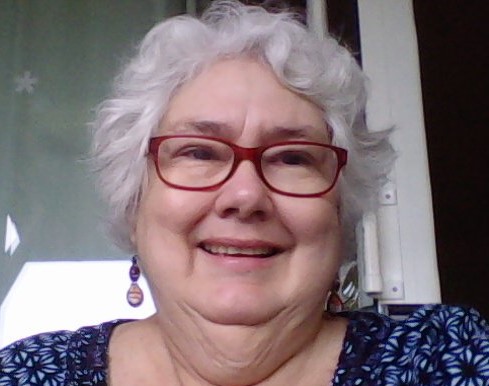
Tell us about your poem “Lullaby for Daughters”. How did it come about? What sparked or inspired it?
The poem was written around 1988-89 when our small family was living overseas in Bujumbura, Burundi. I had written some poems in a journal with no date and left them to mull for many years. The sentiment was inspired once as I watched our two young daughters sleeping. I am white, my husband black, and I was struck by how little the girls looked like me.
What was an early experience where you learned that language had power?
The written word has always been my friend; I was an early reader and devoured books constantly, escaping boredom and looking for answers. Later the poetry of lyrics in the 60s and 70s—from Bob Dylan to Joni Mitchell to Leonard Cohen – helped me cope with the world. But I first felt the power of poetry moving me to new ways of thinking in the works of women (Nikki Giovanni, Lucille Clifton and others) when I was in college. I attended Seton Hill College in Greensburg, PA and I credit several of the faculty there (the late Sister Lois Sculco and Dr. Lynn Conroy) for encouraging me to explore and practice poetry. I was lucky to attend poetry readings in Pittsburgh when I was in college and experienced readings by powerful poets like Derek Walcott and Adrienne Rich. I even put together a collection of poems as a senior in college (1975) and won an award, but then life happened and I only wrote poems when I found some calm in the daily bustle.
As a writer, what would you choose as your mascot/avatar/spirit animal?
I feel a stronger connection to all things green than to any animal. One of my earliest poems evokes a 10-year old me sitting in a maple tree and dreaming; no longer a tree climber I get inspiration from woods and gardens and memories of the green hills of tea and bananas that I found in Burundi.
Tell us about a writer or a book that you return to over and over for inspiration.
While I was working full-time and raising a family, I didn’t find much time for poetry or books. Now I am enjoying exploring much loved poets and discovering new ones. I do go back to both the poet A.R Ammons and the writer Annie Dilliard for the way they communicate about nature.
What are you working on next and where can we find you?
I am mostly retired after working for years on education projects in Africa. I have been focusing on quilting–combining African fabrics with the calico cottons of my childhood. I also explore my new hometown, Columbia, as well and just recently learned about HoCoPoLitSo. This contest took me by surprise and I entered a few old poems on a whim. Maybe I will work on putting together a collection in the years ahead. I have a LinkedIn profile if anyone wants to connect there.
Here, Larraine Denakpo reads “Lullaby for Daughters:
Bio:
I grew up in Carlisle, PA and left after high school in 1971, rarely returning during the next fifty years. After college (BA in English), I joined the Peace Corps and taught English in a small town in Benin. There I met my husband and together we spent time in the US with me getting an MA in Linguistics from the University of Pittsburgh. Then we raised a family while working on education and health development programs in Burundi, Egypt, and Senegal. Our daughters went off to college and we continued working, often separately, for shorter assignments including stints for me in Madagascar, the Democratic Republic of Congo and Rwanda. I still work part-time at FHI 360 as an education specialist but more and more of my time is spent enjoying my grown children and grandchildren and catching up on my own creative aspirations like quilting and learning to draw. I also enjoy living in Columbia and spend time most days pondering nature on one of its pathways.
Meet Steph Sundermann-Zinger — 2023 First Place Winner of the Ellen Conroy Kennedy Poetry Contest
1n 2021, Howard County Poetry and Literature Society launched the Ellen Conroy Kennedy Poetry Prize in honor of its founding member, Ellen Conroy Kennedy. Now in its third year, contest judges evaluated many submissions for mechanics and technique, clarity, style/music for our contemporary age, imagery/sensory power, and emotional resonance. Here, judges noted the poem’s “gorgeous language” and “strong imagery, alliteration, and meter.” One said, “This poem has the strongest voice of all,” and another called it: “a mature poem that is a moment in time.” Congratulations to this year’s winner, Steph Sundermann-Zinger and the wonderful “A Dream of Solitude”.

Tell us about your poem “A Dream of Solitude” How did it come about? What sparked or inspired it?
Sometime last fall, I woke up to find the word “beekeeper” written in my bedside journal. The details of the dream that prompted my midnight scribbling were hazy even then, but I couldn’t get the word out of my mind, so I decided to dig deeper. It was a beautiful, sunny afternoon – my children were in the backyard, giggling, sword-fighting with sticks, and part of me wanted to join them. The rest of me realized that sitting down to write was remarkably like putting on a bee suit – I was choosing solitude, making room to nurture something small and new. I didn’t know anything at all about beekeeping, so I spent the next hour or so watching YouTube videos about various mid-Atlantic hives. That’s one of the things I enjoy about writing poetry – you never know where the development of a piece might take you.
What was an early experience where you learned that language had power?
I learned to talk very early; by the age of two, when my parents decided to have me baptized, I was speaking in complete sentences. I knew the priest very well, as he dined at our house regularly, so I went willingly into his arms – when he began to pour cold water from a dainty silver seashell onto the crown of my head, though, I decided enough was enough. I sat bolt upright in his arms and screamed, “Get that water off my head, Wally!” That was the first time I embarrassed my parents with my blunt, poorly-timed honesty – it was by no means the last.
As a writer, what would you choose as your mascot/avatar/spirit animal?
My study has a big window that looks out onto our backyard, and I’m lucky enough to be visited by a lot of animals while I’m writing. Families of deer, a fox or two, a stumpy-legged groundhog, and a surprising variety of birds – goldfinches, woodpeckers, red-winged blackbirds, cardinals, crows, we even have a Cooper’s hawk nesting on the back hill. They show up in my poetry regularly – so I guess I’d say regional wildlife.
Tell us about a writer or a book that you return to over and over for inspiration.
Oh, goodness. Ada Limon, Ross Gay, Mary Oliver, Ellen Bass, Louise Gluck, Lucille Clifton, Victoria Chang, Brenda Shaughnessy – I could go on. There are so many poets whose work inspires me to push the boundaries of my own, but these are the ones who come immediately to mind.
What are you working on next and where can we find you?
I’m currently completing my thesis year in the University of Baltimore’s MFA program. We’ll be holding our graduation reading and bookfair on Sunday, May 19, and copies of my thesis project will be available; you’ll also have the chance to hear my very talented classmates read their work, so I’d definitely recommend marking your calendar! You can also find me at stephwritespoems.com and on instagram @steph_writes_poems.
Here is poet Steph Sundermann-Zinger reading “A Dream of Solitude”:
Bio: Steph Sundermann-Zinger (she/they) is a queer poet living and writing in the Baltimore area. Her work explores themes of identity, relationship, and connection with the natural world, and has appeared or is forthcoming in Blue Unicorn, Lines + Stars, The Little Patuxent Review, Literary Mama, Every Day Fiction, Litbreak, and other journals.
You will find this winning poem published in the January 2024 issue of Little Patuxent Review. Thanks to LPR for their partnership in presenting the winning poem of the Ellen Conroy Kennedy Poetry Contest each year.
 HoCoPoLitSo