



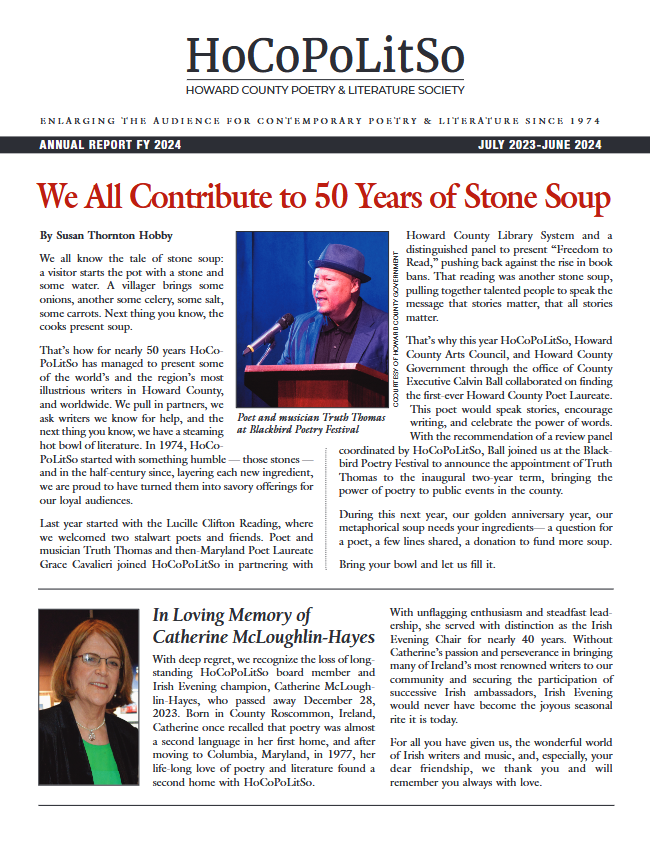
Read Our Annual Report
Wilde Readers of January: Steven Leyva & Julia Tagliere
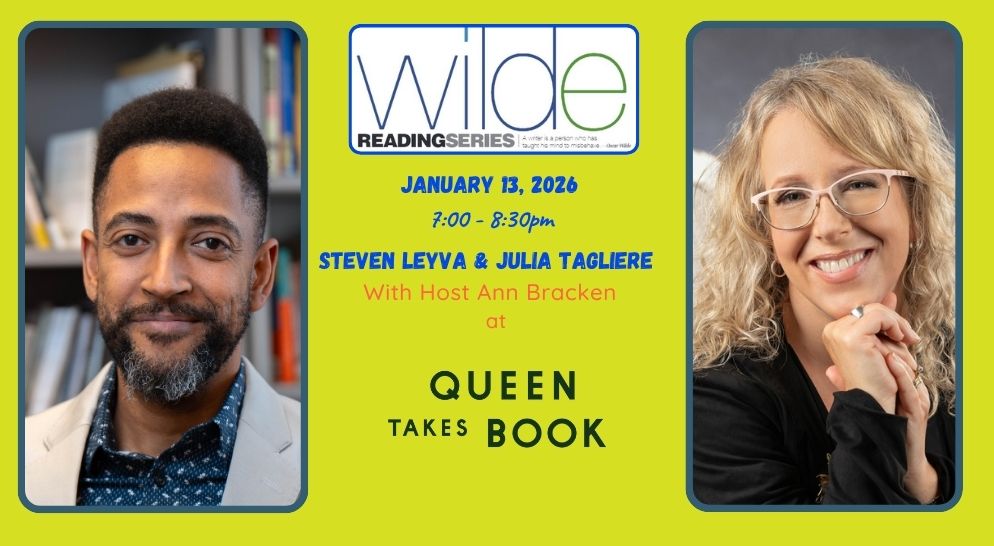
Happy New Year! As we enter 2026, HoCoPoLitSo invites all to the January edition of the Wilde Reading Series, proudly continuing its ongoing tenth season of highlighting local authors in Howard County. This month’s reading features Steven Leyva and Julia Tagliere, hosted by Ann Bracken. Please join us at independent bookstore Queen Takes Book on Tuesday, January 13th at 7 p.m., at 6955 Oakland Mills Rd, Suite E, Columbia MD, 21045. Please spread the word— bring your friends, family, and students! Light refreshments will be served and books by the readers available for purchase.
Our warm and welcoming open mic follows the featured authors and we hope you will let us hear from your stories, poems, or other piece. Please prepare no more than five minutes of performance time (about two poems) and sign up when you arrive.
Below, get to know Steven and Julia!
Who is the person in your life (past or present) that shows up most often in your writing?
Steven: Probably my brother or father.
Julia: My late mother.
Where is your favorite place to write?
Steven: My office at the University of Baltimore, through coffee shops used to be where I wrote most often.
Julia: Anywhere I can scrape together a few sustained hours to focus.
Do you have any consistent pre-writing rituals?
Steven: Hmm … not really. At least not in the way folks imagine a causal link from ritual to practice. Certainly watching animation is a part of it but I’d do that anyway. Reading poetry is part of it but again, I’d do that even if I wasn’t going to write. Perhaps the only pre-writing ritual is remembering presently that one is alive.
Julia: I always leave notes to myself when I stop a given day’s work (“Start with this scene next” or “Flesh out this interaction” or even just “This sucks—why?”). Music also helps me sort of cross over that bridge, can put me in the mood of whatever piece or section I’m working on that day.
Who always gets a first read?
Steven: Often it’s a colleague at work, Marion Winik, or my close friend Zakia Henderson-Brown.
Julia: I have a few trusted friends blessed with marvelous literary instincts I count on to provide for thoughtful, candid feedback.
What is a book you’ve read more than twice (and would read again)?
Steven: The Fellowship of the Ring.
Julia: East of Eden by John Steinbeck.
What is the most memorable reading you have attended?
Steven: A reading with Derek Walcott at 92Y in NYC.
Julia: The first I ever attended, hosted by The Inner Loop in D.C. Hearing the passion, courage, wit, and grace of those writers sharing their works, exactly as they themselves had conceived, completely electrified me. I was hooked.
• Steven Leyva was born in New Orleans, Louisiana and raised in Houston, Texas. His poems have appeared in Smartish Pace, Scalawag, Nashville Review, jubilat, The Hopkins Review, Prairie Schooner, and Best American Poetry 2020. He is a Cave Canem fellow and author of the chapbook Low Parish and author of The Understudy’s Handbook, which won the Jean Feldman Poetry Prize from Washington Writers Publishing House. His second book of poems, The Opposite of Cruelty, was published by Blair Publishing in Spring 2025. Steven holds an MFA from the University of Baltimore, where he is an associate professor, and co-director of the Klein Family Center of Communications Design.
Steven can be found online on Instagram as @sdleyva and at stevenleyva.wordpress.com.
• Julia Tagliere‘s work has appeared in Gargoyle Magazine, The Writer Magazine, and elsewhere. An alumna of the Johns Hopkins University M.A. in Writing program, Julia founded and hosts the bi-monthly MoCo Underground Writers Showcase, serves as an editor with Baltimore Review, is a 2022 Maryland State Arts Council Independent Artist and a 2025 Virginia Center for the Creative Arts fellow, and just returned from her first Bread Loaf Writers’ Conference.
Julia’s website is justscribbling.com; she dumped all her other social media accounts last year and is now just on Bluesky: @mocounderground.bsky.social.

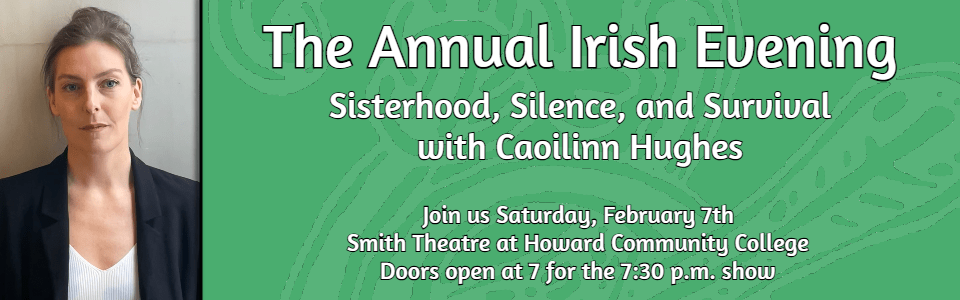
Caoilinn Hughes and Cóilín Parsons Headline HoCoPoLitSo’s 48th Annual Irish Evening

HoCoPoLitSo’s annual evening of Irish music and poetry
on Saturday, February 7th, 2026, at 7:30 p.m. presents
Sisterhood, Silence, and Survival
featuring novelist and poet Caoilinn Hughes
author of The Alternatives
in conversation with Cóilín Parsons,
and music by Poor Man’s Gambit.
In-person admission available for purchase now
Limited-time discount available before New Year’s!
HoCoPoLitSo’s 48th annual Evening of Irish Music and Poetry on Saturday, February 7th, 2026, at 7:30 p.m. presents Sisterhood, Silence, and Survival, featuring Caoilinn Hughes, author of novels, short stories and poetry, reading from her work followed by a conversation moderated by Cóilín Parsons, Georgetown University Associate Professor and Director of Global Irish Studies. The evening also features music performed by Poor Man’s Gambit and Unranked; a representative of the Irish Embassy to the United States has been invited to continue the long-standing tradition of providing opening remarks.
The evening program commences at 7:30 p.m. on Saturday, February 7th, 2026 in the Smith Theatre of the Horowitz Visual & Performing Arts Center on the campus of Howard Community College; guests may be seated starting at 7 p.m. Responsible patrons aged 21 and up are invited to partake of Irish beverages at our CASH-ONLY bar, at intermission and prior to the stage show while enjoying a performance by Unranked. Non-alcoholic drinks and light fare will be provided free to attendees. A book signing follows the reading and discussion, and books by the featured authors will be available for purchase. After intermission, Poor Man’s Gambit will play a concert of traditional Irish music.
Tickets, $50, are available now through the Horowitz Center Box Office. A reduced rate is available for educators and students. We hope you will join us for what is sure to be another unforgettable evening.

You can find more information on this year’s event, including artist biographies, as well as on the history of HoCoPoLitso’s Irish Evening on its dedicated page, here. All proceeds from the event are used to underwrite HoCoPoLitSo’s literary programs in the community, and the production of The Writing Life, a writer-to-writer talk show now seen worldwide by more than one million viewers on youtube.com/hocopolitso, and through Howard Community College’s Dragon Digital TV.
Wilde Readers of December: Khadijah Z. Ali-Coleman & Emily Mitchell
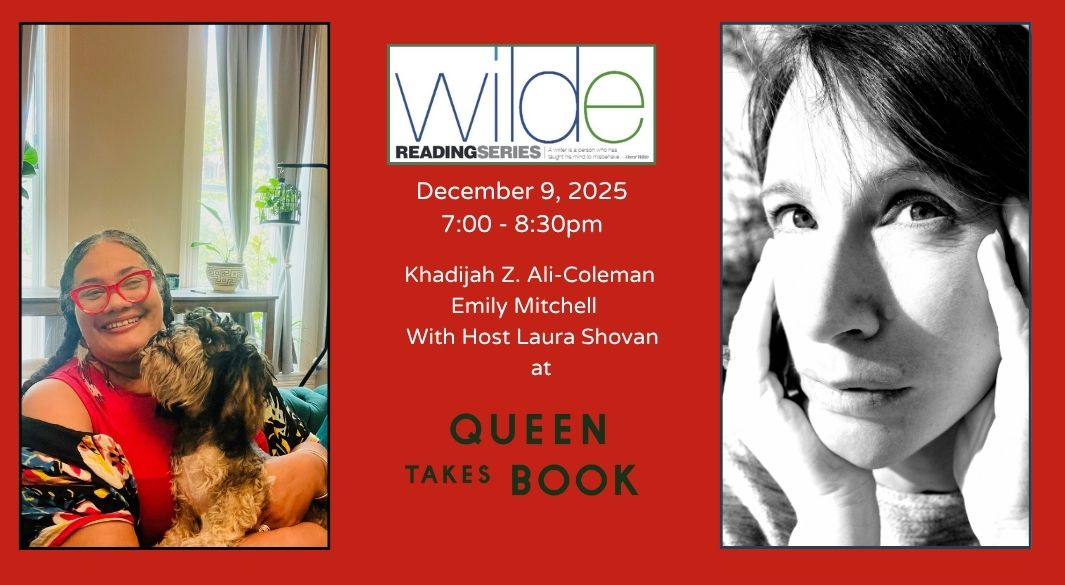
HoCoPoLitSo welcomes all to the December edition of the Wilde Reading Series, which this year proudly opens its tenth season of highlighting local authors in Howard County. This month’s reading features Khadijah Z. Ali-Coleman and Emily Mitchell, hosted by Laura Shovan. Please join us at independent bookstore Queen Takes Book on Tuesday, December 9th at 7 p.m., at 6955 Oakland Mills Rd, Suite E, Columbia MD, 21045. Please spread the word— bring your friends, family and students! Light refreshments will be served and books by the readers available for sale.
An open mic follows the featured authors and we encourage you to participate. Please prepare no more than five minutes of performance time, about two poems, and sign up when you arrive.
Below, get to know Khadijah and Emily!
Who is the person in your life (past or present) that shows up most often in your writing?
Khadijah: I would say, as of late, my mother tends to be featured the most in my writing. My book that I published in 2024, For the Girls Who Do Too Much, was literally a poetic memoir of sorts exploring the many ways I responded to the death of my mother in 2014 over the years while contending with the many feels associated with growing into middle-age. The second person would be my daughter. I wrote poetry to and about her even before she was born.
Emily: I suppose that in different ways my immediate family, my sister, mom, dad and husband, appear in my work a lot but not as themselves. My stories are not directly autobiographical so they are always heavily altered or composite, mixed together with other people, including people I don’t know well at all, like someone I went to middle school with, my piano teacher from when I was six or a coworker from my first job. There are situations that I’m interested in consistently, maybe, instead: people who leave their homes and travel long distances; loneliness and the search for home and community; the pain of being left out, forgotten or excluded. Those themes come back again and again whether I want them to or not.
Where is your favorite place to write?
Khadijah: I don’t have a favorite place to write. But, I do like to write when I am alone and when I feel like I am not being rushed or expected to be somewhere soon. So, the weekends, after hours and early mornings are favorite times usually.
Emily: I have a big, lovely desk that is really a mid-century dining table in my home office which is where I do my creative work. There’s a print of the Chagall painting Les Amoureux hanging over it. More than any other artist, Chagall seems to me to show in his figures how human beings are always trying to overcome our separateness from each other and I like to be reminded of that while I work. But, really, I can write anywhere as long as I don’t have distractions.
Do you have any consistent pre-writing rituals?
Khadijah: I have so much structure and organization in my day-to-day work as a professor, and when leading the organizations I’ve founded that I purposefully ask the universe for grace to share messages with me to give insight on how to move towards a new creative project. I often feel like my poems, songs, and plays are outputs from this channeling, particularly when writing about times in history where I wasn’t born. I listen for the messages by being observant of what is around me and catching my attention. I think about the themes that have been predominant during the week. I reflect on the feelings I have that I just can’t shake. These are the things that want to explore and find ways for them to become part of the story I will write.
Emily: I usually sit and meditate for about 15 minutes before I begin. Especially when I’m working on a longer project, this helps with managing all the uncertainty that is an unavoidable part of writing fiction, not knowing where the story is going, or who the characters are or whether I can make it work in the end. I started doing this in order to finish my second novel and it has become a necessary part of my routine since then.
Who always gets a first read?
Khadijah: My daughter and her dad, who has been my artistic partner for over 20 years, are usually the ones to read something first if it is for a book, song, or solo performance. The women in my artist collective, Liberated Muse, see things first if it is a script or song they will perform. My daughter’s notes are second to none. She has given the best feedback I’ve ever received until recently when I received feedback from Howard County Poet Laureate Truth Thomas. The two of them are really thorough writers and editors when it comes to poetry.
Emily: I have a wonderful writing group that I’ve been meeting with for more than a decade now and they are usually the first ones to see my work.
What is a book you’ve read more than twice (and would read again)?
Khadijah: I have read so many books repeatedly. I didn’t realize how much a creature of habit I was until I started getting those Spotify end-of-the-year recaps that show you who you’ve listened to all year. They tell me every year that I listen to the same 5–10 people.
With books, I fear it may be the same, at least when I think about it based on my age. Anne of Green Gables was probably that book when I was a child. Kindred by Octavia Butler in my 20’s. The Alchemist. The Four Agreements. Read books like that on repeat late 20’s and 30’s. From 20s to now in my 50’s, I have some staples. Many books by Toni Morrison— Sula, Beloved and Song of Solomon. May be time to revisit them again for the tenth time.
Emily: Mrs. Dalloway by Virginia Woolf.
What is the most memorable reading you have attended?
Khadijah: I am not sure if it was a reading, but I enjoyed the only time I saw Nikki Giovanni in person at Busboys and Poets in Washington DC 10 or 11 years ago. She was sharing so many amazing stories of her life and her relationships with people like Maya Angelou and James Baldwin.
Emily: This is tough because I’ve been to so many good ones over the years! I’m going to go with a reading by the poet Bridgit Pegeen Kelly from her book Song some years before she passed away. She was very shy and didn’t love being up at the podium but as soon as she started reading the whole room went absolutely silent, riveted by her words. I’m going to cheat and make a second pick: LaToya Watkins reading from Holler, Child, last year at University of Maryland was also just amazing, a reading that will stay with me for a long time.
• Khadijah Z. Ali-Coleman is author of the published and forthcoming poetry collections Halos for Heroes, Friends and a Few People I Don’t Like (2026), A Park Stands on All of Our Graves (2025), For the Girls Who Do Too Much (2024), The Summoning of Black Joy (2023), the children’s book Mariah’s Maracas (2018) and co-editor of the book Homeschooling Black Children in the US: Theory, Practice and Popular Culture (2022). She served as the second Poet Laureate of Prince George’s County, MD from 2023–2025. Based in Baltimore, Maryland, Khadijah Ali-Coleman is a multi-genre writer and founding director of Black Writers for Peace and Social Justice, a 501(c)(3) nonprofit, and the multidisciplinary arts group Liberated Muse. She is an associate professor in the Humanities Department at Coppin State University.
Visitors are welcome to her personal website, khadijahali-coleman.com, and to her Substack. You can also connect with her on Instagram and Facebook as @KhadijahOnline.
• Emily Mitchell is the author of The Last Summer of the World (W. W. Norton, 2007), a novel, and two short story collections, Viral (W. W. Norton, 2015), and The Church of Divine Electricity (University of Wisconsin Press, 2025). Her short fiction has appeared in Harpers’, Ploughshares, The Sun, The Southern Review, The Missouri Review and elsewhere. She serves as fiction editor of New England Review and teaches at the University of Maryland. As well as writing, she likes reading, running, biking, cooking, traveling, studying Spanish, universal healthcare, stopping climate change and, in case that all wasn’t nerdy enough, she’s recently been getting into bird-watching.
Emily invites you to read a recent interview about her new collection with the writer Allison Wyss for Adroit Journal. Her regular home on the web is emilymitchellwriter.com, and she is on Instagram as @elbmitchell.
Wilde Readers of November: Geoffrey Himes & Linda Rabben

HoCoPoLitSo welcomes all to the November edition of the Wilde Reading Series, which this year proudly celebrates its tenth season of highlighting local authors in Howard County. This month’s reading features Geoffrey Himes and Linda Rabben, hosted by Linda Joy Burke. Please join us at independent bookstore Queen Takes Book on Tuesday, November 11th at 7 p.m., at 6955 Oakland Mills Rd, Suite E, Columbia MD, 21045. Please spread the word— bring your friends, family and students! Light refreshments will be served and books by the readers available for sale.
An open mic follows the featured authors and we encourage you to participate. Please prepare no more than five minutes of performance time, about two poems, and sign up when you arrive.
Below, get to know Geoffrey and Linda!
Who is the person in your life (past or present) that shows up most often in your writing?
Geoffrey: My wife.
Linda: Too many people to name here.
Where is your favorite place to write?
Geoffrey: Anywhere—as long as the words come.
Linda: Anywhere.
Do you have any consistent pre-writing rituals?
Geoffrey: I always carry a notebook in my pocket, just in case.
Linda: No.
Who always gets a first read?
Geoffrey: My poetry writing group on Zoom.
Linda: Nobody always gets a first read. Sometimes my husband, sometimes a friend.
What is a book you’ve read more than twice (and would read again)?
Geoffrey: The Collected Poems of Wallace Stevens.
Linda: Middlemarch.
What is the most memorable reading you have attended?
Geoffrey: Allen Ginsberg at HoCoPoLitSo.
Linda: Jan Karski, Polish diplomat who denounced German genocide during WWII, spoke at the University of Iowa about 40 years ago.
• Geoffrey Himes’ poetry has been published by Best American Poetry, December, Gianthology, Innisfree, Salt Lick and other publications. He has written about popular music and theater for the Washington Post, New York Times, Rolling Stone and many more since 1977. His book, In-Law Country: How Emmylou Harris, Rosanne Cash and Their Circle Fashioned a New Kind of Country Music, was published in 2024, followed by his book, Willie Nelson: The Stories Behind the Music, in 2025. His two books of collaborative poems with Grace Cavalieri, Fables from Italy and Beyond and The Third Voice, were published in 2025. His first book of solo poems, Today I Am an Orphan: The Shorter Poems of Geoffrey Himes, is due in 2026.
Geoffrey’s podcast and most recent writing can be found at the Hard Rain & Pink Cadillacs on SubStack.
• Author, anthropologist and human rights activist Linda Rabben did research in and on Brazil for more than 30 years, worked as a researcher for Amnesty International, and coordinated a project for Lutheran Immigration and Refugee Service. Linda’s 12 published books include Book of Changes, a collection of her poems, and Through a Glass Darkly: The Social History of Stained Glass in Baltimore. She is an associate research professor of anthropology at the University of Maryland.
Linda’s home on the web is found at wordworker.net.
Wilde Readers of October: Hannah V. Sawyerr & Ronald L. Smith
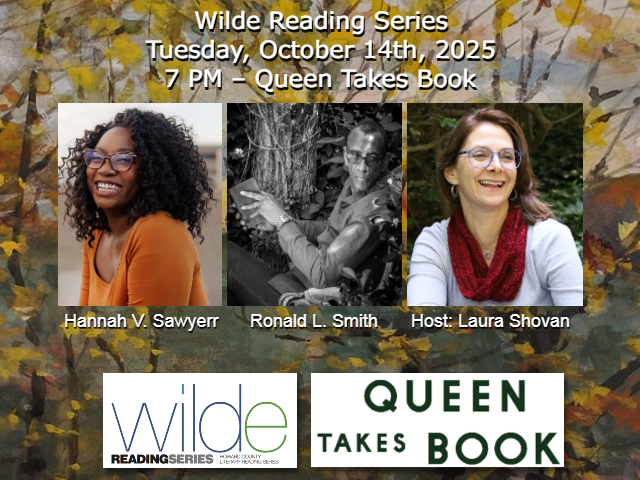
HoCoPoLitSo welcomes all to the October edition of the Wilde Reading Series, which this year proudly opens its tenth season of highlighting local authors in Howard County. This month’s reading features Hannah V. Sawyerr and Ronald L. Smith, hosted by Laura Shovan. Please join us at independent bookstore Queen Takes Book on Tuesday, September 9th at 7 p.m., at 6955 Oakland Mills Rd, Suite E, Columbia MD, 21045. Please spread the word— bring your friends, family and students! Light refreshments will be served and books by the readers available for sale.
An open mic follows the featured authors and we encourage you to participate. Please prepare no more than five minutes of performance time, about two poems, and sign up when you arrive.
Below, get to know Hannah and Ronald!
Who is the person in your life (past or present) that shows up most often in your writing?
Hannah: Maya Angelou and James Baldwin show up most in my writing. The epigraph of my first novel is a James Baldwin quote and I attended a James Baldwin conference before my second novel that influenced the writing. Both my first and second novels also feature nods to Maya Angelou.
Ronald: Me.
Where is your favorite place to write?
Hannah: I love writing in coffee shops. I love people watching and it helps me become “unstuck” the way I can when I am writing alone.
Ronald: In my office, looking out at the city and the great view.
Do you have any consistent pre-writing rituals?
Hannah: I have particular clothing items that I love wearing while writing! Some of these items include my Morgan State University Sweatshirt, my favorite pair of sweatpants, and my DewMore Baltimore shirt.
Ronald: I have to go through all my emails first, and then look at a few news sites, and then I get to work.
Who always gets a first read?
Hannah: The person who gets the first read is often the person I think about the most while writing. My last novel was largely inspired by my days as a youth slam poet, so the first person to read the manuscript was my former slam coach, Kenneth Something.
Ronald: My editor.
What is a book you’ve read more than twice (and would read again)?
Hannah: House on Mango Street by Sandra Cisneros.
Ronald: The Lord of the Rings.
What is the most memorable reading you have attended?
Hannah: This differs slightly from a traditional reading but I recently attended Charm City Slam in Baltimore and absolutely loved it!
Ronald: Philip Pullman, author of the His Dark Materials books.
• Hannah V. Sawyerr was recognized as the Youth Poet Laureate of Baltimore in 2016. Her debut novel in verse All the Fighting Parts was recognized as a Morris Debut Award finalist, a Walter Dean Myers Award Honoree, a Rise Feminist Book Project Top Ten Title, and a Kirkus Best Book of the Year. Truth Is is her sophomore novel.
You can find out more about Hannah at hannahsawyerr.com, and on Instagram @hannsawyerr.
• Ronald L. Smith is an award-winning author of middle-grade novels including Black Panther: The Young Prince Trilogy, Hoodoo, Gloomtown, Where the Black Flowers Bloom, Project Mercury and more. He has also contributed to the anthologies The Hero Next Door, Hope Wins, and RECOGNIZE: An Anthology Honoring and Amplifying Black Life. A former advertising writer, he lives and works in Baltimore, Maryland.
Ronald’s home page is strangeblackflowers.com and he can be found on Instagram @ronsmithwriter.
Happiness Hour with Ross Gay

UPDATE: 11/4/2025 — With deepest gratitude for the enthusiasm of our audience, the event is now SOLD OUT. If you were unable to purchase tickets to this event, we hope you will consider joining us at another upcoming program, such as the annual Irish Evening on February 7, 2026.
In November of 1974, Lucille Clifton joined Carolyn Kizer to headline HoCoPoLitSo’s first-ever event, reading from their work and discussing their lives as writers to adult and student audiences in Wilde Lake. For the past year, HoCoPoLitSo has celebrated the full half-century since that day, an incredible 50 years of hosting several dozen more Nobel-, Pulitzer-, and National Book Award-winners here in Howard County, from beloved staple events like HoCoPoLitSo’s Irish Evening, to more recent initiatives like our partnership in the Howard County Poet Laureate and Youth Poet Laureate programs.
On behalf of HoCoPoLitSo’s current Board and staff, as well as all those dear friends, past and present, without whom we could never have achieved this milestone, we are deeply honored for the continuing opportunity to broaden the audience for contemporary poetry and literature, here at home and worldwide, and we hope you will join us for a special presentation of this year’s Lucille Clifton Reading Series, offered as a grand finale to HoCoPoLitSo’s 50th Anniversary Celebration at a Happiness Hour with Ross Gay on November 7, 2025.
📅 Friday, November 7
🕜 5:30 p.m. doors open, stage show at 6:30 (in-person)
📍 10901 Little Patuxent Parkway, Columbia, MD 21044
Howard Community College’s Kahlert Foundation Complex, room 101
Join us in-person in the Large Meeting Room (KC 101) of Howard Community College’s newly-opened Kahlert Foundation Complex; free and ample parking directly adjoins the venue. Doors open at 5:30 p.m. for an hour of light refreshments and music; a cash bar is offered for patrons aged 21 and older. Stage presentation begins at 6:30 p.m. with an introduction from the poet and former HoCoPoLitSo writer-in-residence Steven Leyva, whose filmed conversation with Ross will be available free through HoCoPoLitSo’s The Writing Life at a later date. After the show, book sales and signing is offered.
General admission is available while seating lasts for $25 per person, with discounted rates available for professional educators and currently-enrolled students. For questions or issues purchasing tickets, to request accommodations, or to discuss attendance by a larger group, please contact HoCoPoLitSo via e-mail to info@hocopolitso.org, or by phone call to (443) 518-4568.

All proceeds from the event support the live and recorded literary programs offered by HoCoPoLitSo for student and general audiences.
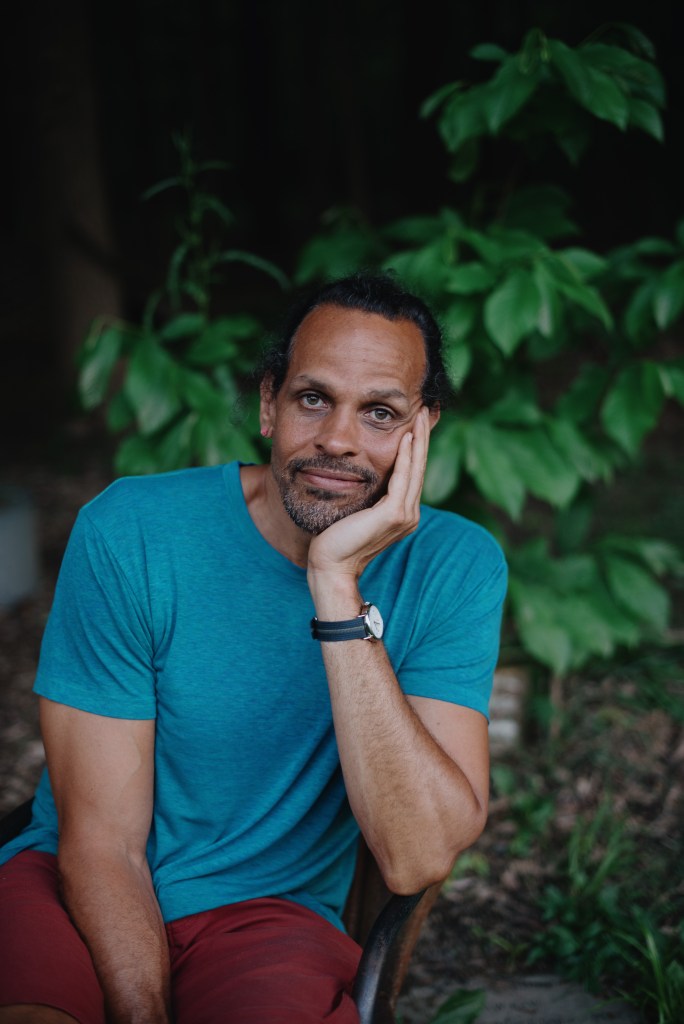
Ross Gay is interested in joy.
Ross Gay wants to understand joy.
Ross Gay is curious about joy.
Ross Gay studies joy.
Something like that.
Ross Gay is the author of four books of poetry: Against Which; Bringing the Shovel Down; Be Holding, winner of the PEN American Literary Jean Stein Award; and Catalog of Unabashed Gratitude, winner of the 2015 National Book Critics Circle Award and the 2016 Kingsley Tufts Poetry Award. In addition to his poetry, Ross has released three collections of essays—The Book of Delights was released in 2019 and was a New York Times bestseller; Inciting Joy was released in 2022, and his newest collection, The Book of (More) Delights was released in September of 2023.
Steven Leyva was born in New Orleans, Louisiana and raised in Houston, Texas. His poems have appeared in Smartish Pace, Scalawag, Nashville Review, jubilat, The Hopkins Review, Prairie Schooner, and Best American Poetry 2020. He is a Cave Canem fellow and author of the chapbook Low Parish and author of The Understudy’s Handbook which won the Jean Feldman Poetry Prize from Washington Writers Publishing House. His second book of poems, The Opposite of Cruelty, was published by Blair Publishing in Spring 2025. Steven holds an MFA from the University of Baltimore, where he is an associate professor, and co-director of the Klein Family Center of Communications Design.
Earlier that day, Steven will join Ross in the recording studio of Howard Community College’s Dragon Media to record an edition of The Writing Life: the acclaimed half-hour, writer-to-writer talk show produced by HoCoPoLitSo. Their conversation joins the more than 130 pairings of great literary minds, available free, world-wide through HoCoPoLitSo’s YouTube channel.


Unranked is a four-piece American roots rock band made up of musical ruffians blending layered guitars, mandolin and violin aiming to please the human soul. Unranked blends a mix of Irish and Americana sound with beautiful harmonies creating a unique brand of music. Core members include Aaron Lubliner-Walters (mandolin/vocals), Skyle Malcom (violin/vocals), Neal Barthleme (electric guitar/vocals), and Will Hill (accoustic guitar/vocals).
HoCoPoLitSo is a 501(c)(3) nonprofit organization (FEIN 52-1146948) registered in the state of Maryland, donations to which are tax-deductible to the fullest extent allowed by law. A copy of our current financial statement is available upon request. Documents and information submitted to the State of Maryland under the Maryland Charitable Solicitations Act are available from the Office of the Secretary of State for the cost of fees and postage.
HoCoPoLitSo is or has in the past fiscal year been supported by funds gratefully received from the Maryland State and Howard County Arts Councils; Howard County Government; Community Foundation of Howard County; Maryland Humanities; Dr. Lillian Bauder; and from other generous individual and corporate contributors. The artistic contents and opinions expressed at HoCoPoLitSo events do not necessarily reflect the views or policies of HoCoPoLitSo’s grantors, donors, or individual Board or staff members.

The 2025 Bauder Lecture, featuring Safia Elhillo & celeste doaks

On Thursday, September 18th, 2025, HoCoPoLitSo proudly presents in partnership with Howard Community College, Howard County Library System, and the Downtown Columbia Partnership, the 2025 installment of the Bauder Lecture Series, featuring a keynote from Safia Elhillo, distinguished poet and author of novel-in-verse Bright Red Fruit, followed by an in-depth conversation hosted by celeste doaks, editor, journalist, and author of American Herstory.
We hope you will join us for this free and public event, in person at the Horowitz Visual and Performing Arts Center on the college campus, or online streamed live via Vimeo at this link. The day’s events begin with a reading, keynote and stage conversation at 12:30 p.m., followed by a brief reception; a second session follows at 6:00 p.m. HoCoPoLitSo shall offer books from both authors for purchase and signing, to in-person attendees.

In Safia Elhillo’s Bright Red Fruit, teenager Samira is determined to spend her summer exploring DC and growing as a poet—but a scandalous rumor leaves her grounded and vulnerable. Seeking solace online, she’s drawn into a secret relationship with an older poet that threatens her reputation, her community ties, and her dreams. Bright Red Fruit is a powerful coming-of-age story about navigating desire, family expectations, and the search for self.
Sudanese by way of Washington, DC, Safia Elhillo is the author of the books The January Children, Girls That Never Die, Home Is Not A Country, and Bright Red Fruit. Elhillo’s work appears in Poetry Magazine, Callaloo, and The Academy of American Poets’ Poem-a-day series, among others, and in anthologies including The BreakBeat Poets: New American Poetry in the Age of Hip-Hop and The Penguin Book of Migration Literature. With Fatimah Asghar, she is co-editor of the anthology Halal If You Hear Me (Haymarket Books, 2019), which was a finalist for a Lambda Literary Award in 2020. Her fellowships include a Ruth Lilly and Dorothy Sargent Rosenberg Fellowship from the Poetry Foundation, Cave Canem, and a Wallace Stegner Fellowship from Stanford University. Elhillo received the 2015 Brunel International African Poetry Prize, and was listed in Forbes Africa’s 2018 “30 Under 30.” Her work has been translated into several languages, and commissioned by Under Armour, Cuyana, and the Bavarian State Ballet. She currently lives in Los Angeles.
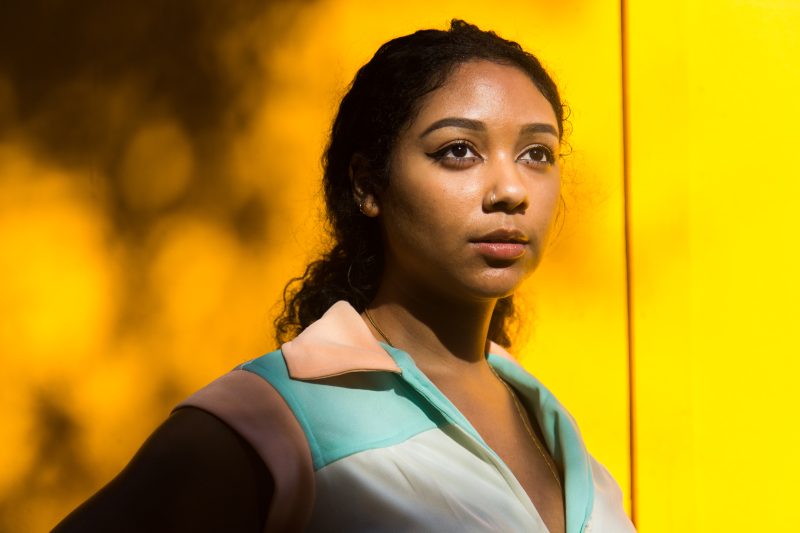
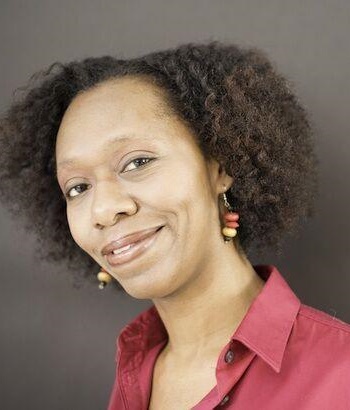
celeste doaks is the author of “Cornrows and Cornfields”, and editor of the poetry anthology “Not Without Our Laughter”. Her chapbook, “American Herstory”, was Backbone Press’s first-place winner in 2018. “Herstory” contains poems—which have been featured at the Whitney Museum of American art, Brooklyn Museum, and most recently the Smithsonian American Art Museum— about the artwork former First Lady Michelle Obama chose for the White House. Doaks is a Carolina African American Writers’ Collective (CAAWC) member and has received fellowships and residencies from Yaddo, Atlantic Center of the Arts, Community of Writers Squaw Valley, and the Fine Arts Work Center. Doaks is a three-time Pushcart award nominee and a creative writing professor for over a decade. Her poems, reviews, and cultural essays have appeared in multiple US and UK on-line and print publications including “Ms. Magazine”, “The Rumpus”, “The Millions”, “Huffington Post”, “Chicago Quarterly Review”, “Obsidian: Literature and Arts in the African Diaspora”, “The Hopkins Review, Bmore Art Magazine”, “Asheville Poetry Review” and many others.
The annual Bauder Lecture Series is made possible by a generous grant from Dr. Lillian Bauder, a community leader and Columbia resident. Each year, the Howard County Book Connection— a partnership of HoCoPoLitSo and representatives from most departments of Howard Community College— selects one book, whose author is invited to headline the lecture; HoCoPoLitSo provides for a local author to join as a special guest, moderating an on-stage writer-to-writer conversation, and audience Q&A. In addition, up to two Howard Community College students are honored with the presentation of the Don Bauder Awards, for their response to the chosen book in an essay or other creative format. The awards honor the memory of Don Bauder, late husband of Dr. Lillian Bauder and a champion of civil rights and social justice causes.
For more information, or to view recordings of past years’ lectures, please visit Howard Community College’s Bauder Lecture Series event listing, or the home page of the Howard County Book Connection.
HoCoPoLitSo, a 501(c)(3) nonprofit registered in the state of Maryland, gratefully receives funding from the Maryland State and Howard County Arts Councils; Howard County Government; Community Foundation of Howard County; Maryland Humanities; Dr. Lillian Bauder; and from other generous individual and corporate contributors.
Join Us in Welcoming the Next Howard County Youth Poet Laureate

As Mai-Anh Nguyen’s inaugural one-year term comes to a close, HoCoPoLitSo and program partners welcome one and all to attend the announcement of the second local young writer to be appointed as Howard County Youth Poet Laureate, to be presented by County Executive Calvin Ball on Wednesday, September 17th, from 4:30 to 6 p.m. at Busboys and Poets in Columbia. RSVP is requested to ensure adequate seating.
The Howard County Youth Poet Laureate Program, created in partnership of HoCoPoLitSo, Howard County Arts Council, and Howard County Government through the Office of the County Executive, is an honorary one-year position selecting a young author from the Howard County area, ages 14–21, who demonstrates a passion for poetry and its power to connect our communities through local public readings and participation in civic events. Applications for this second term were accepted from January to May this year, and reviewed by an independent artistic review panel coordinated by HoCoPoLitSo and made up of local poets and educators Ashley Elizabeth, Naomi Ayala, and Sylvia Jones. Acting on the panel’s recommendation, the next Youth Poet Laureate will be formally appointed by the County Executive to act as an ambassador for literacy, arts, and youth expression.
This event is free and open to the public, but requires registration to attend: please click here to register.
Wilde Readers of September: Elizabeth Evitts Dickinson & Danuta Hinc
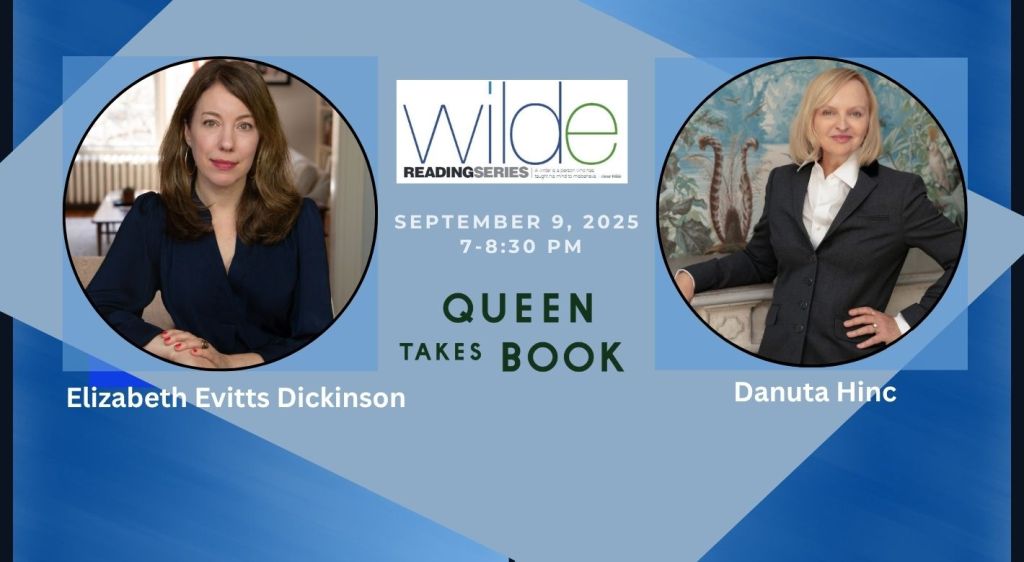
HoCoPoLitSo welcomes all to the September edition of the Wilde Reading Series, which this year proudly opens its tenth season of highlighting local authors in Howard County. This month’s reading features Elizabeth Evitts Dickinson and Danuta Hinc, hosted by Ann Bracken. Please join us at independent bookstore Queen Takes Book on Tuesday, September 9th at 7 p.m., at 6955 Oakland Mills Rd, Suite E, Columbia MD, 21045. Please spread the word— bring your friends, family and students! Light refreshments will be served and books by the readers available for sale.
An open mic follows the featured authors and we encourage you to participate. Please prepare no more than five minutes of performance time, about two poems, and sign up when you arrive.
Below, get to know Elizabeth and Danuta!
Who is the person in your life (past or present) that shows up most often in your writing?
Elizabeth: My grandmother. She died in a tragic way in the 1960s before I was born, and it was a family secret for decades. I’ve long understood that her death had a ripple effect on me and my family, and I’ve written several essays about her in an effort to understand who she was and what happened.
Danuta: In When We Were Twins, the figure who returns again and again is my mother. Her story of delivering my twin sisters, Hanna and Mariola—who were born three years before me and who lived for only ten days—was one of those family narratives I carried with me from childhood, though it was often wrapped in silence. That brief and fragile life, and the way my mother bore it, became the quiet undertow of the novel, in Taher’s mother, Laila. Writing it, I felt as though I was reaching toward a presence I had never truly known, yet one that shaped me profoundly. The sisters who were absent and yet always there, their absence rippling through my mother’s body, her memory, and my own beginnings.In my novel-in-progress, Sisters, the circle widens. Here it is not only my mother’s voice but my whole family that steps into the light—my parents, my grandparents, and most of all, my sister, Olka, Aleksandra. She was my constant companion and, in many ways, my first co-creator of stories. We grew up together in Poland at a time of political tension and silence, but our own bond was full of invention, curiosity, and defiance. When I write about her, I feel I am also writing about that primal closeness between siblings, the way we are each other’s mirrors, rivals, guardians, and witnesses. In Olka, and in the family who shaped both of us, I find the wellspring of the questions that drive my work, how memory is carried, how history lives in the body, and how love binds us through even the most difficult silences.
Where is your favorite place to write?
Elizabeth: I need quiet when I write. I can’t get anything done in a busy cafe, for instance, because I’m easily distracted and I absorb the energy around me. I write in my home office mostly. But my all-time favorite place to write is when I take myself to my favorite state park in Western Maryland and I get to write in the cabins there in front of a crackling wood stove surrounded by nature.
Danuta: I have two places that anchor me when it comes to writing. One is my home in the suburbs of Annapolis, where the familiar rhythm of the seasons and the quiet order of daily life give me steadiness. The other is our condo on the beach in Ocean City, Maryland, where the horizon of water and sky seems to stretch language itself, reminding me of the vastness that stories can hold. These are the places where I return, where the work continues steadily.
And yet, over the years, I have learned that what inspires me most deeply is not the familiar but the unsettled—the act of moving, of inhabiting new spaces that are not quite mine. Being in a new place shakes me open. It makes me notice differently, listen more closely, and enter into a kind of heightened attention that is essential for writing. Most recently, it was Africa, where we spent the month of June traveling along the West Coast, visiting nine countries. Each day offered a new cadence, a new rhythm, a new way of seeing. Before that it was Indonesia and Australia, where we spent a month in 2023, and earlier still, the Mediterranean, where we spent three weeks surrounded by a history layered with myth.
I always carry notebooks with me when I travel. Sometimes the notes are directly about the landscapes and encounters I experience, but often they begin to circle back to the novel I am working on at the time. What I discover is that travel doesn’t take me away from my writing—it folds into it, expands it. Movement, displacement, and the encounter with elsewhere always return me to the deeper questions I am exploring in fiction–memory, belonging, silence, and the way stories migrate across borders and time.
Do you have any consistent pre-writing rituals?
Elizabeth: I tend to set the stage by clearing my desk and lighting an unscented candle. I’ll have water and coffee or tea. And I’ll sometimes play what I think of as “transition music” to get me grounded, usually music by Stan Getz or Erik Satie or François Couperin. But when I write, I need silence.
Danuta: Reading has always been my most faithful ritual. Before I write, I read—not necessarily books directly related to what I am working on, but words that remind me of what language can do. A poem, a page of philosophy, a fragment of fiction, they open the door, set my mind into motion, remind me that writing is part of a long conversation that stretches across centuries. Reading is the way I tune my instrument before I begin to play.
Another ritual, though less deliberate, is not eating. I think most clearly when I am slightly hungry, when the body is alert rather than satisfied. The clarity of thought, the sharpness of images, the way ideas connect to one another, these come most vividly to me in that state of attentiveness. Over time, I even changed my diet to keep my brain sharp, learning how profoundly the body influences the mind.
In some ways, these rituals are small acts of silence and restraint—reading before speaking, withholding before consuming. They echo the themes that shape my work, listening before telling, holding absence before filling it. Writing asks for that kind of pause, the interval in which something unspoken can rise to the surface.
Who always gets a first read?
Elizabeth: I don’t have a standard first reader. It depends on the project. Sometimes it’s the editor I’m working with. Sometimes it’s a fellow writer who I trust. Because I write journalism, essay, memoir, short fiction, and longform nonfiction books, I tend to switch up who reads my work first.
Danuta: My husband, Tim, is always the first reader. He is, quite simply, a superb gift to my writing. His honesty is unwavering. He never avoids the difficult or probing question, never offers easy praise in place of real engagement. What he gives me instead is insight, the kind that comes from reading deeply, from taking literature apart with the precision of someone who studies and teaches it, even though his profession is engineering. He reads with rigor, with clarity, and with a sensitivity that pushes me to see the work more fully than I could on my own.
The next reader is my son, Alex, whose relationship with books astonishes me. He is thirty years younger than I am, and yet I sometimes think he has already read more than I ever will. His reading is wide, sophisticated, and fearless. He discusses literature on a level that both humbles and inspires me, and his way of seeing connections—between texts, between ideas, between worlds—reminds me that literature itself is an endless conversation.
To place a manuscript in their hands is both terrifying and consoling. Terrifying because I know they will see the work without illusions, and consoling because their vision is what steadies mine. Writing is solitary, but in these first readings, I find the essential witness, someone to hold the silence with me, and then break it with truth.
What is a book you’ve read more than twice (and would read again)?
Elizabeth: So many! But I’ll pick two: Pilgrim at Tinker Creek by Annie Dillard and One Man’s Meat by E.B. White.
Danuta: I rarely read books more than once. There are simply too many waiting for me, and time feels far too short. When I read a book I love, I often tell myself I will return to it, but almost always I move forward instead, following the long line of unread voices that call.
What I do find myself doing, however, is reading a book in Polish, and then again in English translation. Perhaps that counts as reading it twice. But what interests me most in that repetition is not the comfort of familiarity, but the difference—the way language transforms the same thought, the same image, into something subtly or even profoundly new. Translation fascinates me, how one text flows into another like water through a different channel, carrying with it both what remains and what shifts.
This preoccupation has followed me into my novel-in-progress, Sisters. In Part V, I imagine a correspondence between Saint Paul and Saint Thomas, letters that never existed but that I invent. Writing them has drawn me back to the Bible and the ways it has moved across languages: Aramaic, Hebrew, Greek, Latin, English, Polish. Each translation both preserves and alters, both reveals and conceals. It is this paradox—the possibility that words can both endure and transform—that keeps me thinking about language itself as the great unfinished text, one that none of us can ever read just once.
What is the most memorable reading you have attended?
Elizabeth: I saw the poet Rita Dove speak at the University of Buffalo in the 1990s and she was transcendent.
Danuta: There have been too many to name, but a few rise instantly to the surface. The first was hearing Czesław Miłosz read at the Library of Congress in the 1990s. For me, it was like stepping across an invisible border. In high school and college in Poland, his work had been banned, his voice officially silenced by the communist government. To sit in Washington, D.C., a decade later, and listen to him read his own words aloud—it felt like touching something sacred, as though history itself had shifted and allowed what had once been forbidden to return in the most direct and human form.
Another unforgettable moment was a conversation between Seamus Heaney and Derek Walcott. Listening to them, I felt an overwhelming sense of intimacy with greatness. It wasn’t only their poetry that moved me, but the generosity of their presence, the way they spoke to one another as peers and friends. I fell in love with both of them in that conversation, their voices, their wisdom, their humanity.
And then, more recently, Olga Tokarczuk at Politics and Prose in Washington, D.C., just a year before she received the Nobel Prize in Literature. I was impressed not only by her luminous intelligence, but also by her translator, Jennifer Croft, whose voice carried the work across languages with such care and brilliance. That evening reminded me again how literature is never a solitary act, but a dialogue, a movement between writer and reader, author and translator, silence and speech.
• Elizabeth Evitts Dickinson is the author of the critically-acclaimed book Claire McCardell: The Designer Who Set Women Free, which came out in June from Simon & Schuster. Named a New York Times Editors’ Choice, an Amazon Editor’s pick for Best History, and a must-read book featured in Oprah Daily, The Atlantic, Elle, Forbes, Harper’s Bazaar, and on NPR’s All Things Considered, among many others, the book has been hailed as an exceptional biography and an essential read that “puts the American fashion icon Claire McCardell back in the pantheon,” according to The New York Times Book Review.
Elizabeth can be found online at eedickinson.com, and on Instagram @elizabethevittsdickinson.
• Danuta Hinc is a Polish American novelist and essayist, author of When We Were Twins, praised by Kirkus Reviews as “a subtle psychological snapshot of radicalization.” Her work has appeared in Literary Hub, Washingtonian, Popula, and Consequence Magazine. She holds an M.A. from the University of Gdańsk and an M.F.A. from Bennington College. A recipient of the Barry Hannah Merit Scholarship, she is a Principal Lecturer in English at the University of Maryland.
Danuta’s online presence includes danutahinc.com, danuta.substack.com, Facebook, Instagram, and LinkedIn.
The 2025 Ellen Conroy Kennedy Poetry Prize

Held annually in loving memory of HoCoPoLitSo’s co-founder, the 2025 Ellen Conroy Kennedy Poetry Prize is now open to all entrants! Whether you are a life-time poet or have never written a line before, we invite you to share with us whatever moves you to poetry.
The author of the poem selected for first place will be awarded a cash prize of $500, celebrated on HoCoPoLitSo’s website, social media, and in our annual report— and have their winning poem published in The Little Patuxent Review and right here on HoCoPoLitSo’s front page.
To enter, click here, or visit the contest’s page to learn more or to read past winners’ poems. A reading fee of $10 per entrant supports a panel of fair and balanced judges.

 HoCoPoLitSo