

Who is rescuing whom? The writers or the readers?
 The latest installment in our occasional series of blog posts from friends of HoCoPoLitSo. Today Patricia VanAmburg, poet and professor of English at Howard Community College, writes of the power of sharing in literature and asks a ‘simple’ question:
Four thousand years ago, the Sumerians immortalized their king Gilgamesh (and their civilization) by telling his story. This has been a universal phenomenon. A few years ago, I had the opportunity to work with American poet Galway Kinnel, who defined poetry as “rescue work in time.” Broadening that definition to encompass all literature, I sometimes ask students what gets “rescued” in a poem or story.
They always guess the writer first and the reader second. Innately we know the healing quality of sharing our feelings and the relief in knowing someone else has felt or struggled with some of our own issues. Finally though, students realize that something even bigger gets rescued—the microcosm of a single event—the macrocosm of human experience.
We all belong to communities whose stories are important on local and global levels. Turkish writer and Nobel prizewinner Orhan Pamuk said in his 2006 acceptance speech: “The writer who shuts himself up in a room and first goes on a journey inside himself will, over the years, discover literature’s eternal rule: he must have the artistry to tell his own stories as if they were other people’s stories, and to tell other people’s stories as if they were his own, for this is what literature is. But we must first travel through other people’s stories and books.” Through the words of other writers, I have come to visualize literature as a flowing infinity symbol—the connection between teller and listener—the connection between individual and community. What literature connects you?
Patricia VanAmburg
Poet and professor of English
Howard Community College
The HoCoPoLitSo board of directors constantly thinks of how literature connects with the community, and how we can share those words with our audiences. But we thought a few book recommendations – especially at this time of year and considering the recent tragedies in our country – would be apropos.
What follows is a quick list of some of our board members and staff and the books they’re thinking of at this time:
- Tara Hart, board co-chair, recently sent her nephew, a veteran, a copy of Tim O’Brien’s Vietnam classic, The Things They Carried.
- Tim Singleton, board co-chair, reaches for Donald Hall’s Without, elegiac poems written of the dying of his wife, Jane Kenyon, that share the idea that one can let go, hold, carry on.
- Pam Simonson, HoCoPoLitSo’s managing director, is reading Elizabeth Spires’ Now the Green Blade Rises: Poems. Spires’ poems about her mother’s death are moving and comforting, as well as full of hope, when hope feels distant, Simonson says.
- Kathy Larson, treasurer, says she has read The Secret Garden, by Frances Burnett, many times, and “come away with a renewed appreciation for fresh air and sunshine and the healing power of nature.”
- Susan Thornton Hobby, secretary of the board, loves Mary Oliver’s New and Selected Poems, with the line: “Tell me, what is it you plan to do with your one wild and precious life?” from the poem “The Summer Day.”
- Laura Yoo, board member at large, found comfort in the collected works of Emily Dickinson when she had a sudden death in the family.
We’d love to hear what literature connects you. Feel free to comment below.
Two Points of View on The Year’s Writer-In-Residence — Derrick Weston Brown
Guest bloggers Joyce Braga and Sam Rubin share their experiences of this year’s Writer-in-Residence in the Howard County Public School System, Derrick Weston Brown.
His poems have swagger, but the poet
remains introspective

Derrick Weston Brown
As the high school liaison for HoCoPoLitSo’s writer-in-residence, I’ve guided many poets around Howard County high schools. After I e-mailed Derrick Weston Brown, this year’s writer-in-residence. I prepared myself for our first meeting, scheduled for Nov. 12 at Oakland Mills High School, by reading his biography and his on-line interviews. I expected the usual poet—a little bit of a performer, a lot of ego and touch of swagger. I looked at the picture of Derrick Weston Brown, and knew I was right. But I was wrong, and in a good way.
I met Derrick at the school front desk. I rattled off instructions: Here’s the packet, here are your poems, sign the book, here’s the room. Oh, and please tell me how you want me to introduce you. Derrick seemed surprised, almost shy about telling me his accomplishments.
When Derrick began rather softly to read, I soon discovered why. He’s a very introspective individual. He thinks very deeply about life. He lets the students know “life’s a journey” and not always an easy one. He’s been writing since he was a child. Even with a masters’ degree in writing, getting published was a struggle for him.
As Derrick spoke, the students were fascinated, and so was I. He told the students he likes to eavesdrop on people, and I too felt a little voyeuristic in the classroom, listening to his stories. Rather than giving students his biography, Derrick uses poetry to tell his audience about himself.
As he read, I learned more about Derrick. One poem was dedicated to his father, called “Legacy.” Another was about his mother, called “Mother to Son.” And one poem, which was hard for him to read, was called “Forgiveness.” It was about him belittling a schoolmate. He told the class he’s still looking for that girl. He wants to ask forgiveness.
With each new visit I hope to discover a little bit more about Derrick Weston Brown. I now know he’s not shy, he just likes to let his poems talk for him.
Joyce Braga
volunteer liaison for
the writer-in-residence program
For Oakland Mills High students,
Brown’s words are supercalifragilisticexpialidocious
As I sat down at the November 12th Derrick Weston Brown presentation at Oakland Mills High School, I truly had no idea what to expect. Shortly after my arrival students started piling in, filling row after row. When Derrick started his presentation, he did not start with a poem or an introduction, rather he started it with a few questions to the class. “Who likes poetry?” he asked first. The audience seemed indifferent. “Who could care less about poetry?” A few went up.
“Who hates poetry?” A few more hands hit the air. “Who likes to write poetry?” A couple of hands rose tentatively.
The questions were a great way to grab the attention of the students, who perhaps did not care about this random writer they had never heard of standing in front of the room.
As the event went on, Derrick read his work, he asked and answered questions and it seemed like he, as well as the students, were having a good time. However, it was not the poetry alone that made the program so enjoyable. Derrick’s interactions with the students seemed so natural and so unplanned that it allowed the flow of the presentation to move artlessly.
One interaction in particular stuck in my mind and I believe will stick in the mind of every audience member at the reading. Derrick asked the students for ten words. After he compiled the list of words, Derrick recited a freestyle improvisation, something he might call an “off the dome” poem. It was an elegant piece, into which he somehow fit “supercalifragilisticexpialidocious.”
Just as in any class, only a select number of students raised their hands to answer and or ask questions, but perhaps a few more hands will go up next time someone asks “Who likes poetry?”
Sam Rubin
HoCoPoLitSo’s intern
Atholton High School
Gwendolyn Brooks — Watch a Treasure from HoCoPoLitSo’s The Writing Life Archive Now Online
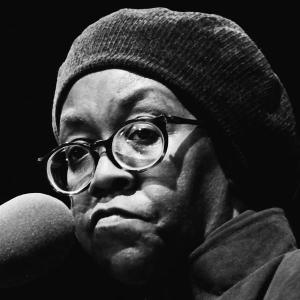 In this edition of HoCoPoLitSo’s The Writing life, revered American poet Gwendolyn Brooks sat down in 1986 to talk with Alan Jabbour, director of the Library of Congress’ American Folklore division, and E. Ethelbert Miller, poet and director of the African American Resource Center at Howard University.
Brooks was the Library of Congress’ 29th consultant in poetry, and tells the story in this program of winning the Pulitzer at age 32, and getting the phone call in the dark because the electric company had cut off their power because they couldn’t afford to pay the bill. She recites “We Real Cool,” a poem she says has lasted because of its “insouciance and staccato effect.” She talks about her introduction to black nationalism, feminism and James Baldwin. Brooks says, “I like for blacks to be proud of what they have come from. They need to learn they have much to be proud of.”
HoCoPoLitSo’s The Writing Life archives, featuring contemporary writers in conversation with other writers, are being digitized and put online as a resource for the world over. As with any such project, this effort can use your support. If you are willing and able, please make a donation to HoCoPoLitSo to ensure the continued success of this project and its contribution to the world’s literary heritage. Thank you.
HoCoPoLitSo to Welcome Colum McCann to the 35th Irish Evening – Tickets now on sale.
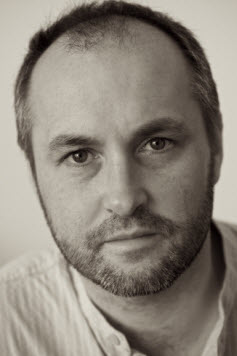
Colum McCann. Photo by Brendan Bourke.
The international award winning author Colum McCann is HoCoPoLitSo’s guest for its 35th Annual Irish Evening at 7:30 pm, March 1, 2013 at the Smith Theater, Horowitz Center for Visual and Performing Arts on the campus of Howard Community College.
General Admission Tickets are available at http://www.brownpapertickets.com/event/287811 or by sending a check payable and mailed to HoCoPoLitSo, 10901 Little Patuxent Parkway, DH 239, Columbia, MD 21044. Tickets purchased before Feb. 1, 2013 are $30 each, $35 if purchased after Feb. 2.
So Many Stories to Be Told: An Evening with Colum McCann will highlight this major voice in today’s literary landscape’s with a discussion of his National Book Award winning novel Let the Great World Spin and his upcoming novel, Transatlantic, due out in late 2013.
McCann’s reading will be followed by Narrowbacks, Eileen Korn, Jesse Winch, Terence Winch, Linda Hickman, and Brendan Mulvihill on fiddle in a concert of traditional Irish music with stepdancers from the Culkin School.
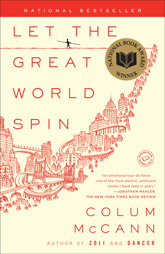 McCann, a two-time winner of the International IMPAC Dublin Literary Award, the most lucrative literary award in the world, has published 5 novels and numerous short stories and articles. In 2003 McCann was named Esquire Magazine’s “Best and Brightest” young novelist. He has also been awarded a Pushcart Prize, the Rooney Prize, the Irish Novel of the Year Award and the 2002 Ireland Fund of Monaco Princess Grace Memorial Literary Award. He was recently inducted into the Hennessy Hall of Fame.
McCann follows other great Irish authors who have come to Howard County including Frank McCourt, Eavan Boland, Hugo Hamilton, Colm Tóibín, Paul Durcan and Paula Meehan to name a few. For years, HoCoPoLitSo’s Irish Evening has recognized and celebrated the enormous impact of Irish-born writers on the world of contemporary literature.
The Dodge Poetry Festival Leaves One Asking, “More Bread, Please!”
The latest installment in our occasional series of blog posts from friends of HoCoPoLitSo. Today Ryna May, Associate Professor of English at Howard Community College, writes of her experience at the recent Dodge Poetry Festival.…
Poetry, like bread, is for everyone.
– Roque Dalton

Natasha Tretheway. Photo by Dodge Poetry Festival. Click on the image to view more photos from the 2012 Dodge Poetry Festival.
The Geraldine R. Dodge Poetry Festival once again transformed downtown Newark, New Jersey, into a “poetry village” for a few days in October. The bi-annual festival has been going strong since 1986, though longtime supporters have noticed a different energy since the festival left its traditional home in Waterloo Village.
But one thing has not changed: This remains the Super Bowl of Poetry. There is no other event like this festival, where the old meets the new, where high school students cheer wildly for words, and where the teeming energy of a giant hall of people morphs into a single, quiet heartbeat. Where Natasha Trethewey, the newly minted poet laureate, shares a stage with Amiri Baraka. Where Philip Levine and Dorianne Laux teach us about the lyrical nobility of work. Where aspiring poets, old and young, hang onto every word as if it is bread, as if it is life-giving manna.
 The festival is more than a poetry reading, more than an event. It is a pilgrimage to sit at the feet of poets like Taylor Mali, to hear him recite “Like Lily Like Wilson.” It is the chance to be completely surprised by a brand new poet like Emari DiGiorgio and come to your feet when she finishes “Lady Liberty.” It is the chance to be inspired by Jane Hirshfield, who tells us that poetry gives us a voice, gives us courage to face the challenges that life puts before us.
Okay, so poetry isn’t life itself, but it is a way to experience life, a way to see the world and describe it and make meaning out of it. You can only see this, can only feel this at the festival. It isn’t quite Brigadoon, but it has that quality of stepping out of one world and into another. And if you experience it, you will be changed. This event is for everyone, and everyone should experience the Geraldine R. Dodge Poetry Festival at least once. If you go once, I promise you will want more.
— Ryna May
Associate professor of English,
Howard Community College
 HoCoPoLitSo