Home » Guest post (Page 9)
Category Archives: Guest post


Next Up – Faheem Dyer on Poetry
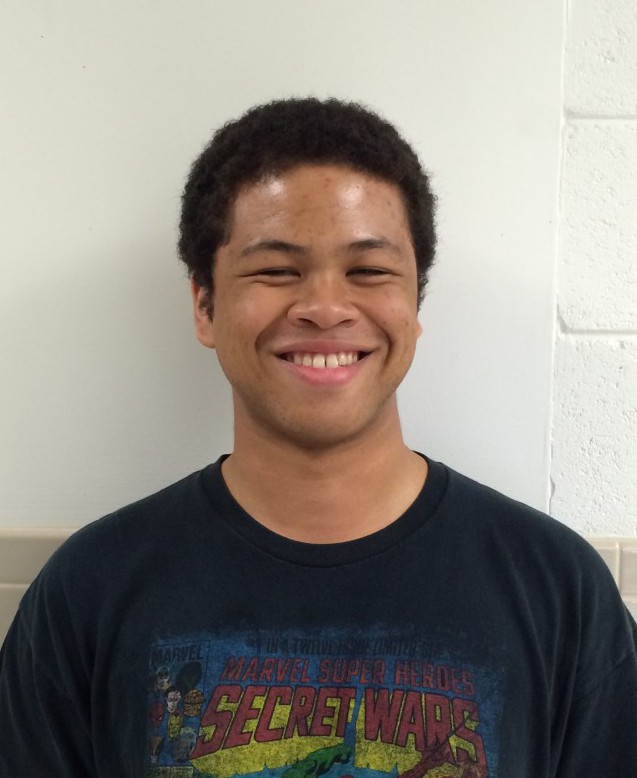 In this mini-series on young people in/of poetry, I have made my own observations about the importance of poetry in the lives of young people and I have interviewed HoCoPoLitSo’s Student on Board, Katy Day about poetry in her life. Next up is HoCoPoLitSo’s student intern, Faheem Dyer.
Faheem is a senior at Atholton High School. He has been pursuing his interest in poetry since middle school, and some of his favorites are Whitman, the Beats, and the Romantics. At Atholton, he is the president of the Poetry Club, and he serves his school’s student newspaper, Raider Review, as the Opinions Editor and the Online Editor. When he graduates this summer, he hopes to attend college in the fall to study creative writing or comparative literature. He says, “I believe that a deep engagement with the written word is essential to the intellectual growth and a healthy understanding of the world, both on a personal, and social level.”
Here’s what he had to say.
What do you get out of attending poetry and literary events, such as the Rita Dove and Joshua Coyne event last year?
I think the most profound thing I gained was the direct exposure to talent and experience of Ms. Dove’s and Mr. Coyne’s caliber. More than that, though, I think the chance to see these two people share their insights and ideas on their crafts with an attentive, engaged audience helped deepen my understanding of those art forms, both as a consumer and aspiring creator.
As a student and as a citizen of this world, what benefits do you see in reading and studying literature (especially poetry)?
I believe that being well-read in literature is the most important part of being a well-educated and informed individual. Whether it’s lofty philosophical theory, or raw poetic passion, all human knowledge and experience is cataloged with language; writing is one of the most important vessels of thought, and to make oneself a student of that is to put oneself at the heart of it. That is invaluable in growing as a person, and it is absolutely essential to a robust education.
What’s your favorite work of literature (a particular poem, poet, or novel maybe)?
I personally never get tired of Leaves of Grass by Walt Whitman, specifically “Song of Myself.” The wild, loving, and almost holy way Whitman addresses the nature of the world around him is beautiful and altogether profound and spiritual on a deeper one.
Do you have any thoughts on what literary organizations like HoCoPoLitSo can do to engage young people?
I may not be able to speak for all young people, but I know that if I were not already interested, simply being shown poetry in ways that demonstrate its continued relevance could easily engage me. Also, in introducing poetry to others, I would keep in mind what priorities and temperaments I’m trying to appeal to, because there is something for any young person of any mindset to gain from poetry, but the ways to make it appealing differ greatly from circle to circle.
You can read Faheen’s review of HoCoPoLitSo’s 2014 Lucille Clifton Poetry Series event when Rita Dove and Joshua Coyne read and performed together on stage at Howard Community College.
As a teacher, I am envious of teachers who get to teach students like Faheem. His commitment to poetry signifies more than his interest or even “skills” in language and literature – for me, it signifies the potential for a deep and wide understanding of the world that I believe literature students like Faheem can cultivate.
Poetry and other forms of literary arts ask us to look outward – at the world, at people, at history, at cultures, at empowering ideas as well as dangerous ideas. At the same time, they ask us to look inward, too – to think, to feel, to ask questions of ourselves, to imagine, and to nurture our interior lives.
Yes, poetry can do that. And Faheem knows it.
– Laura Yoo
Member, HoCoPoLitSo Board of Directors
Writers Come to see Writers.
I have a lot of HoCoPoLitSo memories. They start from way back when I was in high school and I had no idea the organization existed or what it did. All I remember was that I was on a field trip that left me wanting to be Derek Walcott once I grew up. Though a favorite HoCoPoLitSo memory, that is another story. Today I want to share a few moments of writers coming to see writers and what an honor it is to be in the midst of such occasion.
Many stories start with Irish Evening for HoCoPoLitSo. It is a landmark event. I think my awareness of other writers coming to HoCoPoLitSo events to see our headliner started one such evening. Maybe it was the Guinness, but more probably it was Colm Tóibín that brought Colum McCann down to our neck of the woods from his Manhattan apartment for the 21st annual Irish Evening. At that point in the now world famous career of Tóibín, it was a rare thing to him to this side of the Atlantic. McCann took advantage and a train to visit Columbia a year after he himself had read for Irish Evening.
I remember little of the reading that night. I seldom remember Irish Evenings and that is not for the drinking that often followed. They are labor intensive occasions to produce and I tend to be tending to that aspect. Tóibín’s voice is still in my head and bits of The Heather Blazing from that reading; I did catch some of it. What I do remember is that there were a handful of folks, me lucky enough to be among them, that headed off into the night with a number of bottles to listen to Colm and Colum talk about writing once the event was done and packed away. What an honor.
Quite recently, Colum McCann, now many books into his fame, came to another Irish Evening to read from Transatlantic, just about to be published. It was his first reading of the work to an audience and a fascinating occasion as he caught a sentence he hadn’t right and promised us he would go back to the galleys to correct it. An honest moment in the creative process.
I spotted a number of Howard County writers in attendance that evening. They were joined by none other than Alice McDermott and, I am told, George Pelicanos. The two had come from Baltimore and Washington, respectively, to take in one of the masters of prose in suburban Columbia. If we are dropping names here, I’ll add that the Governor came from Annapolis and even joined in to play with the band. After the evening at the green room party, McCann himself joined in the singing of songs.
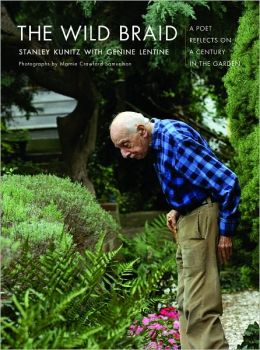
Stanley Kunitz in his garden on the cover of his book The Wild Braid.
Perhaps my favorite coming together of writers to see a particularly treasured writer was for the poet Stanley Kunitz in 1993. We all knew Mr. Kunitz was old old, 88, and that this would be the last opportunity we would have to see him. In a space that no longer exists as a venue for readings – the lower Nursing Lounge on the campus of Howard Community College – Kunitz read to a standing room only crowd that adored each and every syllable. The audience well knew his work and you could tell that he could tell: he put on a commanding performance.
I remember crowded in that room with us were Carolyn Forché and Gregory Orr who had come up from the University of Virginia for the occasion. Afterwards at a reception, all whispered to each other in awe and confirmed how lucky we were to have shared this intimate occasion with the great Stanley Kunitz. I went on to hear him read a number of times since that occasion: our collective luck grew as he lived to be 100.
Why do writers come to see other writers? For the occasion of Kunitz, it was likely reverence and the notion of ‘this might be the last time’ and one not to miss. On other occasions, it is probably more outright a taking in of craft, an opportunity to learn and admire. I know I go see other writers to learn and affirm what common language can do in the hands of masters. Thank you for that, HoCoPoLitSo.
Tim Singleton
Co-chair, HoCoPoLitSo Board
Have a favorite HoCoPoLitSo memory? HoCoPoLitSo is currently celebrating its 4oth season and would love to hear from you. Visit the Share Your Memory page and share a favorite story or two with us. As we collect favorite memories, we’ll share them in a future blog posts.
How it all began for Andrea
One night in 2008 is when my relationship with HoCoPoLitSo began as a last minute favor for a co-worker. I said yes to serving as a volunteer at an event, and I am forever grateful I said yes.
That evening, I made the grave mistake of assuming what the occasion was going to entail and what sorts of people I would meet there. In my mind’s eye I had imagined Ego the food critic from the Pixar movie Ratatouille. Perhaps noses high in the air, shamelessly quoting pieces of literature as they try to “one up” each other on their knowledge base.
Boy, was I wrong.
When I first arrived at the event I met the many board members who were both happy and grateful that I was there to volunteer, and as the event commenced I had the chance to meet and talk to the audience members who were attending the annual Irish Evening. Among the audience members, the age range was as wide as the sea and conversations were varied from the intellectual to the, “Hey there have you heard of this new author?” I was in heaven! And I continued to volunteer for HoCoPoLitSo events for many years.
I’ve always been a “closet” fan of literature and the arts although I never quite found the venue to both learn and share my appreciation for the art. And now I had finally found my tribe, and I could come out of the literary closet and share my love of arts and literature with others. And no Pixar character in sight to date!
Recently when I was asked to join the Board of Directors, I enthusiastically accepted and felt as though the highest honor had been bestowed upon me. In the few meetings I’ve since attended I realize just how much work goes into every event, down to the very last detail and perhaps the most surprising revelation is how many events HoCoPoLitSo puts on within the calendar year. There’s constant planning, brain-storming, idea swapping, and meticulous work to bring as many events to the public as possible.
I was once told, “Anything worth having is worth working hard for”, and this is definitely an organization worth working hard for.
-Andrea L. Martinez

Member, HoCoPoLitSo Board of Directors Member and long-time volunteer

The Humanities Ain’t Like Pre-Chew Charlie’s
A few weeks ago, I took a trip to the University of Maryland, College Park bookstore to purchase books for my classes this semester. I’ve done this enough times before that the process has become more of a script and less of a twisted Easter egg hunt.
 While gathering my books, I noticed a difference in my book for psychology and my books for English literature. My psychology book is a large, heavy textbook. My books for English literature classes are book-books ranging from Oscar Wilde’s A Picture of Dorian Gray to Sigmund Freud’s Dora: An Analysis of a Case of Hysteria.
I never realized this shift in my schoolbooks from textbooks to mostly book-books, probably because it happened so gradually. I don’t miss textbooks. There is a part in Deborah Eisenberg’s “The Girl Who Left Her Sock On The Floor”, in which the main character, Francie, is looking at a textbook and wonders, “who were ‘Editors Clark & Melton,’ for that matter, to be in charge of what was going on? To decide which, out of all of the things that went on, were things that had happened.” Textbooks are subjective summaries on various topics, parading themselves as objective facts. Don’t get me wrong; I am a huge advocate of the sciences. There is a place in this world for science and mathematics, and I am grateful for all of the young minds pursuing those fields of study. Science can offer the closest thing we will probably ever have to objective facts.
The humanities, however, do not summarize. The humanities give students raw materials and equip them with skills to critically analyze and interpret things for themselves. In my literature class, I’m not reading a chapter summary of Sigmund Freud in a textbook, like I am in psychology. I’m reading a book by Sigmund Freud. I get to decide what Freud was like and whether his science was “good” or “bad,” and how I think his writing influenced the world around him. How else do we know and understand the world other than by a collection of subjective experiences? Why should I put all of my trust in anyone else’s interpretation of the world when I have the ability to decide for myself?
If the humanities have taught me anything, it’s that what we know about the world is always changing. We get it wrong a lot. Sigmund Freud got it wrong, but there was a time when his science was understood as fact. The humanities have given me the ability to step outside of social norms and question History and Knowledge. The humanities have taught me to never say, “That’s just how we do it” but instead say, “How else can we do it?”
On the first day of class, one of my professors reminded us of a Saturday Night Live skit called “Pre-Chew Charlie’s” in which servers at a restaurant pre-chew their customers’ food. He told us that while we read any text, he wants us to “chew for ourselves.” That is why the humanities are so important. They are teaching our future generations to be chewers.
Chew on that.
Katy Day
Student on the HoCoPoLitSo Board
From Banned Books to All Time Faves, What Teachers are Teaching This Year:
It’s a new school year, and we asked teachers around Howard County and professors at Howard Community College what they are most looking forward to teaching and why. Here is what they said:
Catherine M. Mundy (Lime Kiln Middle) says,  I am looking forward to teaching House of the Scorpion with my 8th graders […] because it is a perfect example of “science fiction” becoming “fact”. I love reading literature that is NOW – that students can relate to. […] Another novel I am looking forward to teaching is The Giver. While most teachers cover it in our science fiction unit, I am choosing to teach it during our Freedom Unit as an extension of the concept of freedom. The issues of social control and mind control are so pertinent in our world today – especially as you look at countries that face dictatorial control. It is a great novel to discuss the importance of being educated and having an education and not always accepting what is told or taught to you at face value. This compelling story shows that knowledge can be difficult, but “ignorance is bliss” is truly not the way to go. Living and learning through experience, regardless of how difficult, is what life is. Those experiences that individuals in a free society are allowed to have are what make us human. I guess I would be remiss in not mentioning studying Shakespeare’s Romeo and Juliet. I love showing my students that the human condition and human issues, emotions, and struggles haven’t changed much over hundreds of years.
Laarni C. Lucero (Long Reach High) says, I can’t wait to teach Fahrenheit 451. I love to see my students turn a critical eye on the media environment they’re immersed in.
Rita Guida (Howard Community College) says, I have two books that I really look forward to teaching. I teach A Thousand Splendid Suns by Khaled Hosseini in Ethics in Literature, and I have been delighted with students’ reactions. Because it takes place in Afghanistan, it works to humanize people that we frequently see only as enemies. It provides an opportunity to introduce the sad history of the country and their own oppression. Hosseini’s use of female bonding reminds readers of the sacredness of family in every culture, and he has included heroic male characters as well as female characters. The other book that I love is the Poisonwood Bible by Barbara Kingsolver. I use this in By and About Women, and like A Thousand Splendid Suns, it educates students on life in a country often in the news: the Congo. It also provides an opportunity to explore the oppression of the region, and the five, distinct female narrators show varying reactions to the events that occur as the Congo seeks to become independent.
Stacy Korbelak (Howard Community College) says, I’m looking forward to teaching the play Ruined by Lynn Nottage which highlights human rights issues in the Democratic Republic of Congo. I’m excited that it will be coming to the stage at the Everyman Theatre in the spring, too.
Rick Leith (Howard Community College) says, Fahrenheit 451 because it’s still so timely; Bradbury said this book is about television taking over our culture, not censorship, and this is something the students can relate to and discuss especially considering that television is only one of many distractions driving students away from reading in today’s world. Censorship remains a valid theme, however, so I’m also using the novel as an introduction to our Banned Books Week observance.
Bradbury’s best-known work, Fahrenheit 451, published in 1953, became an instant classic in the era of McCarthyism for its exploration of themes of censorship and conformity. In 2007, Bradbury himself disputed that censorship was the main theme of Fahrenheit 451, instead explaining the book as a story about how television drives away interest in reading: “Television gives you the dates of Napoleon, but not who he was.” (www.biography.com)
Ryna May (Howard Community College) says, I am most looking forward to teaching Hamlet this fall. I love this play because I hope that students will come to see Hamlet as someone similar to themselves: a college student, a son, a friend, etc. He has powerful influences all around him demanding that he do certain things and act certain ways, but in the end, he realizes that he, and only he, is responsible for the choices in his life. And for better or worse, he embraces that. I also love Hamlet because I feel like I am still a student of this play, and even though I’ve read it many times, my students always help me see something new.
Elisa Roberson (Howard Community College) says, I enjoy teaching Antigone by Sophocles to the Ethics in Lit class because of the 180 degree change I get from students’ initial reaction and their reaction after reading the play. At the beginning of the semester I hold up the book during our discussion of course materials and I always get a response of rolled eyes or looks of disinterest. When I ask students if anyone has read anything written by Sophocles the response is this…cricket, cricket, cricket. When I ask if anyone knows who he was I get half-hearted replies involving the words “Greek, dead, and philosophy.” By the end of the play, the students are excited about the characters, defend the choices of different characters, and identify with character motivations. Once they’ve learned about the backstory of Antigone and the rest of the cast, the students cannot get enough. I’ve had more than one student say, “This play is better than anything on reality TV. It’s got love, death, betrayal…”
What are you teaching?
We’d love to hear in the comments below….
A Letter from Sama Bellomo
Events come and go. Audiences come and go. Sometimes we wonder how we are doing, if are reaching people, providing enough to help grow the world’s literary heritage person by person. This season, we received the following letter. How humbled and grateful we are.
Dear HoCoPoLitSo,
A thousand gratitudes have flown through my mind and I am sure that the count will grow further as the events of the day really sink in.
I get out so little that I have to select very carefully my activities beyond work and medical appointments. That you have all taken the steps to include me, to be kind toward me, and to be well yourselves around me, speaks much to the ways in which simply being our best possible selves can help others be well also.
 It’s not that I felt treated more specially than anyone else, but that I felt treated as specially as everyone else. It is so easy to feel different, exotic, unusual, especially with all the luggage I carry just to get through a day that it can be off-putting for me to feel like I must explain myself just to be among others. On top of that, another attendee complimented my “entourage,” that is, my friend, Jeffrey, and the interpreters, who accompanied me through the event so I could get through.
You can tell that many of my go-to sentences about my health are well rehearsed because the social stickiness of navigating life with multiple disabilities [Ehlers-Danlos Syndrome, Dysautonomia, and hearing loss] gets to be old hat somewhere around the bazllionth iteration. All of this is pretty old hat for you because you are sensitive individuals with a clear idea of what it means to be aware of how we treat people, but it’s always nice to hear that our efforts and ways of being matter. It means more when we are in those life spaces where we question ourselves, when self-assuredness is particularly thin. Save this note for that moment. If it’s not enough, call me, I’ll make more. (more…)
Temperament Through Time: a not to be missed (free) event THIS FRIDAY!
The latest installment in our occasional series of blog posts from friends of HoCoPoLitSo. Today, the acting chair of Howard Community College’s Music Department, Hsien-Ann Meng, encourages all to see Stuart Isacoff this Friday.
Dear Friends,
I would like to invite you to a special event taking place this Friday, February 21, at 2 pm in the Smith Theatre on the campus of Howard Community College.

Click for full size image.
Stuart Isacoff, a wonderful pianist, celebrated writer of music, and the author of Temperament: How Music Became a Battleground for the Great Minds of Western Civilization, will be here to tell the intricate story of how modern musical tuning came about. He will also demonstrate through a reworked Beethoven piano sonata how central the modern tuning system (equal-temperament) is for us to enjoy the master piano works of the 18th and 19th centuries.
However, the road to equal-temperament was not a simple one. Isacoff has woven together a beautiful narrative that traces the development of the tuning system in the context of teachings and beliefs of the church, parallel developments in art and science, and the political plays between different power groups throughout history. Whether you are a music lover or a lover of arts and science, there will be lots to take away from this event.
This event is free and open to the public. After the lecture demonstration, Anne Midgette, the classical music critic for The Washington Post will join Stuart Isacoff on stage to conduct a Q&A session. A book signing and reception will take place in the Rouse Art Gallery and Horowitz Center Lobby following the Q&A. This event is co-presented by Candlelight Concert Society, Howard Community College Concert Series, and Howard County Poetry & Literature Society.
Hsien-Ann Meng
Acting Chair, HCC Music Department
Amiri Baraka – Friend of the Poet and HoCoPoLitSo Board Member David Barrett Reflects

Amiri Baraka, Miami Book Fair International, 2007 (via Wikipedia).
I had moved to Pittsfield, MA to work as a computer programmer programming the missile fire control system aboard the US nuclear submarine fleets Polaris and Poseidon. So, the summer of ’67 I watched the Newark uprisings on television and witnessed neighborhoods on fire, the very same streets I had frequented while I lived there. I felt guilty for having left Newark, thinking that if I had stayed I might have been in a position to make a difference. I was only a teacher with a history of activism with the Essex County CORE and the Rutgers branch of the NAACP. Still, I might have been able to do something.
In November of ’67 I did return to Newark and, thus, began my long association with Amiri Baraka. That association included my membership in the Congress of African Peoples, community organizing to help elect Newark’s first black mayor, Ken Gibson, the presidency of the United Community Corporation, New Jersey’s largest anti-poverty agency, membership in the New Jersey delegation to The National Black Political Convention in Gary in 1972 and my candidacy twice for public office.
When moved to Maryland in 1974, I carried with me a love of poetry that Baraka had helped me cultivate. Soon after, I began attending poetry readings sponsored by HoCoPoLitSo. That led to my joining the board and eventually doing ten-year stint as chairman. In 1990, we invited Baraka to read one weekend. He was joined by Jonathan Yardley and Patricia Hempl to talk about memoir on a Friday and to read his poetry on Saturday. That Monday, he read for 500 high school students at Wilde Lake High School in Columbia.
In 1998, HoCoPoLitSo sponsored Baraka to read at the Baltimore Book Festival. But he had also been booked to read at the Dodge Poetry Festival in New Jersey that same weekend. We found out the day of the book festival that it would be impossible for him to catch a flight or drive to get to Baltimore in time for his reading.
Seeing my anxiety over the situation, my wife, Sandy, suggested that she might be able to find a plane to fly Baraka from Newark to a private airport in Maryland. Always resourceful, she did just that. Using the yellow pages, under charter flights, she found a man with a plane, explained the situation, and negotiated a price. I don’t recall how we got all this done without cell phones!
I waited for over an hour at a small private airport somewhere in northwest Maryland. Finally, a small four-seater, single engine airplane appeared in the sky and began its descent. A door opened and out popped Baraka. He got in the car, and we sped down Route 83, exiting onto the 695 Beltway and made our way to Charles Street. At this point, Baraka announced he had to get something to eat. “I am diabetic,” he said. I double parked just a block or two shy of the festival grounds in Mount Vernon while he jumped out and got some tea and a sandwich. I got as close as possible to the tent where he was to read and he ran down the path leading to the overflowing tent just as he was being introduced.
Despite the arduous schedule of Dodge where he said he had to do everything but “tote that barge and lift that bale with short or no breaks in between” and the rather adventurous trip from Newark to Baltimore, he found the strength and managed to give a stirring reading.
I never did tell him how much his poetry and the other artists he featured at Spirit House (his residence that had a theater on the first level) influenced my love for poetry. How he showed me the magic created when jazz and poetry meet.
So, I say so now.
Thank you, Amiri, for helping me to grow in poetry, in jazz, and in life.
— David Barrett
Tripping over Lucille Clifton at Howard Community College
The latest installment in our occasional series of blog posts from friends of HoCoPoLitSo. Today, we spend a few moments with Amanda Fiore, a professor/fiction writer/occasional poet, who spent a day, recently, in our midst. Here is her telling of that story:
I was sitting at my desk, scrolling through junk mail and emptying my inbox at Howard Community College, when, to my immense pleasure and surprise, I came across a mouth-dropping subject line: Michael Glaser was coming to HCC’s campus to honor the late poet, Lucille Clifton, and conduct a free poetry workshop, Telling Our Stories — Michael S.
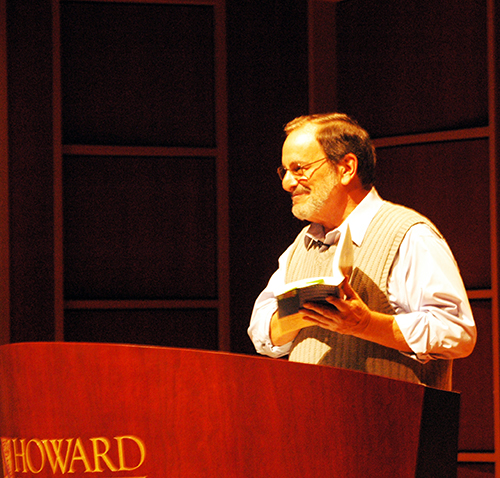
Michael Glaser.
Glaser Celebrates Lucille Clifton and Poetry Teaching! Unable to believe my eyes, I scanned the email and saw that it was being put on by an organization I had never even heard of before, HoCoPoLitSo, and was amazed when after looking into it I found out it was an arts council on which Lucille Clifton had served for many years, and that it was right here, in my own back yard!
Having been a former student of both Lucille and Michael at St. Mary’s College of Maryland, I knew immediately that the event HoCoPoLitSo was planning would be close to my heart. Michael Glaser was the first person to truly encourage me as a writer, and Lucille Clifton was a woman whose spirit and no-nonsense critiques had made me laugh, cry, and embrace my poetry with an honesty that had stayed with me the rest of my life. I immediately wrote to Michael, who returned my astonishment and excitement at being reunited after all these years, and started going through all my old journals until found the one I had kept twelve years ago in workshop with Lucille. I even found the very poem I once read in class, to which she had looked me in the eye and told me, with words I’ll never forget, “you’re hiding behind your words.” It was the hardest and most important thing I had ever heard about my poetry, and I ran out of that room hating her, sitting dramatically in the dark and crying over how mean she was until about three hours later, when I realized she had been right all along. I rewrote the poem. The result was, perhaps, the first honest poem I’d ever had the courage to write, and I never questioned her again.
Though I had thought about contacting her often over the years, by the time she passed I had still never had the chance to tell her how much she meant to me, and so the thought of sitting around a workshop table with Michael again and being given a forum through which to honor Lucille was just too perfect to seem real! But low and behold, a few weeks later there we were, sitting in a circle of tables in Duncan Hall on a cool Fall afternoon. We started off by remembering the lessons Lucille’s poems teach us all and thinking about how we could incorporate those into our own work.
Micheal was just as I remembered him — so much heart and creative energy we couldn’t help but be inspired. We read and talked and each composed a poem of our own, every one written with words that either calmed or stung the air.

Amanda Fiore reads her workshop poem.
Later that evening, some of us went to the reading to celebrate Lucille and were graced by a beautiful evening of poems, stories, and heartfelt emotion. By the end I not only had the opportunity to read what I had composed that day in the light of Lucille’s memory, but to meet her daughter, buy a book, and discover a group of like-minded people through HoCoPoLitSo whose energy and love for the arts mirrored my own. Afterwards, I was stunned at how satisfying and invigorating it was, with just one question repeating in my mind: how did I not know about this organization before, and why wasn’t I more involved?
One thing I know is that I will come to each of these annual Lucille events in the future, and that I will be attending many other HoCoPoLitSo events as well . . . as many as they can put on! But most of all, I am so thankful to Lucille who, even after she has passed, is still managing to connect me to poems. Thank you Lucille, I owe you so much.

From Abu Dhabi to Howard County and Back, Author Siobhan Fallon Lives Through the Jet Lag to Tell About It.
Jet lag, medically referred to as desynchronosis, is a physiological condition which results from alterations to the boy’s circadian rhythms resulting from rapid long-distance transmeridian (east-west or west-east) travel on an aircraft.

The Library’s Megan Maguigan, Siobhan Fallon and Lisa Bankman, also from the Library.
I was asking for it. Heading to Maryland from Abu Dhabi, with two little daughters in tow, was bound to be trouble. But when the generous folks of Howard County chose You Know When the Men Are Gone for their Book Connection Project read, there was no way I was just going to send an ethereal Skype-self to their computer screens on October 15 and 16th. I wanted my flesh and blood and exhausted self right there in person.
We arrived in NY after nearly 24 hours of transit (made interesting by my nine-month-old trying to pull the hair out of the head of the nice lady in front of us all the way to Heathrow). On October 14, I left my girls with my mother and drove a rental car to a hotel in Howard County. I got on the treadmill for an hour of uphill climbing while looking through my notes and skimming my stories, brushing up for the talk the following morning at Howard Community College (HCC).

Authors Siobhan Fallon and Kristin Henderson.
Ten p.m. (six a.m. Abu Dhabi time) I was in my room and wired (for future reference, getting on a treadmill at 9 pm is not a good way to tire oneself out). I decided to post the upcoming readings on Facebook and ended up getting into a lively discussion about Kenny Rogers with Laura Yoo, HCC faculty member and member of the board of directors at HoCoPoLitSo. I mentioned Rogers’ lyrics make for great stories, she posted her favorite childhood songs with videos, and she even found one where Kenny still had his wonderful, original face.
Her sense of humor confirmed what I had already suspected — these events were going to be awesome.
And each one was, filled with enthusiastic, kindly, curious readers in sparkling learning spaces at both HCC and the Miller Branch of the Howard County Library System (no wonder it was voted Library of the Year 2013).
Here are some of my favorite moments:
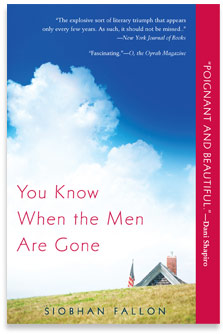 – After reading at HCC, a student asked me to sign his book. His teacher required proof of attendance and he had me inscribe a paperback to her. I couldn’t help adding, Please give this man an A for creativity!!
– When I walked into Margaret Garroway’s English class (she joined forces with other English classes and the room was full), Margaret was in Alex Trebek mode, moderating a trivia game, classes pitted against each other with representatives sitting at a long table in front. The trivia was taken from my collection, and there was even an answer I didn’t know (but the students did, good job, guys!).
– After the English class, one student brought me a red sharpie and asked me to sign the cover of his book rather than inside. Everyone behind him in line liked the way it looked and asked to borrow his pen (I liked the graffiti feel of it myself—I’m going to start carrying a red sharpie and ‘tag’ all my books from now on) until the poor kid had to run off to his next class.
– During the taping of HoCoPoLitSo’s TV show The Writing Life, I finally got to meet fellow mil spouse author and my Writing Life host, Kristin Henderson. When I lived in Virginia, she and I played email tag (she is part of a group of mil spouse writers who get together once a month; alas I had my hands full of new baby and the move to Abu Dhabi and couldn’t manage to meet them). She is just as fabulous as I imagined her to be.
Now I am back in Abu Dhabi. Yes, I spent about a week downing too much coffee and railing at my kiddos for not sleeping enough (the nine-month-old was waking up bright-eyed at 2 a.m. every night, ready to pull my hair out).
Jet lag be damned, I wouldn’t trade a minute of the great time I had at Howard County.
Oh, and can somebody please tell Trivia Pursuit to add questions about my stories to their next edition?
Siobhan Fallon
Author of You Know When The Men Are Gone
Special thanks to Candace DePass, Lisa Bankman, Alesia McManus, and Susan Thornton Hobby for all their hard work coordinating this trip across time zones! I hope to be back in your beautiful Howard County again someday.
 HoCoPoLitSo