
Home » Uncategorized (Page 10)
Category Archives: Uncategorized


HoCoPoLitSo Celebrates its 44th Annual Irish Evening with Former & Future Guests
Here is the program for this evening’s Irish Evening.
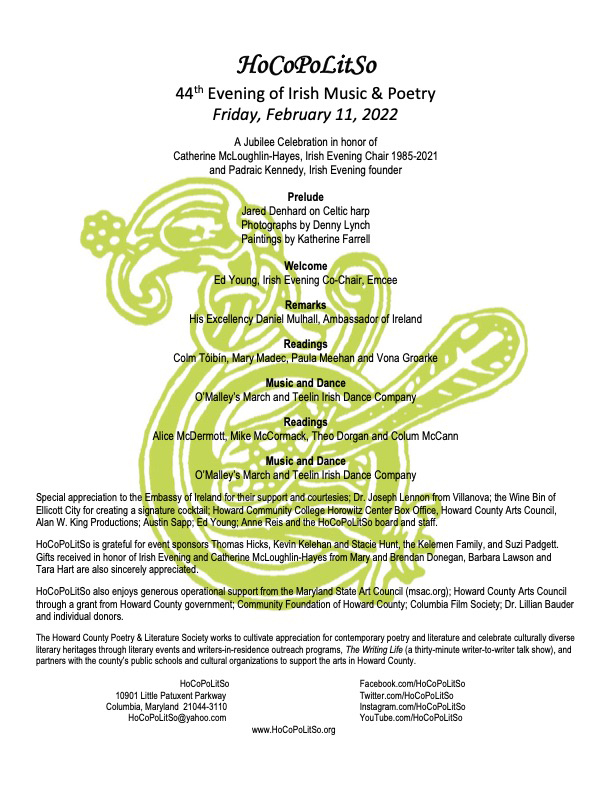


HoCoPoLitSo’s 44th annual Irish Evening of Music and Poetry on Friday, February 11, 2022 at 7:30 p.m. features an amazing roster of Irish writers sharing their memories of past visits. Colm Tóibín, Alice McDermott, Colum McCann, Mike McCormack, Vona Groarke, Theo Dorgan and Paula Meehan will virtually grace our stage, along with music by O’Malley’s March and step dancers from the Teelin Irish Dance Company. General admission is $20 and available at the Howard Community Box Office, https://ci.ovationtix.com/32275/production/1095249 or by calling 443.518.1500.
The evening program, co-chaired by Anne Reis and Ed Young and hosted on Zoom this year, begins with a pre-show at 7:20 p.m. and will pay tribute to Irish evenings of the past and introduce poet Mary Madec. The evening includes an introduction by Daniel Mulhall, Ireland’s Ambassador to the U.S, music by O’Malley’s March fronted by former MD. Governor Martin O’Malley, and award-winning dancers from the Teelin Irish Dance Company.
Six writers to have previously visited HoCoPoLitSo will share tributes to departing Irish chairperson, Catherine McLoughlin Hayes, and the founder of Irish eve, Padraic Kennedy, and read from their award-winning works. Vona Groarke, who visited in 2019, is the author of ten books of poetry and winner of numerous awards. Colum McCann, who visited both 1999 and 2013, received both the National Book Award and the Dublin Literary Award. His most recent book, Apeirogon, was longlisted for the Booker Prize. Poet and playwright Paula Meehan also visited twice, in 2000 and 2014. Theo Dorgan, who visited in 2014, is a poet, writer, lecturer, translator, and documentary screenwriter. Alice McDermott, who visited in 2020, was nominated three times for the Pulitzer Prize and was a recipient of the National Book Award. Colm Tóibín visited in 1999 and again in 2011. A winner of the Dublin Literary Prize, Tóibín received the 2021 David Cohen Prize for Literature, a lifetime achievement award. Mike McCormack visited us in 2018 and his newest novel, Solar Bones, won the Dublin Literary Award. Newcomer Mary Madec’s third poetry collection is The Egret Lands with News From Other Parts (2019).

Click here to watch a brief video on how to purchase Irish Evening tickets online.

Climate change is scary, and cli-fi short stories are here to help
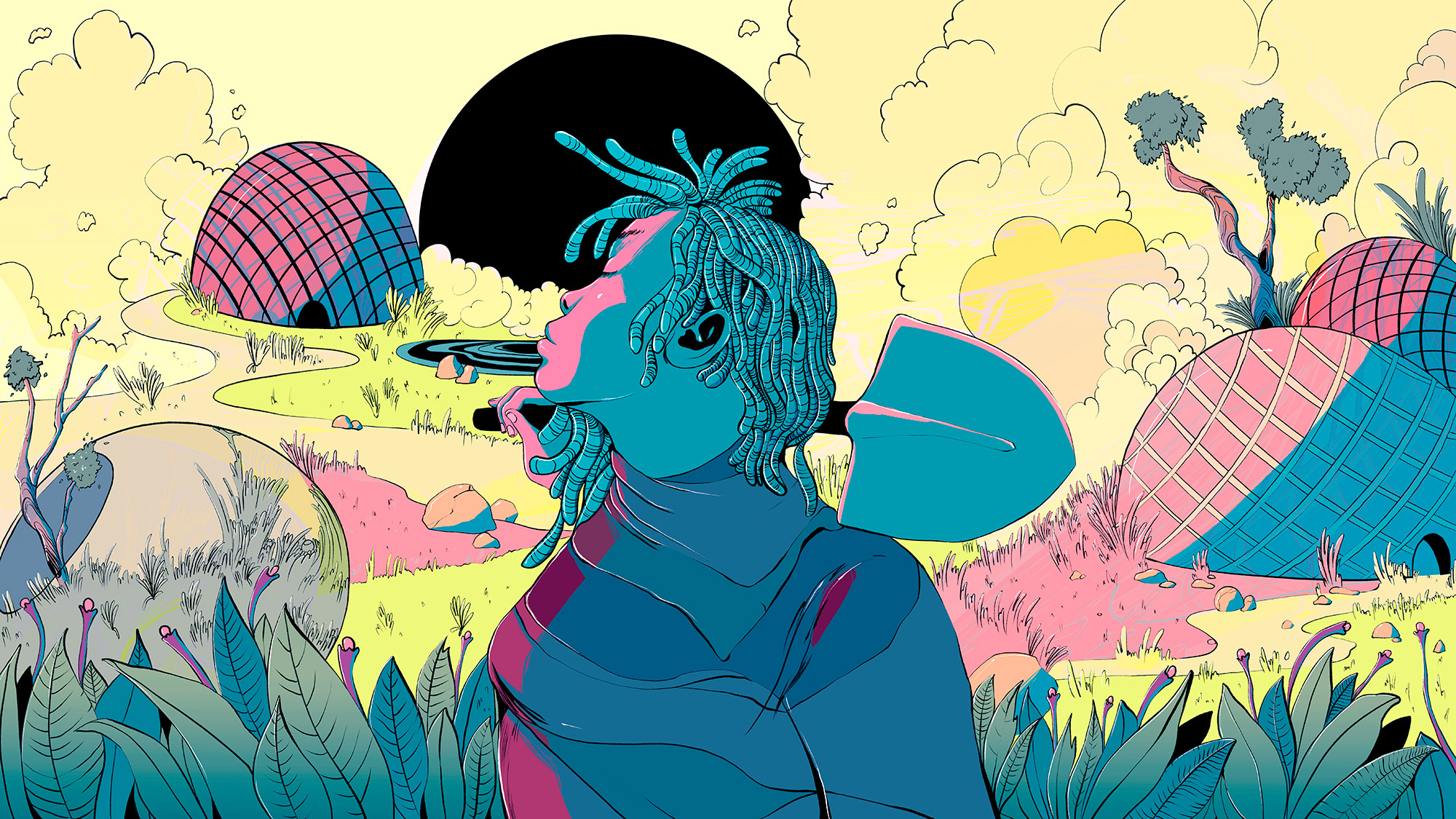
“Right here, right now is where we draw the line. The world is waking up. And change is coming whether you like it or not.” — Swedish climate activist Greta Thunberg, age 18
Change is coming, both in the climate, and with luck, in human behavior. Reading about climate change is frightening, and sometimes shuts people down. But as many climate activists have explained, there is hope.
Environmental and animal activist Jane Goodall said it well: “I do have reasons for hope: our clever brains, the resilience of nature, the indomitable human spirit, and above all, the commitment of young people when they’re empowered to take action.”
But reading alarmist nonfiction doesn’t always reach the heart. Story, however, seems to sneak through our defenses and climb straight into our souls. Climate fiction, a genre of literature sometimes shortened to “cli-fi,” pioneered with J. G. Ballard’s novels of climate change (especially the 1962 classic The Drowned World) and Frank Herbert’s 1965 novel Dune.
Since March 2019, HoCoPoLitSo and climate educator Julie Dunlap have led a climate fiction book club through the Howard County Library. Attenders are interested in literature that explores the facts and mysteries of Earth’s changing climate, and have read and discussed eight incredible novels over two years.
We’re mixing things up in January, and have chosen to read the award winners of a climate fiction short story contest sponsored by Grist Magazine’s Fix Solutions Lab. Organizers of the contest, Imagine 2200: Climate Fiction for Future Ancestors, urged writers to envision the next 180 years of equitable climate progress.
Sponsored by the National Resources Defense Council, the contest is “an uprising of imagination,” as Fix describes it. The winning stories, a collection of a dozen short pieces of fiction by authors including Black, Indigenous, disabled, and queer authors, conjure hope, anger, frustration, joy, and contemplation about the future of our planet in the impending climate crisis.
“Whether built on abundance or adaptation, reform or a new understanding of survival, these stories provide flickers of hope, even joy, and serve as a springboard for exploring how fiction can help create a better reality,” writes Tory Stephens, who works at Fix and spearheaded the contest.
Join us in reading a dozen of these stories and discussing them on Jan. 6, 7 to 8 p.m., at the Miller Branch Library. Register here. The stories, and a terrific glossary of cli-fi terms, including afrofuturism (looking at you Octavia Butler), solar punk and ecotopia, are available here.
blog post by Susan Thornton Hobby, HoCoPoLitSo recording secretary and a leader of the Inconvenient Book Club
wilde readings feature authors Nishi Chawla and Kathleen Hellen
Nishi Chawla and Kathleen Hellen are the feature writers at the October Wilde Readings, a monthly community open mic supported by HoCoPoLitSo. Join Nishi and Kathleen as well as other open mic readers for a free, virtual reading on October 12, 2021 from 7 pm to 8:30 pm. See details about the event below.

We asked Nishi and Kathleen our favorite six questions about their reading and writing, and here’s what they had to share.
Who is the person in your life (past or present) that shows up most often in your writing?
Nishi: There is no specific person whose image gets repeated in my writings. I would suggest that the theme of what I write is what ‘shows up most often in my writing.’ The theme assumes a persona, a kind of living personality. This is often a ‘recollection’ kind of figure as it holds together moments and memories, important aspects of personality along with other parts, like traits of temperament, goals and objectives. This thematic persona assumes the shape of a recent history. It gets wrapped in the web of some urgent questions of the present and future that I try to focus on.
Kathleen: My mother, and more recently my son
Where is your favorite place to write?
Nishi: The solarium is my favorite place to write as the morning rays plunge the room with its unique and faultless solar energy. “Drought became us / Turned us into grains of sand / The blithe breeze that poets sung of / Weren’t that kind to us / When they were done caressing their faces / And having their way with the locks of women’s hair, / They turned a new leaf for a new story” – A A Surin
Kathleen: Anywhere–in the car I write on backs of envelopes, receipts, any available scrap of paper, on walks, in parking lots, on the La-Z-Boy beside the statue of Lord Shiva, on the couch with a legal pad and staring out the window, in bed on unlined tablets beside the pile of books, at the computer in the morning, at the computer at night, in front of the tv on yellow Post-It notes, on beaches with my pocket-sized spiral notebook, in hotel rooms on guest notepads, on planes and waiting at the airport …
Do you have any consistent pre-writing rituals?
Nishi: My writing process is like an implosion within me. I wrap my mind around an idea that bursts into me and sometimes, surprises me to my own inner self. I do not often see clearly where I should go with it. When the way forward seems nebulous, ideas creep around me from behind me, almost my stealth, and crowd my other thoughts out. Sometimes, the outburst seems too condensed and waits to be fleshed out. The flow of words gets blocked, and the dialogues come out broken and need some agility. The sounds and rhythms, the breaks in logic, any unnecessary verbiage, the indiscriminate voices of the individual characters, the hunger in my belly for the right word, the right way to convey my message or project my vision, are all important rituals of my pre-writing process.
Nishi: As soon as I wake up, I put on coffee, stretch, write my dream thoughts in the black-and-white marble composition notebook, then I get to work.
Who gets the first read?
Nishi: My own lonely self. “I saw an otter lying dead at the edge of the creek, / body flaccid, scaled like that of a bird’s. / That was also the time we swung our palms loose, / heading down February over a speed bump, and our mothers- / calling us out, yet the distance too large and the gravity too strong / for us to hear their voices. / It was the way we slid over frozen ice – the carelessness, / the tangling of bones, that reminds me of how / this time and that time was all but a series of endings.” – S Verma
Kathleen: Usually, it’s just me.
What is a book you’ve read more than twice (and would read again)?
Nishi: I have read many books multiple times. I have found Gandhi’s My Experiments with Truth quite mesmerizing even as I try to understand the flawed human being behind the mask of a great and flawless human. “everything comes around from water / to dust, betrayal to trust / you have to recognize the small alphabet a and distinguish it / from the capital A observing the pressure on the fingers that write / trace you must contours on the bark you lean on to / and it will all come to you / Do not look for us when we are not around for we are the moon quivering / upon the night’s lake and the puppet shadows appearing disappearing / beyond us / we are the trees that long for the roots as much yearn the high sky.” – Shelley Bhoil.
Kathleen: Thich Nhat Hanh’s No Death, No Fear
What is the most memorable reading you have attended?
Nishi: A striking and indelible reading that I attended was at Politics and Prose. Amitava Ghosh read from his novel, A Sea of Poppies. Ghosh’s ibis trilogy blew my mind at the level of in depth research he has done. And what a contrast to “Sea Poppies” by H.D.: “Amber husk / fluted with gold, / fruit on the sand / marked with a rich grain, / treasure / spilled near the shrub-pines / to bleach on the boulders: / your stalk has caught root / among wet pebbles / and drift flung by the sea / and grated shells / and split conch-shells. / Beautiful, wide-spread, / fire upon leaf, / what meadow yields / so fragrant a leaf / as your bright leaf?”
Kathleen: Most recently, Tin House’s online reading and interview with Arthur Sze

The First Annual Ellen Conroy Kennedy Poetry Prize.
Deadline extended, prizes, publication.

The new annual Ellen Conroy Kennedy Poetry Prize honors our dear co-founder (1932-2020) and supports HoCoPoLitSo’s live literary programs.
The winning poet will be awarded a cash prize of $500, provided by the Friends of HoCoPoLitSo. The winning poem will be published in The Little Patuxent Review and HoCoPoLitSo’s website. Additionally, the winning poet will be celebrated with a press release, on social media, in a blog interview, and in the annual report. A second prize winner will also be selected and awarded $100.
Eligibility: We welcome submissions from poets all ages and in all styles, including experimental, traditional, and short narrative poems. Each poet may submit one or more previously unpublished, original poems to total no more than 60 lines or three pages. HoCoPoLitSo-appointed judges will consider each poem separately and without identifying author information to select one winning poem of exceptional quality. HoCoPoLitSo Board Members and staff are not eligible to submit.
Evaluation: Each poem will be judged separately and read anonymously.
Reading Fee: $10
Submission Deadline: October 15, 2021 [EXTENDED]
The winner will be notified by November 15, 2021.
Click here to submit your work.
wilde readings feature authors gabor gyukics and sami miranda
Gabor Gyukics and Sami Miranda are the feature writers at the September Wilde Readings, a monthly community open mic supported by HoCoPoLitSo. Join Gabor and Sami as well as other open mic readers for a free, virtual reading on Tuesday, September 14th at 7:00 pm at the Columbia Arts Center. The event will be livestreamed as well. See details about the event below.

We asked Gabor and Sami a few of our favorite questions and there’s what they had to share!
Who is the person in your life (past or present) that shows up most often in your writing?
Gabor: imaginary people from reality
Sami: My Grandfather, and the bass player I perform with Pepe Gonzalez. People I know make up the greater part of my body of work. My work comes from conversations and listening to the stories people have to tell.
Where is your favorite place to write?
Gabor: I can write anywhere
Do you have any consistent pre-writing rituals?
Gabor: Don’t have one. When word hits me I take a note. Weeks or/and months later, I take these notes out and write them down to create poems.
Sami: Conversations with people, other artists, my students
Who always gets a first read?
Gabor: no one
What is a book you’ve read more than twice (and would read again)?
Gabor: Pynchon’s V
Sami: Short History of Monsters by Jose Padua
What is the most memorable reading you have attended?
Gabor: The one with Ira Cohen in NYC and the one with Jack Hirschman in SF, so that’s two – sorry.
Sami: Aracelis Girmay and Ross Gay read together and it was a reading that stuck in my head because of its tenderness and power.
Gabor G. Gyukics, Budapest born Hungarian-American poet, translator, author of 11 books of poetry in five languages, 1 book of prose and 17 books of translations including A Transparent Lion, selected poetry of Attila József in English published in 2006 by Green Integer, an anthology of North American Indigenous poets in Hungarian published in 2015, a brand new Contemporary Hungarian Poetry Anthology in English titled They’ll be Good for Seed published by White Pine Press in 2021. He was honored with the Hungarian Beat Poet Laureate Lifetime award in September 2020 by the National Beat Poetry Foundation, Inc. based in Connecticut.
Sami Miranda is a poet, teacher and visual artist. Originally from the South Bronx, he has made his home in Washington, DC. He is the author of We Is, published by Zozobra Publishing, and Departure published by Central Square Press.
Registration for the in person event will be limited. To register for in-person attendance, email us at WildeReadingsHoCo@gmail.com.
All attendees must follow Columbia Art Center COVID protocols. We encourage attendees to participate in the open mic. Please prepare up to five minutes of performance time/two poems. Sign up when you arrive. Books by featured authors and open mic readers will be available for sale in person and via buying links posted online.
moving hands of Deaf Republic: Miwon Yoon
blog post by Laura Yoo


About one month before the publication of Ilya Kaminsky’s Deaf Republic in 2019, The New Yorker published a multimedia poetry project with a selection of poems from Kaminsky’s collection. This wonderful project by The New Yorker, with an introduction by poet Kevin Young, pushes the boundaries of alphabetic text on paper and creates a “reading” experience that is textual, visual, and auditory. Deaf Republic is so much about language and communication, about seeing and witnessing, and about sound and silence; and this project offers a multi-faceted way of interacting with Kaminsky’s poetry.
First, you can hear an audio of Kaminsky’s reading of each poem, starting with “Dramatis Personae,” which introduces the cast of characters of Deaf Republic. (You can listen to and watch Ilya Kaminsky’s live reading at the Blackbird Poetry Festival on April 29th!)

Second, this multimedia poetry project includes a set of moving illustrations that represent signing. At the very top of the webpage, we see two hands in bluish purple color. The index finger of one hand is pointing at the open palm of the other hand. This illustration represents “match.” In Deaf Republic, this sign for “match” accompanies two poems.
In “Arrival”: “In the nursery, quiet hisses like a match dropped in water.”
In “Theatre Nights”: “In the center of the stage Momma Galya strikes a match.”
As we scroll The New Yorker webpage, we see other movements that represent “town,” “the town watches,” “army convoy,” “hide,” and “story”. Some of these signs are based on various sign languages while “Other signs might have been made up by citizens, as they tried to create a language not known to authorities” (Deaf Republic).
Miwon Yoon is the artist who created the moving illustrations for The New Yorker, based on original drawings by Jennifer Whitten. (Read our interview with Jennifer Whitten here.) HoCoPoLitSo reached out to Miwon, an artist in Korea, to share with us about her work for this project.
Miwon says she she still hesitates at being called an “artist” for it’s a hard term to define, but she began imagining her life as a “self-employed artist” ever since she was in art school. She feels lucky that she can make a living doing her art. You can find two collections of her art – “everyday repetition” and “window collector” – on her website. Here’s what she had to say about her art and about working with Deaf Republic for The New Yorker.
How would you describe your art?
I explore how image works between moving and still. Looped animation explores how the viewer spectates the image as a moving or still image. It has movements but time doesn’t flow. It comes back in a few seconds so the viewers are more free than when watching non-looped moving images. Recently I collected windows or created imaginary windows, with the window frame capturing space and certain time. Capturing the moment but at the same time the scene remains in its movement.
What was your approach to creating the animations for Deaf Republic which are based on Jennifer Whitten’s drawings?
I tried to include a surreal part in the movement, little movement that cannot exist in real life, like flesh stretching or flame rising shapes. But at the same time I was asked not to go too conceptual and to be figurative because it had to look like sign language.
How do you think your animations contribute to the meaning of the poems?
Written words give you the possibility to imagine your own picture in your head (which I love about writing), but giving a certain image with words sometimes helps you narrow down from your imaginary thoughts from getting too big and hard to control. At the same time I never wanted to destroy the ambiguity of words, so that is why I created movements that cannot exist in the real world. When the movement is surreal, you can keep the image as an unfamiliar experience rather than connecting to a certain memory of your own.
I love your series of moving images titled “#everydayrepetition 사건아닌사건” which is similar to the style of the signs in The New Yorker article. Can you tell us more about that collection?
Yes, I think the art director for The New Yorker project commissioned me after seeing those animations. I make animation with looped movement based on daily routines that you have to repeat endlessly. When I was staying abroad outside Korea, taking shoes on and off every time I hopped in bed or took a shower got me into compulsive thinking. It seemed like movement that has to be done unconsciously has become such a big incident. I started making those incidents as looped animation as a way of reducing the stress from it.
(Re) Imagining Language and Silence: The Poetry of Ilya Kaminsky
HoCoPoLitSo and Howard Community College Present
The Thirteenth Annual Blackbird Poetry Festival

Russian-born poet Ilya Kaminsky headlines the Blackbird Poetry Festival to be held virtually on April 29, 2021. The festival is a day devoted to verse, with student workshops, readings, and HCC Poetry Ambassadors on social media.
The Sunbird Reading features Kaminsky, Teri Ellen Cross Davis, local authors, and Howard Community College faculty and students. This free daytime event starts at 2:30 p.m., with registration required — click here to register.
The Nightbird program, hosted on Zoom, begins with a pre-show at 7:20 p.m. Presented live, the evening features an introduction by Cross Davis, a reading by Kaminsky, and an audience question and answer session. A link to the online event will be emailed to ticketholders. Nightbird tickets, $15, are available on-line. If you need help with your order, the Horowitz Center Box Office (443.518.1500) has limited phone hours to answer your questions.
Kaminsky, hard of hearing since the age of four, is the author of Deaf Republic, a 2019 National Book Award finalist. In Poets & Writers Magazine, Garth Greenwell wrote “Deaf Republic is a dramatic masterwork, a parable-in-poems that confronts the darkness of war and terror with the blazing light of ‘a poet in love with the world.’ ” The BBC selected Kaminsky as “one of the 12 artists that changed the world” in 2019. Kaminsky is also an editor, translator, and professor at Georgia Tech, where he holds the Bourne Chair in Poetry.

Kaminsky authored an earlier poetry collection, Dancing In Odessa (Tupelo Press, 2004). Shortly after the release of that collection, Kaminsky won the Whiting Award and a Lannan Literary Fellowship. Carolyn Forché noted he was “more than a promising young poet; he is a poet of promise fulfilled. I am in awe of his gifts.”
Teri Ellen Cross Davis is the author of a more perfect Union (The 2019 Journal Charles B. Wheeler Poetry Prize) and Haint (2017 Ohioana Poetry Award). She is the 2020 Poetry Society of America’s Robert H. Winner Memorial Prize winner and the poetry coordinator for the Folger Shakespeare Library in Washington, D.C.
have lunch with the poets
a blog post by Susan Thornton Hobby
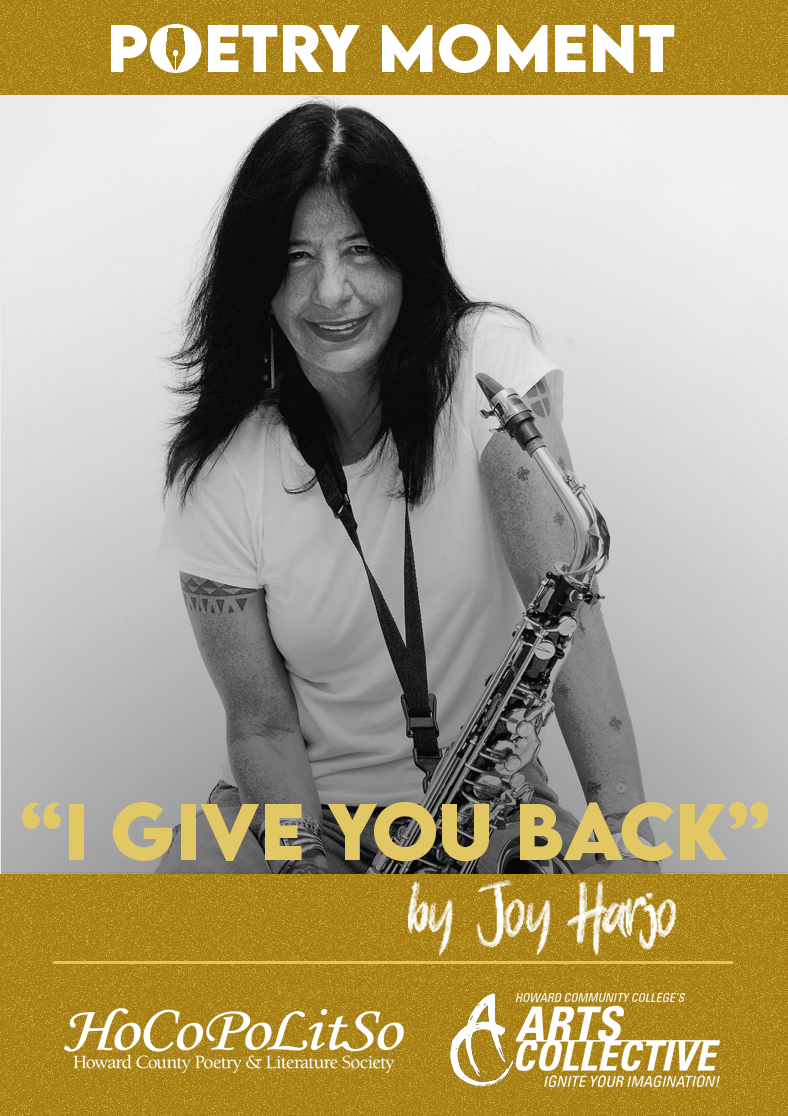
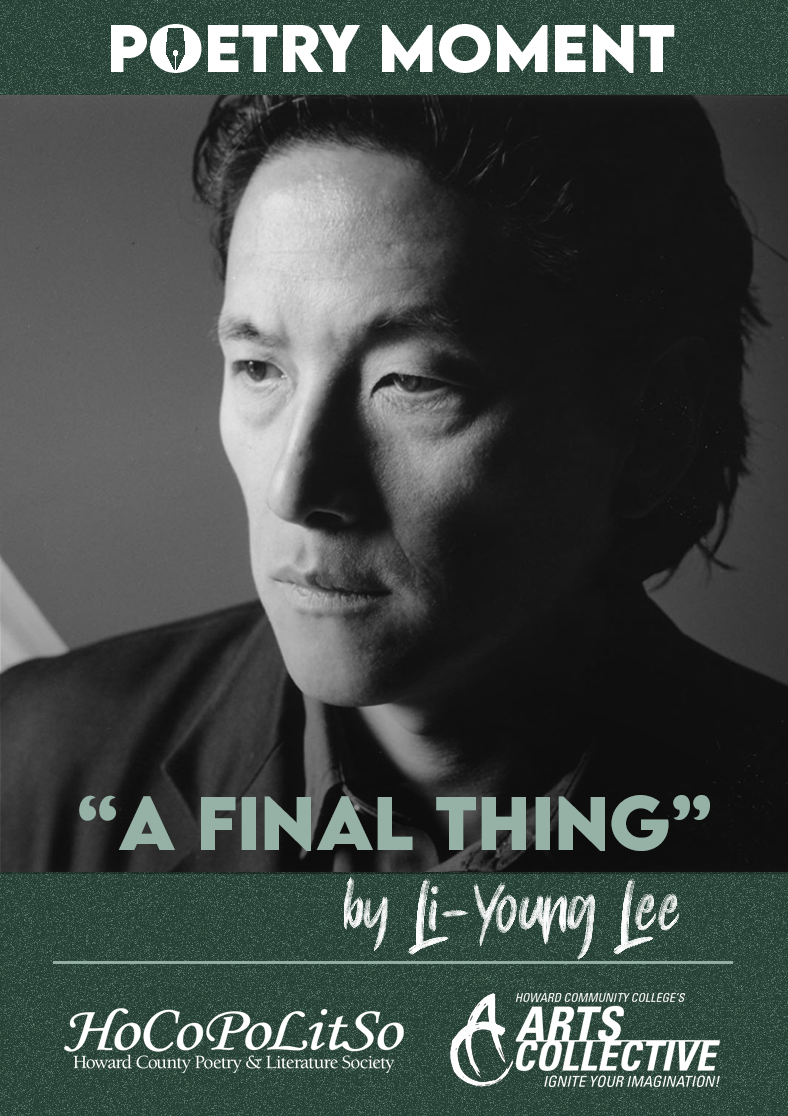

Have lunch with the poets,
the library, and HoCoPoLitSo
during National Poetry Month
“I don’t write out of what I know; I write out of what I wonder. I think most artists create art in order to explore, not to give the answers. Poetry and art are not about answers to me: they are about questions.” — Lucille Clifton
Lots of people think they need to know what a poem means. Sometimes professors and experts dissect a poem so much that a poem dies before we allow it to live. But what if a poem was written not to answer questions, but to ask them?
Lucille Clifton, a National Book Award-winning poet, wrote from her home office in a townhouse in Columbia for decades until her death in 2010. And she never stopped asking questions with her poetry.
Soon after the Howard County Central Library opened in 1981, Clifton read her poetry with three other amazing poets, William Stafford, Roland Flint, and current Maryland Poet Laureate Grace Cavalieri. HoCoPoLitSo brought those poets and library patrons together forty years ago, and we’re still collaborating today.
Join HoCoPoLitSo and the library for their newest program, a lunch break of poetry every Tuesday in April.
The “Po” in HoCoPoLitSo stands for Poetry (the Howard County Poetry and Literature Society). But sometimes, when we talk about poetry, people’s eyes glaze over. Occasionally (or more often …) poetry just seems impenetrable.
But it doesn’t have to be. Clifton’s poetry is accessible, understood at a first reading, with meaning that grows deeper at second or third reading, prompting those questions that bring readers to her poetry over and over again.
Once we’ve hooked you with Clifton’s work, we have plenty of other ideas of where to start with poetry. Perhaps with Amanda Gorman’s performance at President Joe Biden’s inauguration and at the Super Bowl, more people are intrigued about poetry, but don’t really know where to go for good poetry beyond inspirational quotes on Instagram. We’ve got your poetry questions covered.
The library and HoCoPoLitSo have partnered for forty years to bring poetry and literature to Howard County audiences. Over those decades, we have together sponsored movies about Gwendolyn Brooks and Seamus Heaney, organized readings by poets such as Josephine Jacobsen and Stanley Kunitz, judged student poetry contests, and even staged a play about poet Emily Dickinson, “The Belle of Amherst.”
And since National Library Week (April 4-10) coincides with National Poetry Month in April, HoCoPoLitSo and the library system thought it would be the perfect time to launch a new program. Every Tuesday in April, HoCoPoLitSo and the library will collaborate to bring you a little lunchtime buffet of poetry, virtually. I’m Susan Thornton Hobby, a proud library volunteer and HoCoPoLitSo board member and consultant, and with the library’s support, I’ve coordinated this April poetry feast.
When the pandemic closed everyone’s doors, HoCoPoLitSo created a new video series, both to reach out to people at home who were hungry for the arts, and to amplify the voices of Black poets who have visited HoCoPoLitSo audiences since 1974. With the help of Howard Community College’s Arts Collective, and director Sue Kramer, we produced the Poetry Moment series. Local actors Chania Hudson, Shawn Sebastian Naar, and Sarah Luckadoo offer introductions, then famous poets like Clifton and Kunitz and Heaney and Brooks read their work, with selections extracted from archival video. Ellen Conroy Kennedy, the late founding director and heart and soul of HoCoPoLitSo, started this archive in 1986 when she began documenting the poetry and literature programs she was producing. The Writing Life resulted, with more than 100 full interviews with authors carried on HoCoPoLitSo’s YouTube page.
In April, every Tuesday at noon, we’ll gather virtually to talk poetry. We’ve grouped the poems by theme for each week, and will talk a little about poetry, then watch the videos together and discuss.
Here’s our poetry hit parade:
- Tuesday, April 6: We’ll talk about grief, something many people are dealing with this year. Poems we’ll be discussing include “Elegy” by Linda Pastan, “My Deepest Condiments” by Taylor Mali, and “The Long Boat” by Stanley Kunitz.
- Tuesday, April 13: History is this week’s theme, and we’ll talk about Sterling Allen Brown’s “Southern Road,” read by poet Toi Derricotte, “In the Tradition” by Amiri Baraka, and “Requiem” by Anna Akhmatova, read by poet Carolyn Forché.
- Tuesday, April 20: Many contemporary poets turn to their families as sources for poetry. The poems we’ll read this week are “good times” by Lucille Clifton, “The Pomegranate” by Eavan Boland, and “A Final Thing” by Li-Young Lee.
- Tuesday, April 27: Our last week is centered on pep talks in poetry, verse to lift us up and give us strength. We’ll discuss “The Solstice” by W. S. Merwin, “For Every One” by Jason Reynolds, and “I Give You Back” by Joy Harjo.
HoCoPoLitSo and the Howard County Library System are happy to collaborate in bringing poetry to all who ask questions, to any who believe, like we do, that words can change the world.
If we hook you on poetry, consider tuning in to the April 29 Blackbird Poetry Festival, featuring Ilya Kaminsky and sponsored by Howard Community College and HoCoPoLitSo.
Register for the library lunch poetry programs here.
The Women in Minari, Asian Literature, and Beyond
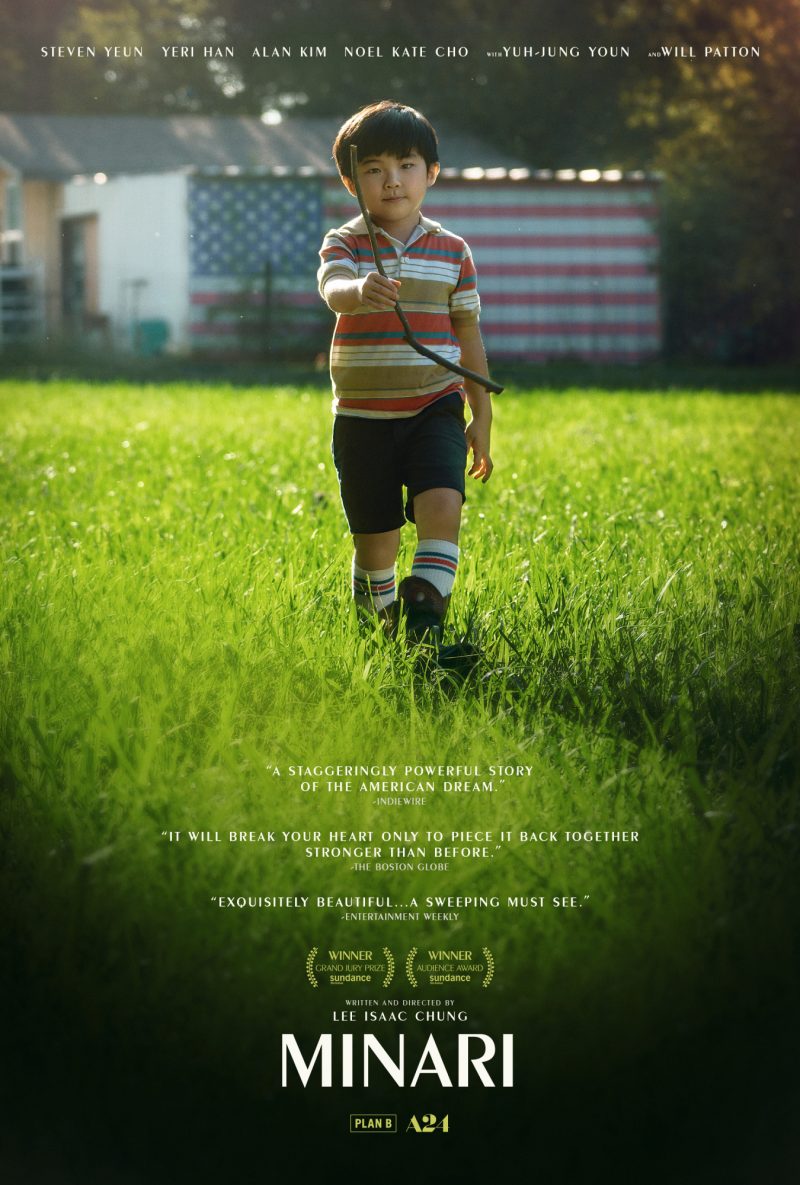
Minari (2021) directed by Lee Isaac Chung image from: https://d135u4jtzauizi.cloudfront.net/_thumbnail/A24_MINARI_POSTER.jpg
In this guest blog, Sylvia Lee reflects on the film Minari and on the experiences and representations of Asian American women in literature and films.
It’s been a surreal year for everyone, but for Korean Americans, even more so.
Maybe it’s a stretch to speak for all Korean Americans, so I’ll speak for myself. Seeing Koreans at the Oscars winning for Parasite, accepting awards in Korean, has been surreal.
The popularity of Korean food, and seeing Korean restaurants full of non-Koreans (many times ordering in Korean) has been surreal.
The rise of K-pop, which I’d listen to back when the only way to hear it was by waiting for my dad to bring home VHS tapes of Korean music shows that were already weeks past air date, has been surreal.
But all of these were distinctly Korean, not Korean American. The only way to see Korean Americans thus far was to watch celebrity cooking shows starring David Chang and Roy Choi, or read Korean American authors, and the latter has been nowhere close to the same scale as Parasite.
To be unseen for so long, and then to have a light cast on you suddenly is unsettling. Early on, I became aware of the dangers of being too visible; the weight of stereotypes, the pressure to be exceptional when you’re the only Asian in the room, and what happens when too many Asians are together and folks are reminded of our perpetual foreignness. Invisibility, which can come in the form of labels like “white adjacent,” is bad enough, but hypervisibility, which can come in the form of “yellow peril” is equally traumatizing. There has been no in between, and to now see representations of myself so frequently, in so many cultural realms, has been like seeing myself in a distorted funhouse mirror.
So when the preview for Isaac Lee Chung’s film Minari, starring Steven Yeun, was released and then buzzed about, I felt anxiety where I should have felt sheer pride. I realized that now I was being seen–seen as in exposed.
The movie, which I have since watched in its entirety, does indeed do this, but in unexpected ways: it sees me, and it invites me to see myself by seeing my parents in their youth. I see my father in Steven Yeun’s portrayal of Jacob Yi, even though the two men are quite different. I see my mother in Yeri Han’s portrayal of Monica, even my grandmother in Youn Yuh-Jung’s Soon Ja. It is as much a movie about an Asian American audience as it is about the Asian American immigrant experience.
Minari centers on the story of a Korean immigrant family, staking their claim in rural Arkansas, pursuing the father’s vision of providing Korean produce to Korean businesses to sell to Korean immigrants. Like any immigrant story, this dream is easier dreamed than achieved. The father, Jacob Yi, has a name perfect for such a premise—like the Jewish forefather whose name he shares, Jacob is patriarchal and is posed to create a legacy that will carry on in his genealogy, setting down roots in a new land. But this story as much belongs to Jacob’s wife, Monica, whose name has a more modern ring to it, and it is Monica who wishes to be back in California, a more progressive place for Koreans to thrive.
It is Monica that I want to see most clearly, and yet, in the press junkets for Minari, Monica and Yeri Han’s portrayal of her seems to be overlooked. While Jacob Yi is played by Yeun, a Korean American whose father was also an immigrant, Monica’s character is played by Yeri Han, a well-known Korean actress. This casting is in some ways more accurate to the character Han is playing—a Korean woman transported to a foreign, unfamiliar setting. But whereas the character of Jacob Yi can be read from a Korean American perspective, the same does not apply as cleanly to Monica. Chung’s writing of Jacob is from the perspective of a Korean American male who has studied and knows the Korean father, the patriarch, well. As I see Monica, I see her through a son’s gaze, transfixed. It is not the white male gaze, but the gaze is unmistakably male, with the emphasis on Yeun, likely because he is the lead actor, than on Han. She still plays an important supporting role of course, in the same way that a Korean mother is often seen setting the table and making the meal, but not enjoying it with her family.
In his recent, excellent New York Times Magazine feature essay on Steven Yeun, writer Jay Caspian Kang quotes Yeun as saying, “Sometimes I wonder if the Asian-American experience is what it’s like when you’re thinking about everyone else, but nobody else is thinking about you.”
If this is true about Asian American experience, it is especially true of Asian American women. In Minari, this rings true of Monica. She is thinking about Jacob’s dream, concerned about family survival, and about caring for her children, while decidedly not thinking about herself. When her mother Soon Ja arrives from Korea with an immin bag full of Korean grocery staples unavailable in the US, Monica breaks down in tears. The acknowledgment of need is the acknowledgment that she has been remembered. It is one moment in the film where Monica is seen.
And so goes the trope of Korean—and most immigrant—mothers: their primary means to enact decisions is in service for the greater good of the family in pursuit of their husbands’ and then their children’s needs, and this is done silently. In the film, Monica has been aware all along of the struggles Jacob has kept hidden from her, but she says nothing. When Monica’s mother comes from Korea to help care for the children, this trope is played out further. Even in her old age, the Korean mother travels abroad to help her daughter to the point of a health crisis, sacrificing her physical body for the good of the family as a stroke renders her unable to speak. It is this silence, above all, that comes to characterize Korean women.
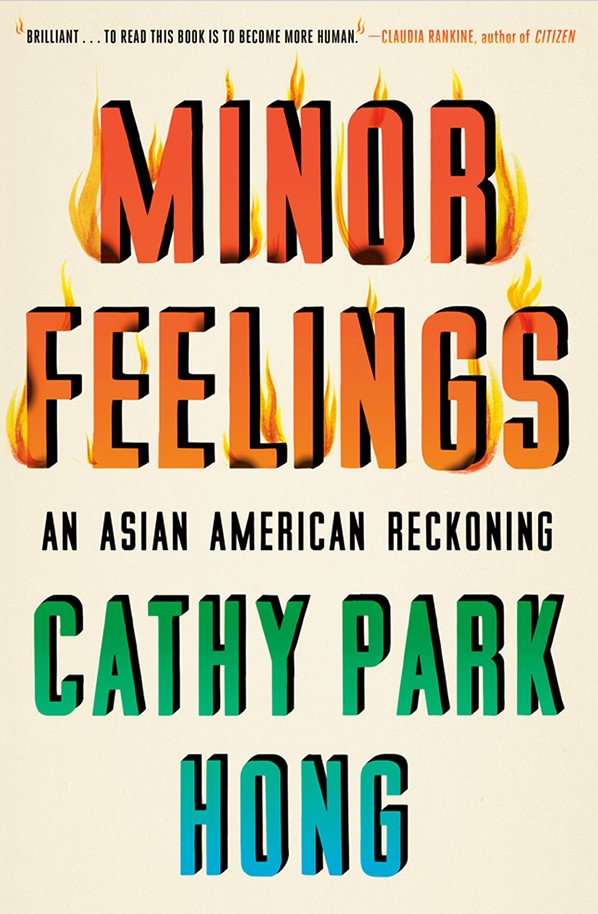
Minor Feelings: An Asian American Reckoning by Cathy Park Hong
In Minor Feelings, Cathy Park Hong discusses one way this silence manifests. It is keeping quiet about trauma, specifically sexual violence. Asian American women, as Hong cites, report some of the lowest rates of sexual assault. Hong is right to distrust these reports, when silence is so endemic to the Asian American female experience. Hong describes how she’d hear about Asian women who disappeared, or “went mad” with no further discussion or explanation provided to her. There are many examples in Asian literature. Maxine Hong Kingston writes about the “No Name Woman” in her book Woman Warrior. Cho Nam-ju’s Kim Ji Young, Born 1982, attempts to articulate so many of the sexist experiences that silently make up the Korean female’s position in society. Han Kang’s The Vegetarian centers around the story of a woman who ends up literally silenced in a vegetative state, a result of the trauma absorbed over a lifetime.
Over a lunch of bibimbap and cabbage soup, my mom tells me of her oldest sister, whose name I don’t know, but have always referred to as the Daechon eemo, which is the city she lives in along with title “aunt.” It would be akin to my nephew calling me “Baltimore aunt.” But Daechon eemo is not the aunt my mother is referring to. She had another sister, she says, the oldest one of all the girls in the family. I’m floored. How did I not know about the existence of another family member? And yet, I don’t know why I should be surprised, given how little I know about my aunts in Korea. She tells me that this aunt died in her mid-thirties, quite young, and in fact, the same age I am when I hear this. Like many women during the 1950s, my aunt was married off before having met her husband, and when the marriage proves so unbearable (in ways I am not told about) she runs away back to her family, she is told by her father that leaving her husband would ruin the prospects of all of her remaining siblings. And so, she returns, sacrificing herself until her very body succumbs to her hardship. It reads like a bad Lisa See novel minus the enduring female friendship.
I know that suffering is not unique to Korean women. All women carry this DNA in their bodies, and it is not the only narrative Korean women have. In Minari, I at once appreciate that I am spared insight into Monica’s suffering, but I am also perplexed by the lack of it. She is distraught over her son’s health condition, but aside from the moment she cracks open in a pivotal argument with Jacob, she is cast as the silent, albeit beleaguered, wife. In her silence, I see my mother, my aunt. But while the film invites me to witness Jacob’s struggles, I am not invited to witness Monica’s in similar detail.
What I see instead, is Chung leaning into the trope of the Korean grandmother, the halmoni, to portray this experience. That’s because it is the halmoni who raised so many of us while our mothers were at work, and that recognition is even given in the end credits. We see the physicality of suffering through their broken bodies, and personality too. Soon Ja, played by Youn Yuh Jung, is given the means not just to portray her own sacrifice, but to be her memorable, quirky and quixotic self, her dedication and identity carved throughout the movie in poignant episodes like planting the minari the movie is titled after, a scene that suggests it is the halmoni, not the mother, who ensured that our roots were planted in an inhospitable environment.
The mother’s labor, like so much of her story, is largely invisible, as is Yeri Han in comparison to Yeun, whose star status is immediately more recognizable to American audiences. But as Yeun reflects, repeatedly, on his role in the movie, the conceptualization in character development and voice, Han is missing, and in the moments she can speak, she is speaking from a different perspective than Yeun, who has walked the life of the audience and the writer of the movie. The voice of the Korean woman is once again silent and she is rendered invisible, even if what we get from Han is an admirable performance of displacement and silent strength.
But this phenomenon of silence is not because we aren’t speaking. In an essay published in The Racial Imaginary, poet Jennifer Chang writes, in reference to being mistaken for the writer Victoria Chang: “Why am I so hard to distinguish, so hard to remember?” She calls this feeling of interchangeability a specific strain, set apart from invisibility, in that one is seen, but seen as “a synonym.”
As I watch Minari, I wonder how much of Monica and even Soon Ja, are synonym, interchangeable, in the same way I wonder how much of myself will be absorbed, forgotten into what Fatimah Asghar described as “a dance of strangers in my blood.” Once my life is over, will I be relegated to a generic supporting role, destined to be a stranger to my own children? This interchangeability is a result of the lack of attention given to the varied stories, written by and for Asian American women who have walked the lives of their audience as the leads in their own stories.
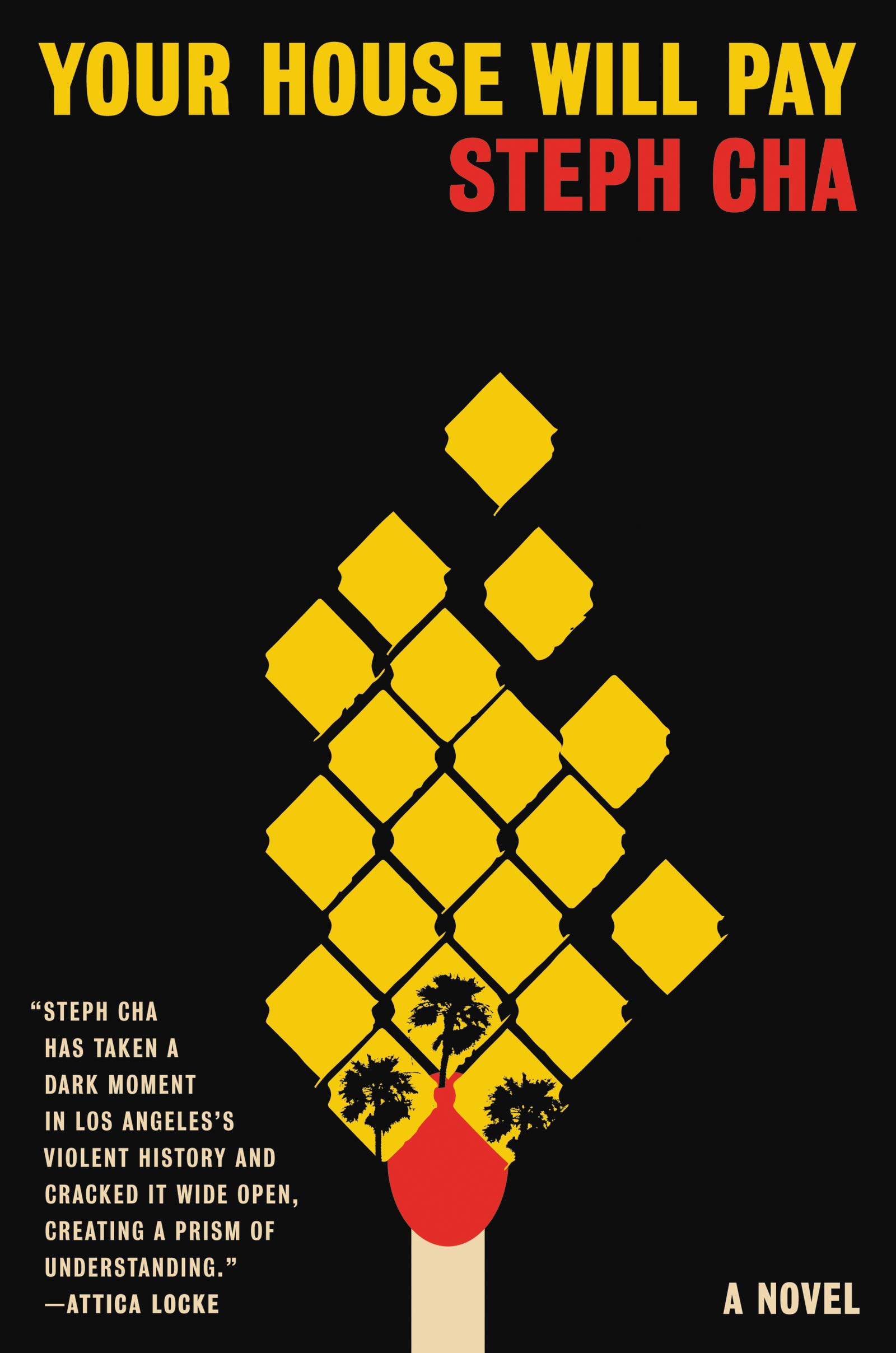
Your House Will Pay by Steph Cha

The Magical Language of Others by 고은지 EJ Koh
There are glimmers though, that as representations and visibility increase, and Asian American women are able to experiment with their work, the vague blurred images of us will form a more accurate mosaic, not solely bound by tropes. In the literary world, Korean American women writers are doing the work. Glancing at the literary landscape, one can see, in plain sight, writers like Min Jin Lee, author of Pachinko and Free Food for Millionaires, EJ Koh, author of The Magical Language of Others, Steph Cha, author of Your House Will Pay, Cathy Park Hong, author of Minor Feelings, carving out space for varied narratives to come to light.
In film and television, directors like Lulu Wang are making inroads. Pachinko has been ordered to series by Apple TV. Sandra Oh is set to play the lead in The Chair, a Netflix series about a Korean American who is the chair of the English department at her college. The last one brings an odd hypervisibility again, as I too am a Korean American chair of my English department. I am shocked to see such a close representation of my situation, but I know I should grow accustomed and deserve to see myself too, something Minari revealed. I am my own audience, that there’s enough of me to be a central audience, and I owe no explanations to others who are interested enough to watch as well. This is not exclusionary; it is being comfortable not having to explain or interpret myself to others, something I’ve grown accustomed to.
Yet the anxiety at being too visible persists. Maybe it’s vestigial, this feeling; from having to be exceptional, having a unique identity that when represented, triggers the synonym syndrome. Or maybe it’s because I know, as the voices grow louder, the stories brought into the spotlight, there will still be distortion. But, as in any case when the eyes have been in darkness for so long, or the ears flooded with sound after such silence, the period of discomfort will be necessary, making what is seen and heard that much brighter and clearer.
———————————————————-
Sylvia Lee is a current Chair and an Associate Professor of English at Howard Community College where she teaches composition, creative writing, and literature courses. She was previously an Assistant Professor at Montgomery College and has had teaching posts in New York and South Korea. She has been published in places such as The Korea Herald, Poets and Writers Magazine, and Lostwriters, among others. She has served on the editorial boards for several literary magazines, including HCC’s community publication The Muse. She received her M.F.A. in Writing at Sarah Lawrence College and a B.A. in English from the University of Maryland at College Park.

Author Nana Kwame Adjei-Brenyah to Deliver Keynote at Howard Community College’s Inaugural Bauder Lecture
Acclaimed author of “Friday Black” will be joined in conversation with local author Tope Folarin
COLUMBIA, MD – Howard Community College announced that Nana Kwame Adjei-Brenyah, the New York Times-bestselling author of “Friday Black,” will deliver the keynote at the inaugural Bauder Lecture. Adjei-Brenyah will participate in the virtual event on March 4, 2021, at 12 p.m., which also will include a conversation with Washington, DC-based writer Tope Folarin.

Adjei-Brenyah’s debut work, “Friday Black,” is a collection of twelve short stories that explore the injustices experienced by Black men and women in the U.S. Adjei-Brenyah, a professor at Syracuse University, uses fiction, humor, and shock to tackle urgent instances of racism and cultural unrest in America.
His work has appeared or is forthcoming from numerous publications, including the New York Times Book Review, Esquire, Literary Hub, the Paris Review, Guernica, and Longreads. He was selected by Colson Whitehead as one of the National Book Foundation’s “5 Under 35” honorees, is the winner of the PEN/Jean Stein Book Award and the William Saroyan International Prize, and a finalist for the National Book Critics Circle’s John Leonard Award for Best First Book, the Dylan Thomas Prize and the Aspen Words Literary Prize.
Following his keynote, Adjei-Brenyah will be joined by Tope Folarin, a Nigerian-American writer based in Washington, D.C., and the author of “A Particular Kind of Black Man,” for an in-depth conversation. Folarin won the 2013 Caine Prize for African Writing, was recently named a “writer to watch” by the New York Times, and was recognized among the most promising African writers under 40 by the Hay Festival’s Africa39 initiative.
The Bauder Lecture by Howard Community College is made possible by a generous grant from Dr. Lillian Bauder, a community leader and Columbia resident. Howard Community College will present an annual endowed author lecture known as The Bauder Lecture, and the chosen book will be celebrated with two student awards. Known as the Don Bauder Awards, any Howard Community College student who has read the featured book is eligible to respond and reflect on the book in an essay or other creative format. The awards honor the memory of Mr. Don Bauder, late husband of Dr. Lillian Bauder and a champion of civil rights and social justice causes.
“Friday Black” was selected by the Howard County Book Connection committee as its choice for the 2020–2021 academic year. The Howard County Book Connection is a partnership of Howard Community College and the Howard County Poetry and Literature Society.
To learn more about the Bauder Lecture and RSVP for the event, visit howardcc.edu/bauderlecture.
For more information on Nana Kwame Adjei-Brenyah, “Friday Black,” and the Howard County Book Connection, visit https://howardcc.libguides.com/bookconnection2020.

