



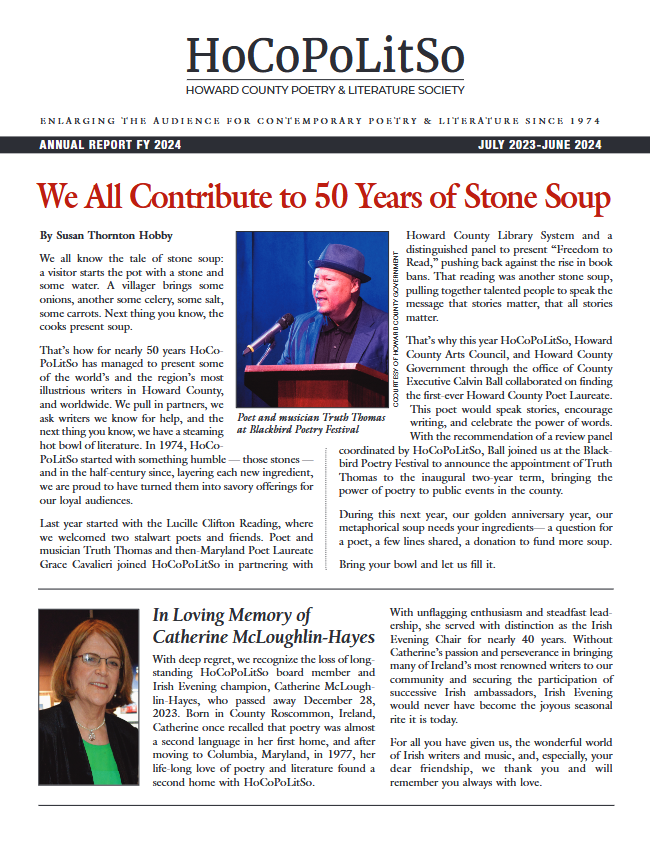
Read Our Annual Report
HoCoPoLitSo to Welcome Colum McCann to the 35th Irish Evening – Tickets now on sale.
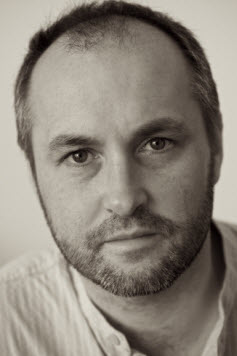
Colum McCann. Photo by Brendan Bourke.
The international award winning author Colum McCann is HoCoPoLitSo’s guest for its 35th Annual Irish Evening at 7:30 pm, March 1, 2013 at the Smith Theater, Horowitz Center for Visual and Performing Arts on the campus of Howard Community College.
General Admission Tickets are available at http://www.brownpapertickets.com/event/287811 or by sending a check payable and mailed to HoCoPoLitSo, 10901 Little Patuxent Parkway, DH 239, Columbia, MD 21044. Tickets purchased before Feb. 1, 2013 are $30 each, $35 if purchased after Feb. 2.
So Many Stories to Be Told: An Evening with Colum McCann will highlight this major voice in today’s literary landscape’s with a discussion of his National Book Award winning novel Let the Great World Spin and his upcoming novel, Transatlantic, due out in late 2013.
McCann’s reading will be followed by Narrowbacks, Eileen Korn, Jesse Winch, Terence Winch, Linda Hickman, and Brendan Mulvihill on fiddle in a concert of traditional Irish music with stepdancers from the Culkin School.
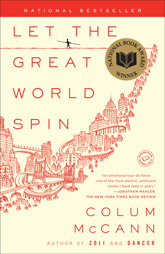 McCann, a two-time winner of the International IMPAC Dublin Literary Award, the most lucrative literary award in the world, has published 5 novels and numerous short stories and articles. In 2003 McCann was named Esquire Magazine’s “Best and Brightest” young novelist. He has also been awarded a Pushcart Prize, the Rooney Prize, the Irish Novel of the Year Award and the 2002 Ireland Fund of Monaco Princess Grace Memorial Literary Award. He was recently inducted into the Hennessy Hall of Fame.
McCann follows other great Irish authors who have come to Howard County including Frank McCourt, Eavan Boland, Hugo Hamilton, Colm Tóibín, Paul Durcan and Paula Meehan to name a few. For years, HoCoPoLitSo’s Irish Evening has recognized and celebrated the enormous impact of Irish-born writers on the world of contemporary literature.
The Dodge Poetry Festival Leaves One Asking, “More Bread, Please!”
The latest installment in our occasional series of blog posts from friends of HoCoPoLitSo. Today Ryna May, Associate Professor of English at Howard Community College, writes of her experience at the recent Dodge Poetry Festival.…
Poetry, like bread, is for everyone.
– Roque Dalton

Natasha Tretheway. Photo by Dodge Poetry Festival. Click on the image to view more photos from the 2012 Dodge Poetry Festival.
The Geraldine R. Dodge Poetry Festival once again transformed downtown Newark, New Jersey, into a “poetry village” for a few days in October. The bi-annual festival has been going strong since 1986, though longtime supporters have noticed a different energy since the festival left its traditional home in Waterloo Village.
But one thing has not changed: This remains the Super Bowl of Poetry. There is no other event like this festival, where the old meets the new, where high school students cheer wildly for words, and where the teeming energy of a giant hall of people morphs into a single, quiet heartbeat. Where Natasha Trethewey, the newly minted poet laureate, shares a stage with Amiri Baraka. Where Philip Levine and Dorianne Laux teach us about the lyrical nobility of work. Where aspiring poets, old and young, hang onto every word as if it is bread, as if it is life-giving manna.
 The festival is more than a poetry reading, more than an event. It is a pilgrimage to sit at the feet of poets like Taylor Mali, to hear him recite “Like Lily Like Wilson.” It is the chance to be completely surprised by a brand new poet like Emari DiGiorgio and come to your feet when she finishes “Lady Liberty.” It is the chance to be inspired by Jane Hirshfield, who tells us that poetry gives us a voice, gives us courage to face the challenges that life puts before us.
Okay, so poetry isn’t life itself, but it is a way to experience life, a way to see the world and describe it and make meaning out of it. You can only see this, can only feel this at the festival. It isn’t quite Brigadoon, but it has that quality of stepping out of one world and into another. And if you experience it, you will be changed. This event is for everyone, and everyone should experience the Geraldine R. Dodge Poetry Festival at least once. If you go once, I promise you will want more.
— Ryna May
Associate professor of English,
Howard Community College
The Dodge Poetry Festival has occurred every other year for more than two decades. The next one wont come along until 2014, plenty of time to plan attending. In the meantime, click here to view their video archive of poets reading their work at past Festivals for a taste of the bread ahead.

“Are you on TV or something?” Maryland Crabs with Writers Edward P. Jones and E. Ethelbert Miller
The latest installment in our occasional series of blog posts from members of the HoCoPoLitSo board.…
 I first met Edward P. Jones in 1994 when he accepted an invitation from HoCoPoLitSo to come to Columbia to read for Howard County residents. His first book, one of short stories about the invisible people of non-tourist Washington, Lost in the City, had been receiving wide acclaim. It was my job to drive him from his hotel to the reading venue. He wrote in my copy of Lost in the City, “Thanks for escorting me around. This has been one of the best days I have had in a long time.”
Our next meeting was in 2005 when he read for us from his ground breaking novel The Known World. He had read to an appreciative audience on the campus of Howard Community College on a Friday night and stayed over to appear for a taping of HoCoPoLitSo’s literary program, The Writing Life the next day. He was to be interviewed by poet, E. Ethelbert Miller.
Saturday morning, I picked up Jones at the Columbia Sheraton to drive him to HCC campus for the taping. On the way, he asked me if I knew a place where we could stop and get some steamed crabs later on. He said he doesn’t get to visit Maryland often but when he does, he makes it a point to buy some crabs. So, while Miller and Jones went into taping, I left the studio to call my wife to ask about a crab place. She told me that there was an excellent place just off Route 1 in Laurel that served the best crabs between Columbia and DC, the Bottom of the Bay.
When the taping was over, Jones, Miller and I got into my car for the trip to Laurel. We found the restaurant with no trouble. It was in an unremarkable strip mall and had both a sit-down restaurant and a carryout store which doubled as a convenience store with the usual fare that convenience stores carry – beef jerky, chips, soda, cigarettes, chewing tobacco and cold beer and cheap wine.
We placed our order of one dozen crabs and asked that they be seasoned with Old Bay. While we waited, Jones called our attention to the beef jerky on the display and noted that he had never tasted it and wanted to know if either Miller or I had. We both shook our heads “no” and chuckled.
While we waited for Jones’ order of crabs, two young men perhaps in their late twenties entered the store to buy some beer. One of the men turned to us and asked, “Aren’t you somebody important, or something?”
Being the “host”, I thought I should be the one to answer, so I said, “This is Edward P. Jones and this is E. Ethelbert Miller. They’re both poets.”
 The other man asked, “Are you on TV or something?”
I replied, “They just finished taping a TV show, but they do not have a regular program.”
The young man followed with, “We don’t see folks around here in suits that much, so I thought you were, like, you know, somebody really important.”
At that moment, the man behind the counter announced our order was ready.
I grabbed the steaming bag of crabs from the counter and said to the young men, “Well, we are sorry to disappoint you.”
We left the store, got into my car, and headed for DC. Miller asked Jones if he was going to eat all of those crabs by himself. Jones said, “Not in one sitting; but by Sunday evening they should be all gone.” Miller and I laughed, knowingly and perhaps a little enviously.
By David Barrett
Ex-Officio, HoCoPoLitSo Board
- Watch Edward P. Jones and E. Ethelbert Miller in conversation on HoCoPoLitSo’s The Writing Life.
Pictured above at the taping of The Writing Life ( left to right, back row to front): David Barrett, Ellen Conroy Kennedy, Tara Hart, Edward P. Jones and E. Ethelbert Miller.
Poems of Pain, Times of Joy — Toi Derricotte and Lucille Clifton

Toi Derricotte
Toi Derricotte’s poems speak pain plainly. A wince from long ago when her father dangled her by her hair for failing to clean her plate. The deep ache of her grandmother trying to pass for white in Saks Fifth Avenue in the 1940s. And the torment of insomnia – wee hours of the morning full of anything but sleep: raw nerves, to-do lists, stubborn grudges.
In her poem “Invisible Dreams”, Derricotte’s lines embody insomnia, give it a color (rust), map out the suffering of leaden bones, name the smell of an ocean of decay.
Derricotte has an ability to take the personal and make it, if not universal – there are a few who blissfully sleep through every lucky night—then open to many. Born a light-skinned African-American girl with “good hair” into a family of undertakers, Derricotte started writing poetry at age 10. She now teaches English at the University of Pittsburgh and has written five acclaimed books of poetry and a memoir, The Black Notebooks. Just this year, she won the PEN/Voelcker Poetry Prize.
Poet Sharon Olds has called her work “vibrant poems, poems in the voice of the living creature, the one who escaped—and paused, and turned back, and saw, and cried out. This is one of the most beautiful and necessary voices in American poetry today.”
On Nov. 2, Derricotte will read her work and talk about the legacy of the late poet Lucille Clifton in HoCoPoLitSo’s opening event for the fall, the Lucille Clifton Poetry Series. We’ve called the event “Good Times”, after one of Clifton’s famous poems of dancing in the kitchen when the rent is paid and the electricity is back on. While we probably won’t be dancing (though who knows?), we will celebrate the power and light of Lucille Clifton, who was HoCoPoLitSo’s artistic advisor for years and taught many poetry workshops at Cave Canem, the writers’ retreat program Derricotte co-founded. A new collection of Clifton’s poetry – a sturdy volume with many previously unpublished poems – came out last month and it reveals plainly the pain and joy in Clifton’s work.
Clifton and Derricotte both write about painful subjects – child abuse, history, family ties, racism – and they knew each other well. One of the things Derricotte admired about Clifton was her endurance. She writes: “In her poetry Lucille Clifton models survival for all of us with toughness and humor. And I don’t mean just physical endurance. I mean the ability to prevail over the many things that are able to kill body and spirit. The poets who manage to keep writing reveal this attribute in their lives and their work.”
Derricotte, also, has survived to write her own poems of prevailing over things that want to kill body and spirit. Heavily influenced by the confessional poetry of Sylvia Plath, Derricotte writes personal poetry. And much of it is painful – working out abuse by her parents and rage over that kind of childhood. But her latest collection, The Undertaker’s Daughter, seems to work through the anger at her parents and ends with glimpses of joy and peace.
As she writes in a poem “After a Reading at a Black College,” from her collection Tender, which won the Patterson Prize, “Poems do that sometimes, take/ the craziness and salvage some/ small clear part of the soul, / and that is why, though frightened, / I don’t stop the spirit.”
On Nov. 2, join HoCoPoLitSo for good times in this time of craziness, to help salvage our spirits with poetry, sometimes painful, sometimes joyful, from Derricotte and Clifton.
— Susan Thornton Hobby
Tickets for the event, Friday, Nov. 2, at 8 p.m. in the Monteabaro Recital Hall (HCC campus), are available at http://www.brownpapertickets.com/event/280070. Admission is $15, and $10 for seniors and students. For information, call 443-518-4568.
La poesie vit d’insomnie perpetuelle
—René Char
There’s a sickness in me. During
the night I wake up & it’s brought
a stain into my mouth, as if
an ocean has risen & left back
a stink on the rocks of my teeth.
I stink. My mouth is ugly, human
stink. A color like rust
is in me. I can’t get rid of it.
It rises after I
brush my teeth, a taste
like iron. In the
night, left like a dream,
a caustic light
washing over the insides of me.
*
What to do with my arms? They
coil out of my body
like snakes.
They branch & spit.
I want to shake myself
until they fall like withered
roots; until
they bend the right way—
until I fit in them,
or they in me.
I have to lay them down as
carefully as an old wedding dress,
I have to fold them
like the arms of someone dead.
The house is quiet; all
night I struggle. All
because of my arms,
which have no peace!
*
I’m a martyr, a girl who’s been dead
two thousand years. I turn
on my left side, like one comfortable
after a long, hard death.
The angels look down
tenderly. “She’s sleeping,” they say
& pass me by. But
all night, I am passing
in & out of my body
on my naked feet.
*
I’m awake when I’m sleeping & I’m
sleeping when I’m awake, & no one
knows, not even me, for my eyes
are closed to myself.
I think I am thinking I see
a man beside me, & he thinks
in his sleep that I’m awake
writing. I hear a pen scratch
a paper. There is some idea
I think is clever: I want to
capture myself in a book.
*
I have to make a
place for my body in
my body. I’m like a
dog pawing a blanket
on the floor. I have to
turn & twist myself
like a rag until I
can smell myself in myself.
I’m sweating; the water is
pouring out of me
like silver. I put my head
in the crook of my arm
like a brilliant moon.
*
The bones of my left foot
are too heavy on the bones
of my right. They
lie still for a little while,
sleeping, but soon they
bruise each other like
angry twins. Then
the bones of my right foot
command the bones of my left
to climb down.
— Toi Derricott
HoCoPoLitSo Welcomes 2012 PEN/Voelcker Winner for Poetry
Toi Derricotte Celebrates Lucille Clifton

Photo by Seishi Tsutsumi
Toi Derricotte, 2012 PEN/Voelcker Winner for Poetry, will read for HoCoPoLitSo 8 pm, November 2, at the Horowitz Center for Visual and Performing Arts’ Monteaboro Recital Hall on the Howard Community College campus.
Tickets are available $15 to the general public; $10 for students and senior citizens. Credit card orders are available at www.brownpapertickets.com/event/280070.
Good Times: Toi Derricotte Celebrates Poetry and Lucille Clifton celebrates distinguished poet and University of Pittsburgh professor Derricotte’s recent work, The Undertaker’s Daughter, and Lucille Clifton’s influence on Derricotte’s work.
“We are proud to welcome back Toi to read for HoCoPoLitSo and celebrate our good friend and former board member, Lucille Clifton,” said Dr. Tara Hart, Co-Chair, HoCoPoLitSo.
“Lucille was a personal friend and also a supporter of other poets’ work,” Derricotte said, reflecting upon the personal impact Clifton had on her own work, on other writers’ work and on the literary community.
Derricotte, co-founder of Cave Canem, a summer poetry workshop for African-American writers, frequently hosted Clifton who provided constructive, critical advice to young and emerging writers.
“She (Clifton) came to Cave Canem several times even when she was extremely ill, so you can imagine how grateful we all were for her presence,” Derricotte said. “She gave of herself without holding back. This, in itself, was a totally unique gift to all of us.”
Clifton (1936-2010) was a two-time Pulitzer Prize finalist for poetry, a former Maryland Poet Laureate, The Ruth Lilly Poetry Prize winner, and she is scheduled to receive The Robert Frost Medal for lifetime achievement for poetry from the Poetry Society of America.
She left a 45-year legacy of poetry, children’s books and other writing. The Collected Poems of Lucille Clifton 1965-2010, edited by Kevin Young and Michael S. Glaser, “provides a definitive statement about this major American poet’s career.”
Derricotte’s work, greatly influenced by Clifton, makes a statement of its own. The Undertaker’s Daughter has been hearlded as another great work from Derricotte. The Washington Post has described these “Poems that stick with you like a song that won’t stop repeating itself in your brain…”
“Derricotte’s work continues to have a profound impact on society and HoCoPoLitSo is honored to add her to the long list of distinguished, award-winning writers that have shared their work with our community,” Hart said.
For more than 38 years, HoCoPoLitSo has nurtured a love and respect for contemporary literary arts and global literary heritage in Howard County. The society sponsors live readings by authors and hosts a monthly television series, literary contest, writers-in-residence outreach programs and activities, and partners with other cultural arts societies to support the arts in Howard County, Maryland.
Poetic Lack of License
The latest installment in our occasional series of blog posts from members of the HoCoPoLitSo board.…
When it comes to HoCoPoLitSo, I follow the money via the checkbook, the budget, and the ticket sales. I also do the tax returns. In short, I’m the Treasurer.
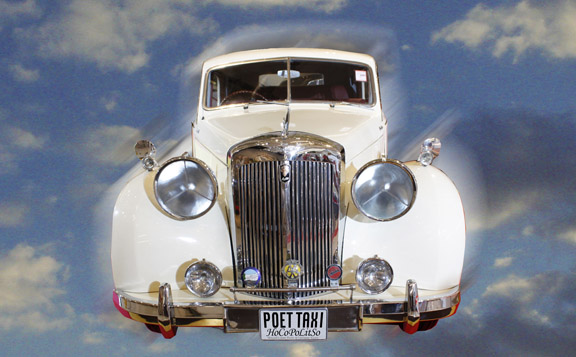 I’m also an unofficial driver for HoCoPoLitSo. Since we like to provide the personal touch, the board members and the staff share the task of picking up or dropping off our authors at the airport or the DC Metro. It surprises me that so many of our authors, including our own Lucille Clifton who lived in Columbia, don’t drive at all.
I admit that if I lived in DC, I would seriously consider abandoning my car, but I wonder sometimes if there is something innately poetic about not owning a car or holding a drivers license. Whatever their reason for not driving, the benefit of the poetic lack of license is that it gives us another opportunity to interact with our visiting authors.
While some save their energy for the audience and just wish to ride quietly (as did Martin Espada), others prove quite talkative. On our way to the Wheaton Metro, Naomi Ayala remarked about how green Columbia was so I explained Columbia’s Open Space concept. In turn she told me about her favorite Ethiopian restaurant in Adams Morgan.
Linda Pasten carried on a charming conversation with me despite the nail-biting circumstances of running very late as I drove her along winding back roads from Montgomery County to Columbia one rainy Friday. She surreptitiously glanced at her watch and humored me gently as I chattered away, trying to distract her from my perhaps ill-founded decision not to use the beltway.
Playing chauffeur is well worth the experience and, as Treasurer, I have to add, the cost of the gas. So I guess I’ll keep my car and the job.
By Kathy Larson
Treasurer, HoCoPoLitSo Board
Let Our Kids Read
 “Children are made readers on the laps of their parents,” says author Emilie Buchwald. That’s a nice cuddly sort of sentiment, isn’t it? But she’s right. Most of us with children do read to them, almost from birth. It’s one of the best tools we have to introduce them to the vast new world around them.
We read to teach colors, shapes, letters, numbers, and textures. To teach them about animals and flowers, babies, and brothers and sisters, mommies and daddies. We read to teach them about themselves and living among others, about their world and their place in it. We read to help them learn to think. And in the process, we fervently hope – in fact it’s our duty – that we spark in them a sense of curiosity and a love of words, both so powerful that they will learn and love to read and to seek out answers on their own.
There’s an old joke about bringing up kids that goes something like this: We spend the first two years of our children’s lives teaching them to walk and talk. Then we spend the next sixteen trying to get them to sit down and shut up. Isn’t it more or less the same thing when, after we teach and encourage our children to explore the world through reading, we allow a book to be removed from a school curriculum or public library shelf because a vocal parent or small group in some way objects to its contents?
It happens more often that you might think. Every year, for the past thirty years, the American Library Association has recorded all reported challenges and bans of books in schools and public libraries in the United States. That’s hundreds of challenges every year. And those are only the reported ones. The ALA estimates that four out of five challenges go unreported. Most of the challenges come from well-intentioned parents trying to protect their children from some difficult idea or information. And that would be within their rights if they were protecting their children. The problem, however, is that challenges and bans might also deprive other children whose parents don’t share the same objections.
The challenging or banning of a book is akin to pulling the reading rug right out from under our kids. Take a look at the ALA’s list of frequently challenged books of the 21st century. You’ll see that along with the usual characters – Huckleberry Finn, The Catcher in the Rye, To Kill a Mockingbird, and so on – are a host of children’s and young adult books, the very books that we should be thrilled that our children are reading.
Reading is an active process of discovery. Our children will encounter new ideas and new ways of thinking; it’s bound to happen more and more as advances in technology continue to shrink our world and move us ever closer to true globalization. If as responsible parents we embrace such encounters as teachable moments, helping our kids “enter into a dialogue” with what they are reading, instead of saying, emphatically, “NO, you can’t read that,” we will teach our children to truly think for themselves, to consider the tough questions of our world, to make it a better and more accepting place.
In a nation that bemoans the fact that our educational system and student performances are lagging behind those of other developed nations, why would we ever even consider, if we hope to regain the intellectual edge, denying our children the opportunity to think by preventing them from exploring through reading? It may not sound quite as cuddly as what Emilie Buchwald says, but what a world of good we could do if we made our children thinking “readers on the laps of their parents,” and then let them read to their hearts’ content.
The American Library Association’s 30th Anniversary Banned Books Week observance is September 30-October 6. Join your Howard County neighbors and supporters of your First Amendment rights. Celebrate your freedom to read by reading a banned book – or by sharing one with your children.
Rick Leith
Assistant Professor of English
Howard Community College
Join HoCoPoLitSo and Howard Community College in their celebration of Banned Book Week at “Freedom to Read: The Historic Role of Grove Press in the Publication of Banned Books,” with Jeannette Seaver and Michael Dirda, Tuesday, October 2, 2-3:20 PM in Monteabaro Recital Hall in the Horowitz Visual and Performing Arts Center at Howard Community College. The event is free and open to the public.
Banned Book Profile: Naked Lunch
 Would you have published this banned book?
Book: Naked Lunch
Author: William S. Burroughs
Controversy: First published in 1959 by Olympia Press in France, Naked Lunch (initially misprinted as The Naked Lunch) was banned in the United States because of obscenity laws. The book’s subject matter deals with drug use, sexually explicit acts and obscene language.
Challenge: In 1962, Grove Press published the unedited American edition of The Naked Lunch, that is, as it was originally written for publication. It was banned in both Boston and Los Angeles, and European publishers were harrassed for printing and distributing the book. However, in 1966 the Massasschuetts Supreme Judicial Court reversed the decision finding that it did not violate obscenity laws. The book was deemed to have social value.
Impact: While his book dealt with “risque” subjects under the McCarthy Era, Burrough’s book also tackled the problems of drug addiction and protesting the death penalty. The book ‘s overall theme deals with failings of society through the exploration of the main characters encounters with the books more risque subject matter.
Burrough’s Naked Lunch was said to have influenced Thomas Pynchon, J. G. Ballard, and William Gibson.
It is included on Time magazine’s “100 Best English-language Novels from 1923-2005”.
Join HoCoPoLitSo and Howard Community College in their celebration of Banned Book Week at “Freedom to Read: The Historic Role of Grove Press in the Publication of Banned Books,” with Jeannette Seaver and Michael Dirda, Tuesday, October 2, 2-3:20 PM in Monteabaro Recital Hall in the Horowitz Visual and Performing Arts Center at Howard Community College. The event is free and open to the public.
HoCoPoLitSo, HCC Celebrate Banned Books Week – 9/30-10/6
 Co-chair of the HoCoPoLitSo board and Division Chair of English/World Languages at Howard Community College, Dr. Tara Hart previews a few upcoming Banned Book Week events in Howard County:
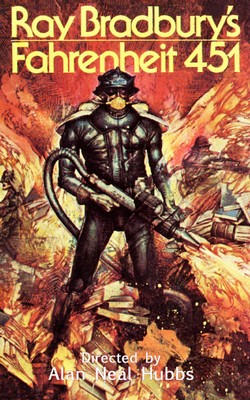
My New Jersey high school reading list made sure I met and never forgot Ray Bradbury’s perverse firemen, called to burn wherever books were found. Pop culture let rebellious ‘80s teens share Kevin Bacon’s Footloose character’s horror at finding that his new hometown is a place that incinerates piles of Kurt Vonnegut’s Slaughterhouse-Five in front of the public library. Much more recently, Terry Jones’s treatment of the Koran lit a global flame that continues to profane what many hold sacred. Also, “Hundreds of books [including, ironically, Fahrenheit 451] have been either removed or challenged in schools and libraries in the United States every year. According to the American Library Association (ALA), there were at least 326 in 2011. ALA estimates that 70 to 80 percent are never reported,” (www.bannedbooksweek.org). We may not understand, or feel we understand all too well, what drives those who burn or strive to hide books, but the good news is that the drive to protest such destruction and suppression is loud and sustained.
The Howard County Poetry and Literature Society (HoCoPoLitSo) celebrates National Banned Books Week (September 30 – October 6, 2012) and our freedom to read by partnering with Howard Community College to present an important conversation between Jeannette Seaver, widow of publishing giant Richard Seaver, and Michael Dirda, Pulitzer-Prize-winning critic for the Washington Post, about the historic role of Grove Press in the publication of banned books through discussion of Richard Seaver’s extraordinary memoir, entitled The Tender Hour of Twilight: Paris in the 50s, New York in the 60s: A Memoir of Publishing’s Golden Age (Farrar, Straus and Giroux, 2012).
“Dick” Seaver had a unique gift for recognizing, appreciating, and advocating for the translation and publication of previously unknown authors, especially Samuel Beckett, and was a unique presence in the publishing age that ultimately delivered to American readers, triumphing through much literal trial and other’s error, essential titles that continue to be challenged by contemporary citizens, including Lady Chatterley’s Lover, Naked Lunch, The Story of O, The Tropic of Cancer, Last Exit to Brooklyn, and The Autobiography of Malcolm X. The memoir resonates, in spite of his modesty, with a spirit of highly intelligent discernment and sense of vocation that played an enormous role in revolutionizing the American literary landscape, leading it from priggishness to possibility.
Michael Dirda is a well-versed expert on such landscapes and an ideal conversational host for Ms. Seaver, who is fascinating in her own right as an accomplished musician and later publisher who shared her husband’s intellectual and professional life and has her own opinions of and experiences with many of the literati mentioned in the book. It promises to be an engrossing, important, provocative, and academically enriching event, so come join today’s literati at “Freedom to Read: The Historic Role of Grove Press in the Publication of Banned Books,” with Jeannette Seaver and Michael Dirda, Tuesday, October 2, 2-3:20 PM in Monteabaro Recital Hall in the Horowitz Visual and Performing Arts Center at Howard Community College. The event is free and open to the public. Also check out HCC’s “parade” of banned books and the media clip festival that week.
Dr. Tara Hart
Board co-chair, HoCoPoLitSo
For more information, see
For event details, visit
Freedom to Read – Would You Print a Banned Book?
Freedom to Read – Would You Print a Banned Book?
Book: Tropic of Cancer
Author: Henry Miller
Controversy: First published in 1934 by Obelisk Press, Tropic of Cancer was banned in the United States for obscenity (graphic sexual content). U.S. Customs banned the book from being imported and sold in the United States. However, the book was frequently smuggled into the country. From the 1930s to the 50s, Tropic of Cancer was the subject of many lawsuits between the government and publishers/book sellers.
Challenge: In 1961, Grove Press legally published Tropic of Cancer, and lawsuits, once again, were filed in 21 states against store owners that sold the book. The case against it went all the way to the U.S. Supreme Court in 1964 with the decision of it being obscene was overturned.
Impact: Tropic of Cancer is considered a 20th Century literary masterpiece. Miller broke ground with a new literary writing style with his fusion of real life with fiction, free association writing, mysticism, and philosophy in the book. Many writers of the time hailed Miller as a new literary voice despite critics of the book.
Beat Generation writers, Jack Kerouac, Allen Ginsberg, Williams S. Burroughs and Lawrence Ferlinghetti, claimed to be greatly influenced by Miller’s work.
It has been named on several 100 Best or Must Read Book lists and was instrumental in paving the way for challenging censorship in the United States and Freedom of Speech cases.
 HoCoPoLitSo