



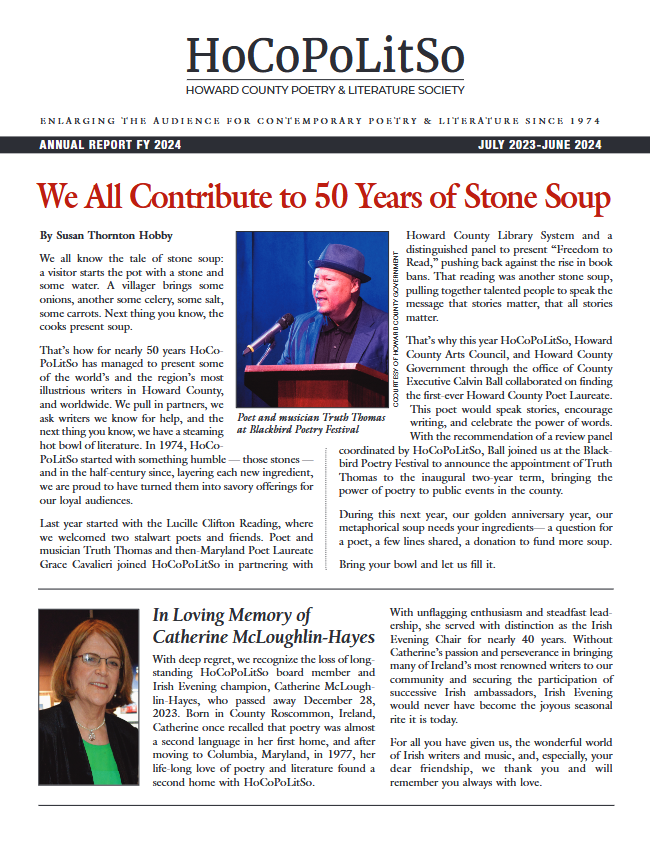
Read Our Annual Report
Wilde Readers of October: Odessa Rose & Deborah Kalb

HoCoPoLitSo welcomes all to the October edition of the Wilde Readings Series, with Odessa Rose and Deborah Kalb, hosted by Linda Joy Burke. Join us at the Columbia Art Center on Tuesday, October 10th at 7 p.m., at 6100 Foreland Garth, Columbia, MD 21045. Please spread the word— bring your friends, family and students! Light refreshments will be served and books by the readers available for sale.
An open mic follows the featured authors and we encourage you to participate. Please prepare no more than five minutes of performance time, about two poems. Sign up when you arrive, or in advance by calling the Columbia Arts Center at (410)-730-0075.
Below, get to know Odessa and Deborah!
Who is the person in your life (past or present) that shows up most often in your writing?
Odessa: Until my latest novel, “Kizmic’s Journey”, no one in my life has ever showed up in my books. In “Kizmic’s Journey,” I wrote about my family’s church, so I had characters that were based on them in the book, in particular my uncle who was the Bishop of our church until his death.
Deborah: Various versions of myself.
Where is your favorite place to write?
Odessa: My favorite place to write is in my home office. My family are in the house with me and I like being close to them. My husband lets me bounce ideas off him. My daughter often comes in my office and tells me about her stop motion scripts or films that she is working on. My sons stop in to give me hugs and kisses. I know I can probably get more done if I worked some place else, but I am most creative when I’m home.
Deborah: My home office, at my desktop computer.
Do you have any consistent pre-writing rituals?
Odessa: Research is my only pre-writing ritual. I love to research because I love learning new things. I like discovering things about my characters and the many themes that run through my novels.
Deborah: Taking long walks and contemplating what my characters might do next.
Who always gets a first read?
Odessa: My husband always gets the first read. Often times I wake him up in the middle of the night to discuss something going right or wrong with the book. So, he deserves the first read.
Deborah: A few of my family members and a couple of close friends.
What is a book you’ve read more than twice (and would read again)?
Odessa: Toni Morrison’s “Song of Solomon” is a book I’ve read over and over and over again. I love Morrison’s writing. I love the imagery in “Song of Solomon.”
Deborah: The Pursuit of Alice Thrift by Elinor Lipman.
What is the most memorable reading you have attended?
Odessa: The most memorable reading I’ve attended is when Terry McMillan came to Morgan State University when she was on tour for “Waiting To Exhale.” I had just had an operation and was supposed to stay in bed, but when I learned that Terry McMillan was coming to town, I got up and went. I somehow forgot my book, but she signed my ticket, and I got a picture of her with my friend. I will never forget that day.
Deborah: Various book events featuring my father, Marvin Kalb, who is 93 and still writing books.
• Odessa Rose received her B.A. in English from Coppin State University and her M.A. in Literature from the University of Maryland at College Park. She is the author of Water In A Broken Glass, which was her first novel. This intriguing story captured the #6 spot on the On-Demand Best Seller list, received the Just About Books Annual Book Award, is ranked #17 on Accredited Online Colleges’ 20 Essential Novels For African-American Women list, was recorded for the Maryland School for the Blind, is included in The Greenwood Encyclopedia of Multiethnic American Literature, Ethnic American Literature: An Encyclopedia for Students, and Black Like Us: A Century of Lesbian, Gay, and Bisexual African American Fiction.
In 2018, Water In A Broken Glass was adapted into an award-winning feature film called Water In A Broken Glass. Her second novel, In the Mirror received the African American Expo Award for Fiction. Rose is a member of the Black Writers Guild of Maryland. She is also the co-creator of the television magazine, This Is Baltimore, Too. She resides in her hometown of Baltimore with her husband and three children. You can find Odessa and links to all her social media pages at odessarose.com.
• Deborah Kalb is a freelance writer and editor. She spent about two decades working as a journalist in Washington, D.C., for news organizations including Gannett News Service, Congressional Quarterly, U.S. News & World Report, and The Hill, mostly covering Congress and politics. Her book blog, Book Q&As with Deborah Kalb, which she started in 2012, features hundreds of interviews she has conducted with a wide variety of authors.
She is the author of the forthcoming novel Off to Join the Circus (Apprentice House, 2023), as well as three novels for kids, Thomas Jefferson and the Return of the Magic Hat (Schiffer, 2020), John Adams and the Magic Bobblehead (Schiffer, 2018), and George Washington and the Magic Hat (Schiffer, 2016) — and she’s the co-author, with her father, Marvin Kalb, of Haunting Legacy: Vietnam and the American Presidency from Ford to Obama (Brookings, 2011). She is the author/updater of Elections A to Z, 5th edition (CQ Press/SAGE, 2022), the editor of the two-volume reference book, Guide to U.S. Elections, 7th edition (CQ Press/SAGE, 2016), the co-author of The Presidents, First Ladies, and Vice Presidents (CQ Press, 2009), and the co-editor of State of the Union: Presidential Rhetoric from Woodrow Wilson to George W. Bush (CQ Press, 2007), and has contributed updates to a variety of other CQ Press books on politics and government.
Deborah can be found online at deborahkalb.com and on Twitter @deborahkalb, Instagram @deborahskalb, and on Facebook.
Freedom to Read Roundtable

Would you like to support the essential right to read?
Then join HoCoPoLitSo for our 2023 Lucille Clifton Reading Series offering: the upcoming Freedom to Read Roundtable, presented in partnership with Howard County Library System (HCLS).
Come to the Miller Branch at 1:30 p.m. for a thoughtful discussion and readings by Maryland Poet Laureate Grace Cavalieri and distinguished poet and publisher Truth Thomas, then stay at 2:30 p.m. to watch and participate in the virtual roundtable panel discussion with National Book Award-winning author, musician, and screenwriter James McBride, Washington Post satirist and author Alexandra Petri, renowned historian and author Dr. Richard Bell, and American Library Association President Emily Drabinski.
All in-person attendees receive a complimentary copy of The Heaven & Earth Grocery Store, the newest book from James McBride. Light refreshments will be served.
📅 Sunday, October 15
🕜 1:30 p.m. (in-person) and 2:30 p.m. (virtual)
📍 Miller Branch and Online
To register for the in-person event: bit.ly/FreedomToRead-InPerson
To register for the virtual event: bit.ly/FreedomToRead-Virtual
A Newark Childhood
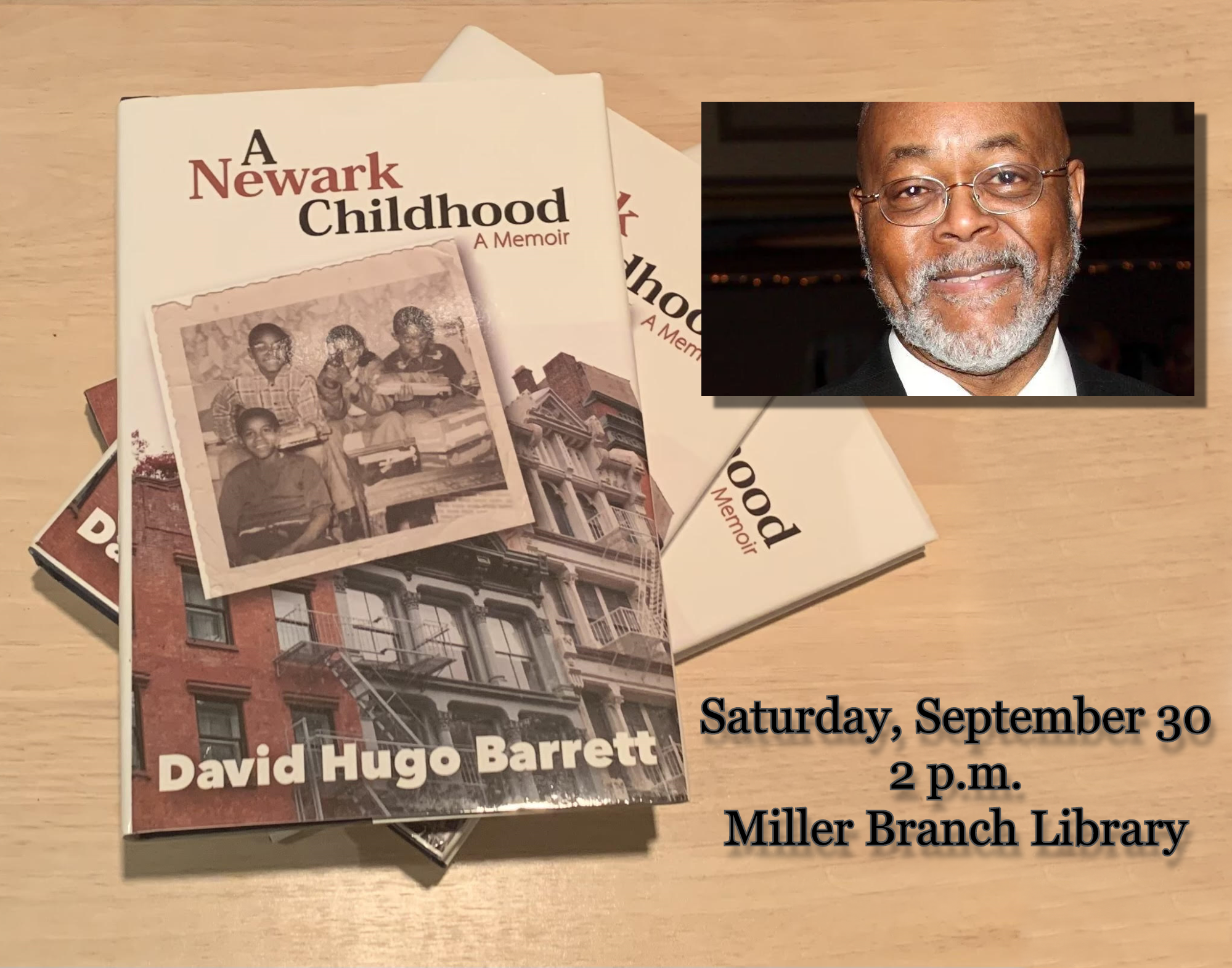
Saturday September 30th at 2 p.m., please join HoCoPoLitSo Board Member David Hugo Barrett at the Miller Branch of the Howard County Library for a reading from his book “A Newark Childhood” and for a conversation between father and son about the memoir and the insights born of growing up in the fifties and sixties in Newark, New Jersey. Find a synopsis and excerpt at www.davidhugobarrett.com.
The 2023 Ellen Conroy Kennedy Poetry Prize
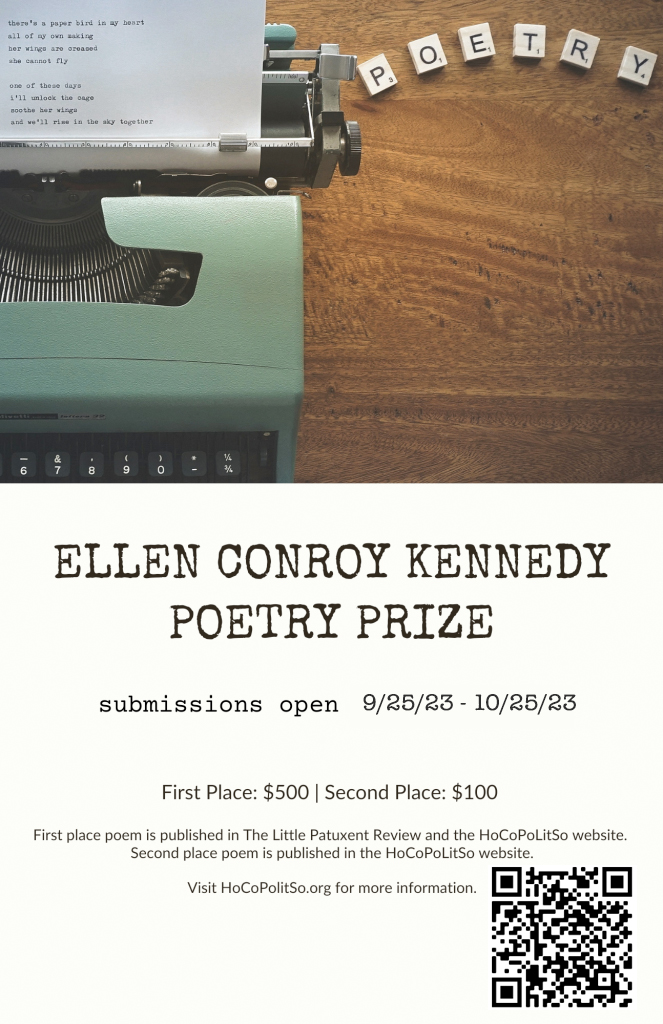
Held annually in loving memory of HoCoPoLitSo’s co-founder, the 2023 Ellen Conroy Kennedy Poetry Prize is now open to all entrants! Whether you are a life-time poet or have never written a line before, we invite you to share with us whatever moves you to poetry.
The author of the poem selected for first place will be awarded a cash prize of $500, celebrated on HoCoPoLitSo’s website, social media, and in our annual report— and have their winning poem published in The Little Patuxent Review and right here on HoCoPoLitSo’s front page.
To enter, click here, or visit the contest’s page to learn more or to read past winners’ poems. A reading fee of $10 per entrant supports a panel of fair and balanced judges.

The 2023 Bauder Lecture, featuring Nadia Owusu & Tope Folarin

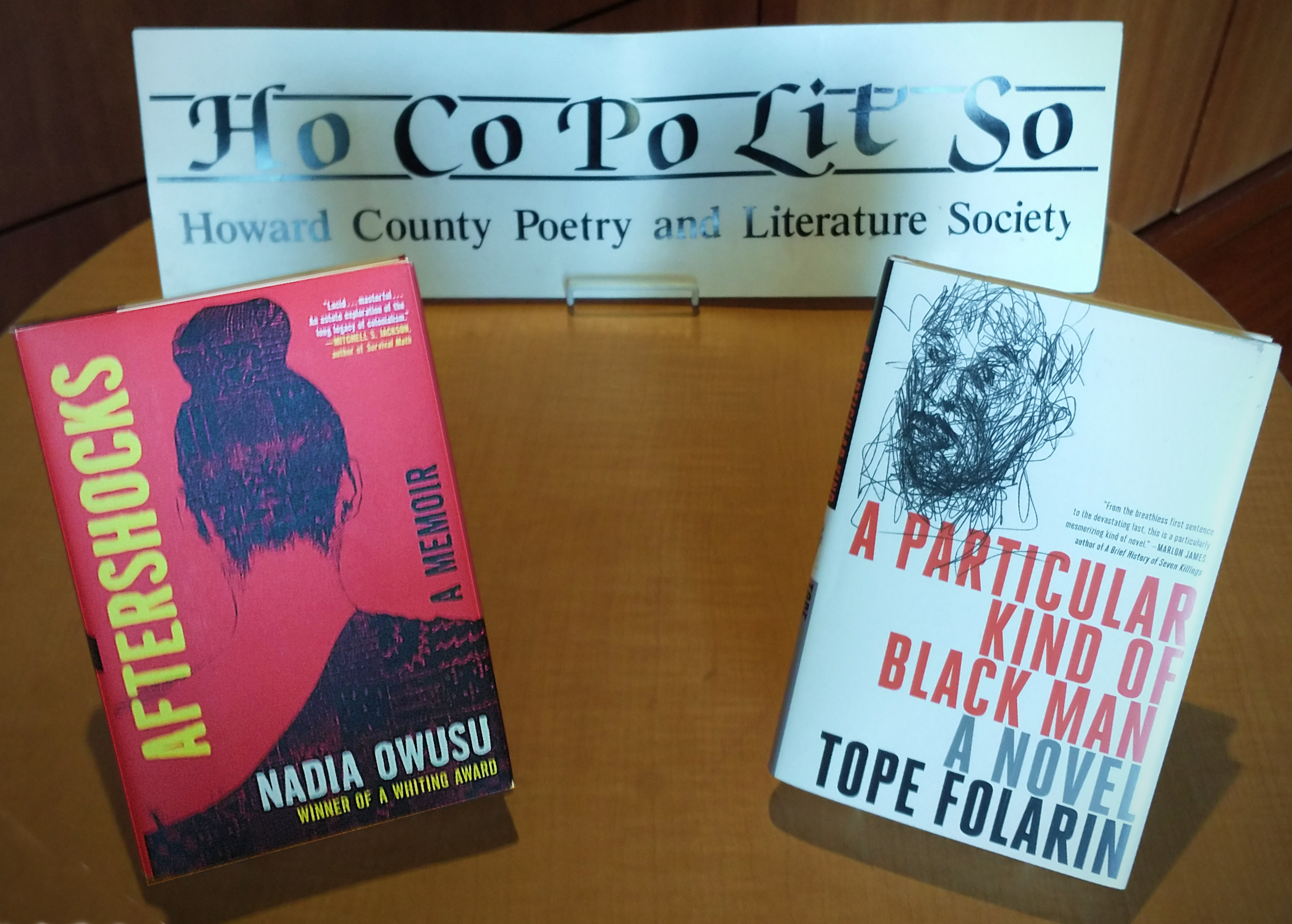
This Thursday, September 21, 2023, HoCoPoLitSo proudly presents in partnership with Howard Community College and the Howard County Library System, the 2023 installment of the Bauder Lecture Series, featuring Nadia Owusu, author of “Aftershocks“, hosted by Tope Folarin, author of “A Particular Kind of Black Man“.
Join us for this free and public event, in person at the Horowitz Visual and Performing Arts Center on the HCC campus, or online streamed live via Vimeo at this link. The day’s events begin with a reading and keynote at 12:30 p.m., followed by a short reception and second reading at 6:00 p.m. Signed books will be available for purchase from HoCoPoLitSo to in-person attendees following both presentations.
The Bauder Lecture Series is made possible by a generous grant from Dr. Lillian Bauder, a community leader and Columbia resident. HoCoPoLitSo is a private nonprofit 501(c)(3) cultural arts organization designed to enlarge the audience for contemporary poetry and literature and celebrate culturally diverse literary heritages. HoCoPoLitSo receives funding from the Maryland State Arts Council, the Howard County Art Council through a grant from Howard County government, Community Foundation of Howard County, Dr. Lilian Bauder, the Reis Foundation, and from individual contributors like you.
For more information, visit the Horowitz Center event page available here— and be sure to check back right here for more literary events coming soon from HoCoPoLitSo.
let there be lit.
Wilde Readers of September: Adina Ferguson & Edward Belfar

HoCoPoLitSo welcomes all to the September edition of the Wilde Readings Series, with Adina Ferguson and Edward Belfar, hosted by Ann Bracken. Join us at the Columbia Art Center on Tuesday, September 12th at 7 p.m., at 6100 Foreland Garth, Columbia, MD 21045. Please spread the word— bring your friends, family and students! Light refreshments will be served and books by the readers available for sale.
An open mic follows the featured authors and we encourage you to participate. Please prepare no more than five minutes of performance time, about two poems. Sign up when you arrive, or in advance by calling the Columbia Arts Center at (410)-730-0075.
Below, get to know Adina and Edward!
Who is the person in your life (past or present) that shows up most often in your writing?
Adina: I’d have to say my Mom shows up in my work a lot (more). Whether it’s a paragraph or whole essay, Connie is getting her shine (LOL). I’m often writing about growing into womanhood and my mom has definitely had an influence in that area. And of late, my therapist has become a character in my work. So much so that she’ll slide in a “It’s fine. You can write about me in your next story” when we have a “heavy” session and I want to quit her.
Edward: I am primarily a fiction writer, and all my characters are composites, drawn from various sources, including direct experience, things I heard about second- or third-hand, my reading of fiction and nonfiction, and my imagination. There is never a one-to-one correspondence in my fiction, such that Character X equals Real Person Y. The closest I might come to that is imagining how someone like Real Person Y might respond to a situation faced by Character X, but when I do that, I often find that Character X surprises me in a way that Real Person Y probably would not.
Where is your favorite place to write?
Adina: The Purple Room aka my home office/guestroom is my writing sanctuary. I was very intentional with the artwork I put on the walls, the photos I have on the bookshelf, my goal board, the color scheme.
Edward: I have made part of our basement into an office, in which I have a desktop, a printer, and many reference books. I do most of my drafting there. I like to edit on paper, though, and I often do that at the dining room table.
Do you have any consistent pre-writing rituals?
Adina: Before I can get in a good writing groove, I like to listen to one of my Spotify playlists of R&B songs and then I’ll switch to YouTube to watch a few Jodeci videos. I’m a big 90s/2000s R&B fan. And so I pretty much have a little mini concert before I finally get down to business (professional procrastinator here). All the while there’s a candle burning in the background. I like tapping into a few senses first.
Edward: I do not.
Who always gets a first read?
Adina: I’ll drop a message in the group chat with my best friends, Davie and Marquetta. But the way everyone’s lives are set up, it comes down to whichever of them is available. We went to the same arts high school and were in the same department. So, I value their feedback as fellow writers who happen to be my sisters for life.
Edward: My wife Kathleen always gets a first read. Without her support and encouragement, I doubt that I would have been able to persevere through all the rejection, disappointment, and frustration to publish two books. At the same time, she is an astute critic and will not hesitate to tell me if she finds a false note in something I have written.
What is a book you’ve read more than twice (and would read again)?
Edward: Many books fit that description. One that comes readily to mind, because it is both eerily prescient and hilarious, is Walker Percy’s Love in the Ruins. It was very much on my mind when I was writing my novel A Very Innocent Man.
What is the most memorable reading you have attended?
Adina: Oooh, that’s a great question! I can’t narrow it down to one event but I will say I always have a great time when I attend Zora’s Den’s “In Our Own Words” Reading series in Baltimore. There’s an indescribable feeling when you hear Black women share their lives with you. The voices, styles, experiences are so eclectic. I’m always finding new writers to fangirl over and honestly, it’s just a whole vibe of sistahood!
Edward: It is hard to pick one, as I have attended many memorable readings, both in person and online. One that does stand out in my mind, though, even after many years, was given by the late Amiri Baraka when I was in graduate school at SUNY/Stony Brook. He was as great a performer as he was a poet. Without singing a note, he made an instrument of his voice and transformed the poems that he read into music. Until that night, I don’t think I had realized the power of the spoken word.
• Adina Ferguson is a Pushcart Prize nominated essayist, humorist, content writer and proud DC native. Her work centers around being black and woman and a single 30-something navigating life with therapy, old school TV, friends and family. She is the author of the essay collection, I Don’t Want to Be Your Bridesmaid, and has been published in Hippocampus Magazine, The Fire Inside Volume II, Midnight & Indigo, Very Smart Brothas, Defenestration, and more. Adina currently resides in Columbia, MD with her french bulldog, Kobi. You can find Adina at adinathewriter.com, on Instagram @adinathewriter or on the couch watching Good Times reruns.
• Edward Belfar is the author of two books of fiction. His novel A Very Innocent Man was published by Flexible Press in 2023. Wanderers, a collection of short stories, was published by Stephen F. Austin State University Press in 2012. His fiction and essays have appeared in numerous journals, including Shenandoah, The Baltimore Review, Potpourri, Confrontation, Schuylkill Valley Journal, and Tampa Review. He lives with his wife in Maryland and can be reached through his website at edwardbelfar.com.
The Spontaneity of Poetry at the HCLS H3 Carnival
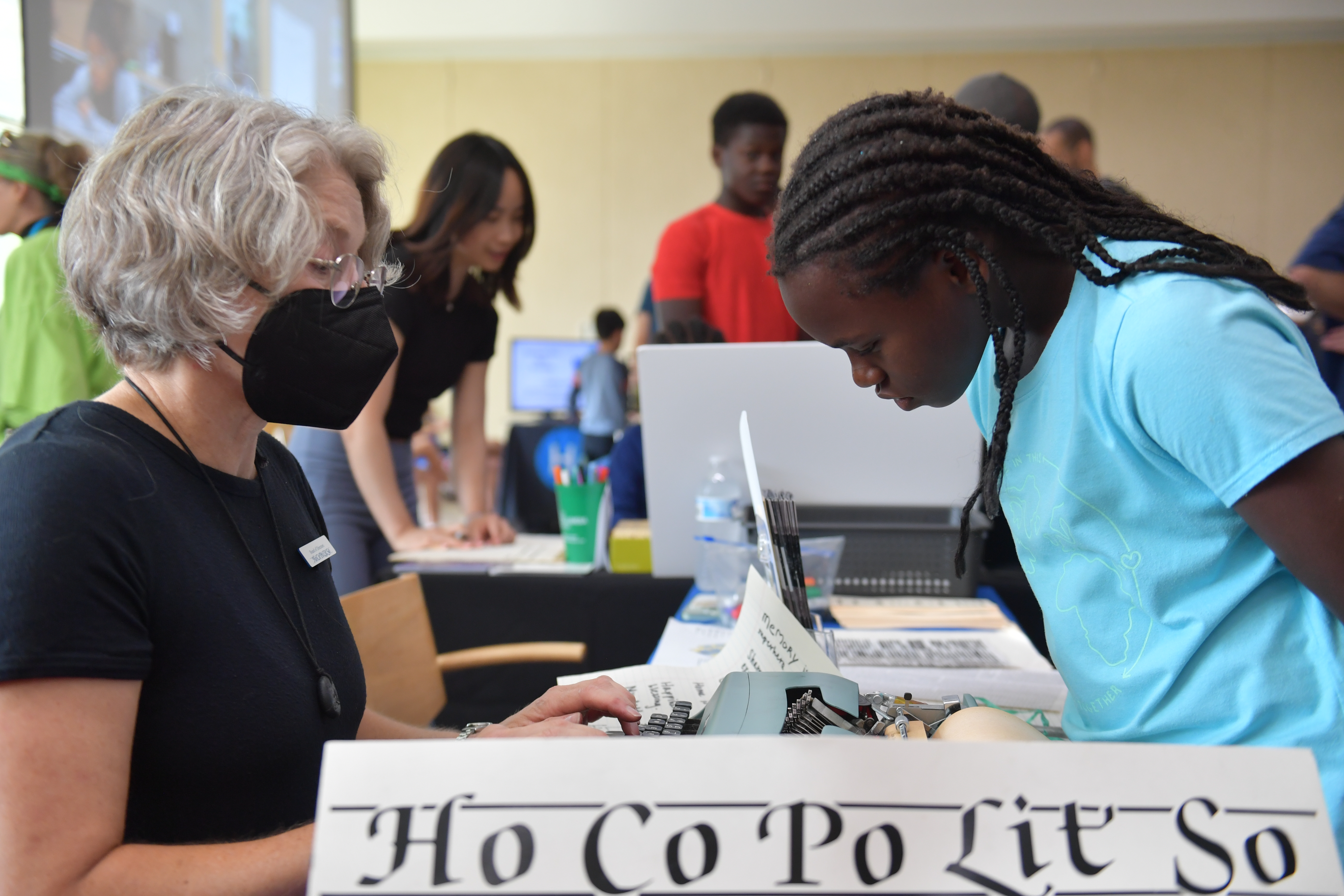
On a sunny Saturday this past August 5th, HoCoPoLitSo brought poetry to people of all ages at Howard County Library’s H3 Carnival— that’s “Hi-Tech, How-to, Hands-on”. From kindergartners through teens and couples married for 30 years alike, all wrote poems with the help and prompts provided by HoCoPoLitSo volunteers.
Naomi Ling, a Bauder Youth student member of the board and award-winning poet, guided the poetry writing using tools such as Metaphor Dice, instructions on writing a ghazal, and “blackout poetry“, in which a page of text is redacted by the poet and a poem discovered within just the words they chose to remain. When visitors finished their poems, volunteers typed them up on an antique manual Olivetti Lettera typewriter using worn, vintage-looking paper. Visitors of all ages marveled at the typewriter and wrote poems so they could have an artifact of their efforts.
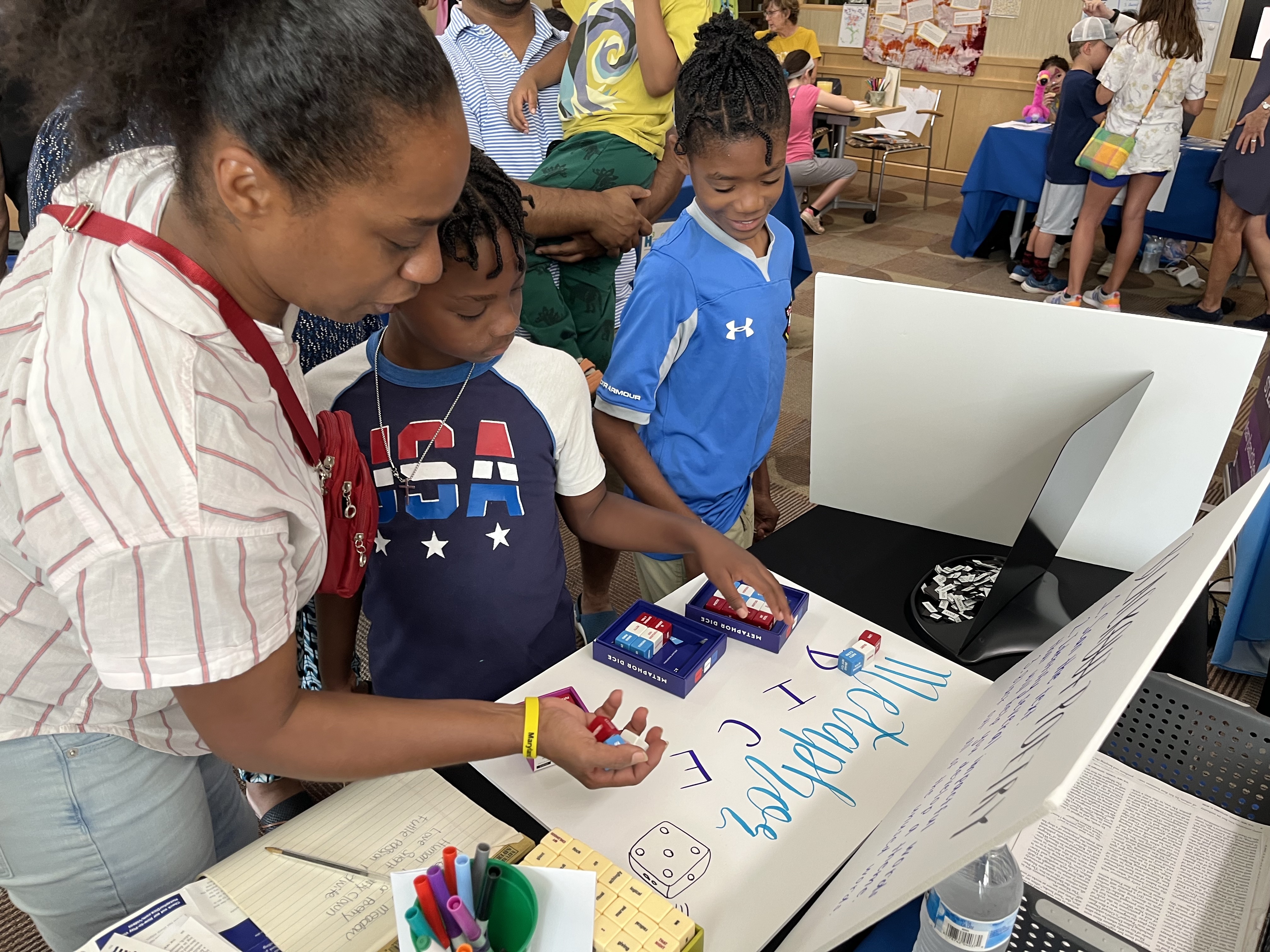
Susan Thornton Hobby, HoCoPoLitSo board member and recording secretary had this to say:
A rising sixth-grader with long hair wrote three poems over the course of the day, and kept returning with his work to have it typed up. I saw him wandering around the other booths with his paper and pen, gazing up at the ceiling, tapping his pen to his mouth, clearly thinking. Every once in a while, he would stop at a different booth and use their flat surface to write his poems. One of his poems was about the woods, about building forts and feeling the breeze through the leaves.
Another trio of teenagers collaborated on a poem and wanted just their initials as authors, and laughed as a volunteer typed it up, speaking their phrases out loud as they were struck on the Olivetti. A man wrote a ghazal, which is a poem that repeats a word at the end of each line in a different way. He chose the word light and wrote the poem for his wife, his “guiding light”.
Poetry can sometimes intimidate would-be writers, but by bringing poetry to people where they are, at a free carnival where “hands-on” was the theme, HoCoPoLitSo helped visitors to shake off those fears and jump in, going home with a record of their own art. I know of at least two refrigerators now graced with original poetry by the children of the household.
Naomi Ling shared the thought that titled this post:
What kind of heart is cocooned? What kind of family is a lethargic drum? Questions like these swarmed the HoCoPoLitSo table, where eager kids rolled dice with seemingly untethered, random words on them to make metaphors. Many times I’d glance at the kids’ parents— who were just as flabbergasted by the metaphors— and answer: “I don’t know . . . That’s just poetry for you.”
You see, poetry doesn’t beget intentionality. It manifests at the roll of a die or the scratch of a head, and all we can do is let it flow from there. I personally had a great experience trying to decipher strange word concoctions (and laughing at the worst ones random chance laid out) with guests at our table. Not only did it prove that anyone could indeed craft a metaphor, but anyone could craft a writer out of themselves. They just have to roll with it.

You can find many more photos of the day’s outings, poetic and otherwise, at the library’s Flickr album found here— and check back at this very page for information on more literary events coming soon from HoCoPoLitSo.
let there be lit.
may wilde readings: sherry and scott morrow

We welcome you to the May edition of the Wilde Readings Series with Sherry Audette Morrow and Scott D. Morrow. The event is hosted Ann Bracken. Join us at the Columbia Art Center (Columbia Art Center 6100 Foreland Garth Columbia, MD 21045) on Tuesday, May 9th at 7 pm. Please spread the word – bring your friends, family, and students.
We encourage you to participate in the open mic. Please prepare no more than five minutes of performance time/two poems. Sign up in advance by calling the Columbia Arts Center, or when you arrive. The number is 410-730-0075. Light refreshments will be served. Books by both featured authors and open mic readers will be available for sale.
Below, get to know Sherry and Scott!
Who is the person in your life (past or present) that shows up most often in your writing?
Sherry: Since my parents’ passings, they most often show up in my writing.
Scott: I’ve never thought about people in my life showing up in my writing. I think my father frequently works his way into my scripts, as he was such a talented character actor that I imagine him in certain roles while writing them (some of which he actually performed).
Where is your favorite place to write?
Sherry: Since we’ve had road work going on outside my house for the past eight months, I am grateful to the Baltimore County Public Library in Parkville for providing a quiet place to work.
Scott: I’m still searching for my favorite place to write. I like going on “writing dates” with my wife, Sherry, where we hang out for hours at a coffee shop, library, or anywhere away from home distractions to work on our writing.
Do you have any consistent pre-writing rituals?
Sherry: I do a lot of thinking before words appear on the page. Themes and phrases and individual words fill many of my hours and much of my brain space. When it is time to write, a cup of tea is a necessity; a package of Twizzlers is an added bonus.
Scott: My most effective “pre-writing ritual” is thinking about my writing beforehand to get into “writing mode.”
Who always gets a first read?
Sherry: My husband, Scott Morrow, is always my first audience. He has been since we were in grade school together. Because we write so differently, he is the ideal first reader to identify what works for a wide readership, while also understanding the history behind my prose and poetry. He’s also a great proofreader.
Scott: My wife, Sherry, is always the first to read my work!
What is a book you’ve read more than twice (and would read again)?
Sherry: The first multiple-read book that comes to mind is Gabriel Garcia Marquez’s “Love In the Time of Cholera” for his brilliant, lyrical sentence construction. I would also reread anything by Alice Hoffman, Thomas Hardy, Joyce Carol Oates, John Gardner, and Natasha Trethewey.
Scott: I actually have trouble reading books because I’m a proofreader and am easily distracted by sentence structure, verb tense, punctuation, etc. As a script-/screenplay writer, I love watching movies. Some movies I can watch over and over are “The Princess Bride,” “Indiana Jones and the Last Crusade,” and “The Truman Show.”
What is the most memorable reading you have attended?
Sherry: So many memorable readings come to mind: Natasha Trethewey at the Baltimore Museum of Art; Alice Hoffman at the Seattle Public Library; John Gardner (not the detective novelist, the author of “The Sunlight Dialogues,” “Grendel,” “October Light,” and “Nickel Mountain” among others) at California State University, Northridge in the early 1980s shortly before his death; Alice Walker at Barnes & Noble in Northern Virginia; Terry Prachett, also at Barnes & Noble in Northern Virginia shortly before his dementia diagnosis.
Scott: Terry Pratchett in Northern Virginia.
Scott D. Morrow is a Baltimore-based scriptwriter, musician, lyricist, and composer. He has received two Individual Artist Awards in scriptwriting from the Maryland State Arts Council, and his one-act play, “Mr. Mahler Finds a Dollar,” won Baltimore’s Artscape98 one-act play contest. He has also written screenplays, musicals, and radio skits. His short films, “Abduction: A Love Story” and “Telekinesis for Beginners,” were premiered at the Fort Lauderdale International Film Festival.
Writer, editor, and occasional poet Sherry Audette Morrow loves writing dates with her husband; pages actually get written. Sherry has been finishing a novel that makes readers laugh — quite different for her — plus writing poetry that makes even her uncomfortable. Her work has appeared in Chesapeake Life and Baltimore magazines, New Lines from the Old Line State anthology, and Threads magazine, among others. She has been founding editor of Scribble and an MWA past president.
an invitation to your first (or 264th) poetry reading
by Laura Yoo
I know that poetry has a reputation for being “highfalutin” and hoity toity. I know that some poems are hard and they seem utterly unreadable or unknowable. As I have confessed elsewhere before, even as an English major in college, I avoided taking the required poetry class until the very last semester.
But hear me out. Not all poetry is scary. I promise. Lots of poems are very readable and knowable. Often, poems tell stories, sometime really gritty, raw, and real stories about being human. They tell stories, whether they are fictionalized or based on the poet’s life, about how people live, exist, survive, love, and die. Different people turn to poetry looking for different things, and I turn to poetry for their poignant, particular storytelling.
So, I want to invite you to HoCoPoLitSo’s Nightbird event on April 27th with poet Noah Arhm Choi, the inaugural winner of HoCoPoLitSo’s Ellen Conroy Kennedy Poetry Prize in 2021, and hear their stories.
In Cut to Bloom, Choi’s poems tell stories about family, umma (mom) and appa (dad), hurt, violence, love, language, self discovery, and names. This one about forgiveness stays with me:
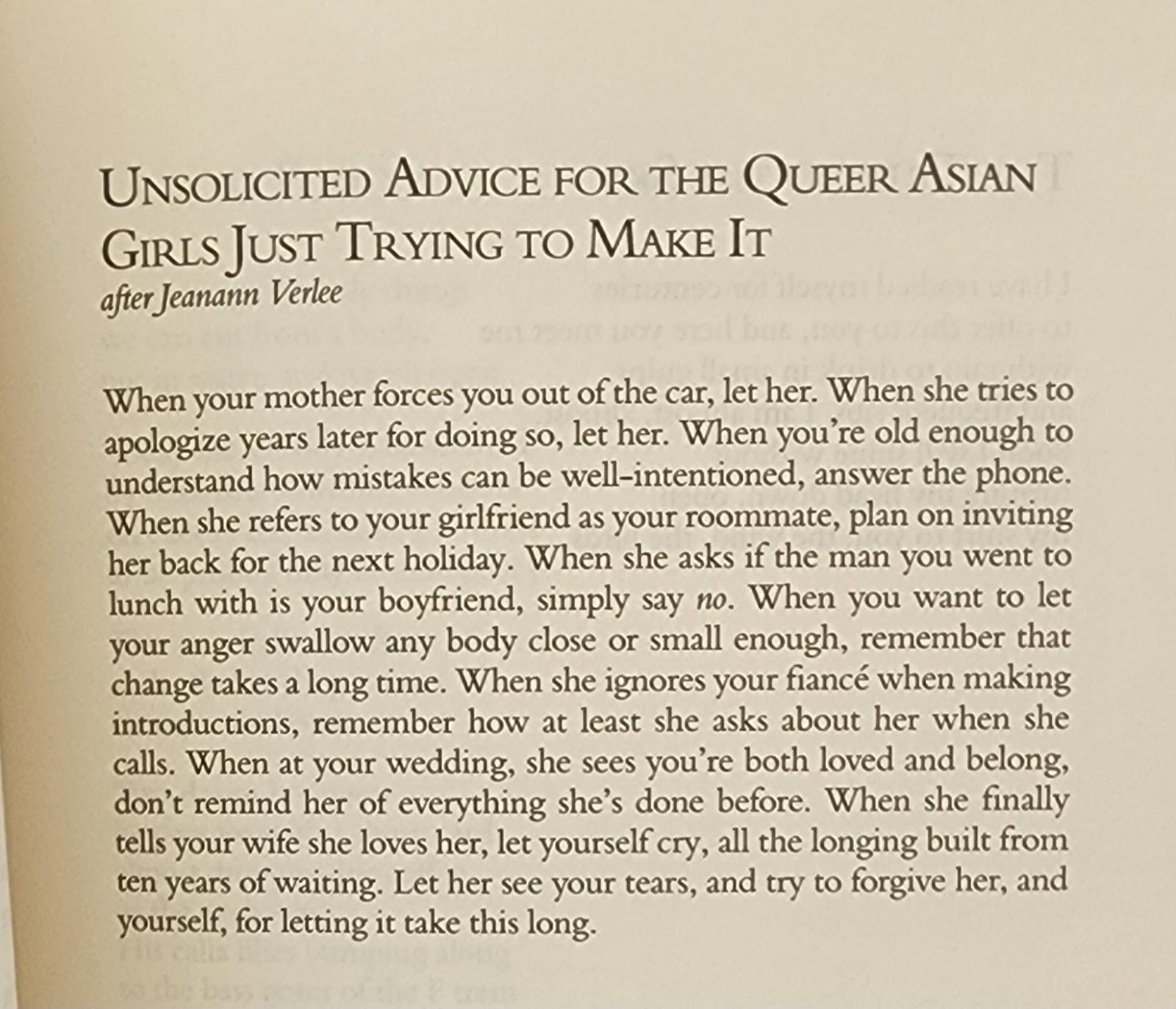
Yes, it’s a story about “queer Asian Girls” but it’s also about mothers, daughters, weddings, love, and forgiveness – all things that many of us can relate to.
How about these lines about being worthy?
Most days, it is hard to remember
I am worthy to be loved, even without
the right answer, the right joke,
the right moment.
And yet, here is my wife,
trying to tell me
a story around her toothbrush,
bragging about me to her parents,
bringing my favorite dessert home, as if
I could still be an unpredictable ending
that she wants to see unfold.
Haven’t we questioned our worthiness? Haven’t we also been loved in this way too – or have craved for such love? Is this not a story that many of us are familiar with?
When asked what they are working on after Cut to Bloom, Choi said this:
I’m working on a 2nd poetry manuscript that has been orbiting around my father’s death in 2020, my divorce, and finally coming out as transgender and beginning to transition. Sometimes I wonder what will be the thread that ties all of these subjects together. Today that thread is a look at what it means to start over and again, how grief brings out truth even if its unbearable, how much life can change in unexpected ways when one claims themself.
Are these – starting over, grief, life changing in unexpected ways, claiming oneself – not the stuff of our stories?
What I am trying to say is that you should come out to hear Noah Arhm Choi “unfold” their stories on stage on Thursday, April 27th at Monteabaro Hall at Howard Community College. Get your tickets right here. If you are a student (HCPSS high school or HCC), it’s free!
Whether this is your first poetry reading or your 264th poetry reading, you are all welcome to “poetry of belonging.”
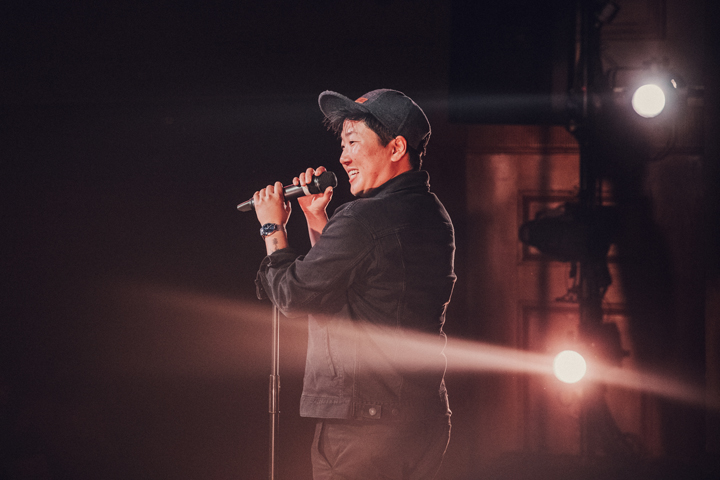
Noah Arhm Choi is the author of Cut to Bloom (Write Bloody Publishing) the winner of the 2019 Write Bloody Prize. They received a MFA in Poetry from Sarah Lawrence College and their work appears in Barrow Street, Blackbird, The Massachusetts Review, Pleiades, Split this Rock and others. Noah was shortlisted for the Poetry International Prize and received the 2021 Ellen Conroy Kennedy Poetry Prize, alongside fellowships from Kundiman, the Sewanee Writers’ Conference, and the Martha’s Vineyard Institute of Creative Writing. They work as the Director of the Progressive Teaching Institute and Associate Director of DEI at a school in New York City. Jeanann Verlee, the author of Prey, noted “Cut to Bloom is neither delicate nor tidy. This immense work both elucidates and complicates ethnic, generational, and gender violence, examining women who fight for their humanity against those who seek to silence―indeed, erase―them.”
Wilde Readings with Martin Malone, Katy Giebenhain, Alan Bogage

We welcome you to the April edition of the Wilde Readings Series with the hosts of The Ragged Edge, Martin Malone, Katy Giebenhain, and Alan Bogage. The event is hosted Laura Shovan. Join us at the Columbia Art Center (Columbia Art Center 6100 Foreland Garth Columbia, MD 21045) on Tuesday, April 11th 7-8:30 PM. Please spread the word – bring your friends, family, and students.
We encourage you to participate in the open mic. Please prepare no more than five minutes of performance time/two poems. Sign up in advance by calling the Columbia Arts Center, or when you arrive. The number is 410-730-0075. Light refreshments will be served. Books by both featured authors and open mic readers will be available for sale.
Get to know our featured authors Martin, Katy, and Alan!
Who is the person in your life (past or present) that shows up most often in your writing?
Alan: Grandfather.
Martin: My poems don’t tend to be about specific people very often. Many of them draw from mythology and mythic characters – the Norse wolf Fenris, Odysseus, Aztec gods and myths. Or they are about things I have seen – observations of everyday events – a woman in the car in front of me putting on make-up while she drove, looking at the skin on the backs of my old worn hands, walking on streets familiar or new, fishing the Gallatin River in Montana; traveler tales – the shock of seeing things for the first time and attempting to capture the memory and the emotion of that event – Cuzco, Florence, New York City; visual stimuli – photos-artistic or everyday or journalistic or old family snapshots, or paintings or sculpture.
Katy: Images and circumstances reappear more than specific people. My brother has a consistent, indirect influence on my perspective when I write. I have not thought about this question before. It might be my father. His stories of growing up on a dairy farm have a way of popping up in unlikely associations in my poems.
Where is your favorite place to write?
Alan: Dining room table. I know, how boring.
Martin: While I only have access to this space one month a year- from mid-June to mid-July, the screened porch of the house we rent in Maine faces the Penobscot Bay. When I get up at sunrise and sit at that table with the day’s first coffee, that is ideal. Eagles and cormorants hunting and the small birds of everyday life all dart by. Clouds float along changing shapes and changing the morning light and fishing boats going out and already returning make this an hour of quiet and wonder that is hard to beat for concentration, and just pure ahhh. The rest of the year, I either write in my home office, where my laptop is, and with the advantage of nearness to my own library, or in a comfortable sunny chair in our living room.
Katy: Hmmm, I don’t have a particular favorite.
Do you have any consistent pre-writing rituals?
Alan: I put on ECM label jazz – Eberhard Weber, Jan Garbarek, Pat Metheny.
Martin: Waking with the lines already coming is a great start. Sometimes that means grabbing the bedside notebook and retreating to the bathroom so as not to wake my wife. If it is late enough to get up – at least 5, I can go to the kitchen, make coffee and perhaps toast, and write at the dining room table watching the eastern sky’s first red bar and then the brightening sky. If I’m not starting with dream lines, I choose poets to read to put my mind in the right frame. For my current large project – a poem cycle of Aztec and Spanish monologues about the fateful 16th century meeting of two worlds, I often start by reading Aztec or other indigenous poets. There are many more than most people realize. Otherwise, depending on what I have in mind to write about, I may pull down Gary Snyder, Elizabeth Bishop, Auden, Williams, or whoever seems most helpful.
Katy: I start on paper (notebooks, legal pads, sticky notes, envelopes, paper scraps by the cutting board, the edges of a newspaper article – yes I still like hardcopy newspapers – cheers).
Who always gets a first read?
Alan: Friends
Martin: My first reader is always my wife, Jane, who I know is biased but has a keen eye, especially for a word or phrase that doesn’t work. She works through every early draft before anyone else sees anything. Before the more critical reactions of workshops, her sympathetic reading is the best place to start, without getting discouraged too early. She has my abiding gratitude.
Katy: Often my husband. He is good at zeroing in on parts that are not clear.
What is a book you’ve read more than twice (and would read again)?
Alan: Beloved, Great Expectations, One Hundred Years of Solitude.
Martin: Once again because of my current Aztec-Spanish project, I have been rereading different translations of the Iliad, from Pope’s 18 th century rhyming couplets to the whole slew of recent ones. My favorite for the language continues to be Robert Fagles. But there are so many good ones, each with a different tone. I can’t say I have read all of each one. But contrasting the various books and stanzas is always fascinating. While I have gone back and reread (just once) Pynchon’s earliest novels – The Crying of Lot 49, and V, and William Gibson’s earliest cyberpunk – Burning Chrome, Mona Lisa Overdrive, generally rather than whole books, I find myself returning to short pieces – like Dashiell Hammett’s and Raymond Chandler’s short stories or Borges’ fables, and to poems from favorite poets – Elizabeth Bishop, Billy Collins, Lawrence Ferlinghetti, Seamus Heaney, Pablo Neruda’s odes, Mary Oliver, Robert Pinsky, Gary Snyder, and the guilty pleasure of Sharon Olds’ Odes.
Katy: Geography of the Forehead by Ron Koertge and Copperhead Cane by Jim Wayne Miller with German translations by Thomas Dorsett.
What is the most memorable reading you have attended?
Alan: Allen Ginsberg, Archibald MacLeish.
Martin: The biannual Dodge Poetry Festival in Newark NJ has been the most overwhelmingly powerful poetry event I have ever attended. My first visit in 2016 opened with a reading in the big hall (NJ Performing Arts Center – NJPAC) by the festival’s top poets, including Gary Snyder, Billy Collins, Martin Espada, Anne Waldman, Li-Young Li, and I am sure others I have forgotten. It genuinely brought me to tears. Every festival since then has been a wondrous three days. Nothing else I have ever been a part of has been as magical.
Katy: This is tricky. Many come to mind. I really enjoyed a reading that the Welsh poet Tony Curtis and his wife Margaret gave in Pennsylvania several years ago at “A Dylan Thomas Evening.” It was magical to hear them on this side of the Atlantic.
Alan Bogage is a retired librarian living in Westminster, Md. He has worked for Carroll Community College, American University, Howard County (Md.) Public Library, and Robert Morris College. He has facilitated (with others) a number of poetry readings including the Carroll County Arts Council and most recently, First Friday at the Ragged Edge (Gettysburg, Pa). His poems have appeared in Gently Strength Quarterly, Backbone Mountain Review, and the anthology Out of the Mouths of Men.
Katy Giebenhain is the author of Sharps Cabaret (Mercer University Press). Poems and prose have appeared in New Welsh Review, The Arkansas Review, The Examined Life Journal, PoetryXHunger, Bridge Eight, The Pittsburgh Quarterly, BMJ Medical Humanities Blog and elsewhere. Her luddite blog is Big Pharma and the Barkeep at www.katygiebenhain.com. She co-hosts a coffeehouse poetry series with Alan Bogage and Mary Malone.
Martin Malone’s poems have appeared in a number of little magazines, including Dream International Quarterly, Scribble, Seminary Ridge Review, Pennsylvania Bards Against Hunger 2018, Backbone Mountain Review, CentraLit, the Pennsylvania Poetry Society 2021 Anthology, and are forthcoming in the Maryland Literary Review. He is one of the organizers of Gettysburg’s First Friday Poetry Series. He was a professor of sociology and anthropology for 31 years at Mount Saint Mary’s University. His chapbook, Simple Gifts, was published in 2014. He lives in Gettysburg, Pennsylvania, with his wife, Jane.
 HoCoPoLitSo