Home » Articles posted by hocopolitso (Page 8)
Author Archives: hocopolitso



Belinda McKeon to read at HoCoPoLitSo’s 39th Irish Evening of Music and Poetry
HoCoPoLitSo’s guest for its annual Irish Evening on February 10, 2017 is the award-winning writer and playwright Belinda McKeon. McKeon’s reading will be followed by Narrowbacks Eileen Korn Estes, Jesse Winch, Terence Winch, Linda Hickman, and Michael Winch in a concert of traditional Irish music, with stepdancers from the Culkin School. The Narrowbacks will be performing music from their newly released This Day Too: Music from Irish America with Terence Winch, Michael Winch, & Jesse Winch. This is the first album featuring new material from Terence Winch-composer of many of the original Celtic Thunder’s best-known songs- in almost ten years. Irish beverages and snacks will be available.

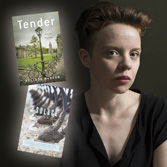 Belinda McKeon’s debut novel, Solace, won the 2011 Faber Prize and was voted Irish Book of the Year, as well as being shortlisted for the James Tait Black Memorial Prize. Her second novel, Tender, was shortlisted for the Eason Book Club Novel of the Year at the 2015 Irish Book Awards. The Irish Book Awards website noted “Brave, moving and powerfully told, Tender confirms Belinda McKeon’s status as one of the most exciting contemporary voices in Irish fiction.” About her second novel, Kirkus (starred review) said “Exquisite…Captures something essential about vulnerability, love and longing.” A Kind of Compass: Stories on Distance, edited by McKeon, was published in 2015. Her essays and journalism have appeared in the Irish Times, the New York Times, the Paris Review, the Guardian, A Public Space and elsewhere. As a playwright, she has had work produced in Dublin and New York. Fiona Wilson, The Times (U.K.), noted “McKeon is a superb and sophisticated writer, who captures the barely articulable feelings between young people on the brink of adulthood.”
 McKeon joins a long list of luminary Irish authors HoCoPoLitSo has brought to Howard County audiences, including Frank McCourt, Colm Tóibín, Anne Enright, Colum McCann, and Emma Donoghue. For 39 years, HoCoPoLitSo’s Irish Evening has celebrated the substantial impact of Irish-born writers on the world of contemporary literature.
The evening begins at 7:30 p.m. in the Smith Theatre of the Horowitz Center for Visual and Performing Arts on the campus of Howard Community College. General admission tickets are $35 each; available on-line at http://www.brownpapertickets.com/event/2716229 or by sending a check and self-addressed envelope to HoCoPoLitSo, 10901 Little Patuxent Parkway, Horowitz Center 200, Columbia, MD 21044. Each ticket purchased by January 15th includes a complimentary adult drink.
HoCoPoLitSo works to cultivate appreciation for contemporary poetry and literature and celebrate culturally diverse literary heritages. The society sponsors literary readings and writers-in-residence outreach programs, produces The Writing Life (a thirty-minute writer-to-writer talk show), and partners with the public schools and cultural organizations to support the arts in Howard County, Maryland. For more information, visit www.hocopolitso.org.
Reading Recap: On the coattails of her words – Carolyn Forché
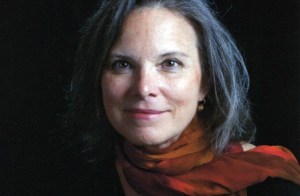
© Don J. Usner / Blue Flower Arts
When poetry lovers attended a Carolyn Forché reading Oct. 30, they probably expected gorgeous wordplay. But beyond the language, the world’s troubles — even those we didn’t know about — were laid bare.
Should we expect any less from the writer who coined the phrase “poetry of witness”?
At HoCoPoLitSo’s most recent event in the annual fall Lucille Clifton Reading Series, Forché gave HoCoPoLitSo audiences an exclusive — a reading from her yet-unpublished manuscript, In the Lateness of the World.
The whole world crept into the theater on the coattails of her words: the refugees fleeing Syria in flimsy rubber boats and her grandmother’s crossing of the Atlantic to reach Ellis Island, the siege of Sarajevo and the resistance of the Russian poet Pushkin.
Despite being thick into recovery from pneumonia, Forché delivered a forceful reading of her work, and answered questions for half an hour after the reading with the audience about how she helps translate poetry from Vietnamese, Bulgarian and Arabic, the tradition of oral poetry and human rights around the world. Even in the questions from the audience, in which one poetry lover talked about the thousands of annual deaths along the Rio Grande, the world’s woes were evident.
Author of two collections of poetry of witness, including the seminal Against Forgetting: Twentieth-Century Poetry of Witness (1993) and the more recent Poetry of Witness: The Tradition in English, 1500 to 2001 (2014), Forché has always been both a human rights advocate and a poet.
During the afternoon’s taping of HoCoPoLitSo’s The Writing Life, a thirty-minute writer-to-writer talk show hosted by Grace Cavalieri (also the host of the Library of Congress’ The Poet and the Poem: https://www.loc.gov/poetry/media/poetpoem.html), Forché talked about her beginnings, and about “my poet’s responsibility.”
She talked with Cavalieri about winning a Guggenheim, meeting someone in California who talked with her about El Salvador, and about voyaging to Central America to find out what was happening. Turns out, it was death squads, the military dictatorship’s brutality and an impending revolution. She began writing to Amnesty International, and putting poems on paper. Those experiences gave rise to her book The Country between Us (1981), which became that rarest of birds, a poetry bestseller.
At the tail end of the question session after her reading, a student asked, “What would you tell young poets of witness?”
“Stay open, stay awake,” Forché said, and don’t think you have to travel the world to find trouble. There’s plenty here at home. “Enlarge your capacity for empathy.”
“Poetry,” she told Cavalieri during The Writing Life taping, is “the natural prayer of the human soul,” and can work to heal the world.
Let’s hope.
— Susan Thornton Hobby,
Recording secretary

HoCoPoLitSo Recognizes Howard County Students for Literary Achievement
For thirty-five years the HOward COunty POetry and LITerature SOciety (HoCoPoLitSo) has awarded book prizes to the winners of its All County Writing Contest, and recognized students nominated by their teachers for Promise and Achievement in Language Arts. To foster lifelong reading and a love of literature, HoCoPoLitSo presents book awards with personalized bookplates. The tradition continued this year as HoCoPoLitSo board members made presentations at all Howard County public high school senior award assemblies and the Homewood Center.
Books were presented to eleven creative writing winners: Nadine Eloseily (Centennial), Angelina Zater (Howard), and Kasmita Mirani (Glenelg) in the personal essay category; Christian Salazar (Oakland Mills) Ben Yodzis (Hammond), Alexa Marquis (River Hill), Erin Hill (River Hill) and Lawrence Qiu (River Hill) in the short story category; and Xin He (River Hill), Kasmita Mirani (Glenelg) and Kiara Bell (Oakland Mills) in the poetry category. This year’s judges were Sama Bellomo, rehabilitation technologist; Joelle Biele, poet and editor, Patricia Van Amburg, poet and professor, Howard Community College; and Nsikan Akpan, HoCoPoLitSo board member and Former Promise and Achievement in Language Arts Award Winner.
In addition, twenty-four students were chosen by their English Departments to receive HoCoPoLitSo’s Promise and Achievement Award in Language Arts. The honorees were: Amanda Etcheberrigaray, Connor Gallant (Atholton), Jessie Kwon, Teresa Whittemore (Centennial), Tiffany Nguyen, Zoe Read (Glenelg), Emily Carter, Matthew Sinnott (Hammond), Mia Dubin, Emilee Melton (Homewood Center), Hunter Hensley, Rachel Walter (Howard), Naomi Yang, Theo Yang (Long Reach), Devon Carberry, Grace Yi (Marriotts Ridge), Casey Kindall, Cory Weller (Mt. Hebron), Kiara Bell (Oakland Mills), Joseph Smith, Marya Topina (Reservoir), Alexa Marquis (River Hill), Yazunat Guta, and Sara Shemali, (Wilde Lake).
Thirty-one students in all received books by such outstanding poets and writers as Lucille Clifton, Sandra Beasley, Michael Collier, Billy Collins, Emma Donoghue, Rita Dove, Eamon Grennan, Josephine Hart, Robert Hass, Colum McCann, and Richard Wilbur. HoCoPoLitSo is dedicated to enlarging the audience for contemporary poetry and literature through public readings, special events, writer-in-residence visits, and The Writing Life, a cable television series produced at Howard Community College, now available on YouTube, for more than 40 years.

Presenting Novelist Nadia Hashimi on June 26
Here are some numbers about Afghan refugees:
- 2 million Afghan citizens were displaced by violence in 2015.
- 5 million are awaiting repatriation or citizenship in Pakistan, but the government there is starting to force the refugees back to Afghanistan.
- 1 million wait in Iran and are enduring increasingly rough treatment and deportation.
And here’s why we can read those sentences and glaze over: because our brains can’t comprehend the millions of stories in the refugee crisis.
That’s why one photograph, of one drowned toddler and his two tiny shoes sparked more outrage than the daily tally of refugees. That photo told a story that had been incomprehensible.
 Novelist Nadia Hashimi, who is of Afghan descent but grew up in New York and New Jersey, wanted to tell one family’s story, to show the humanity in the humanitarian crisis that is the migrant emergency.
Hashimi centered her 2015 novel, When the Moon is Low, around a schoolteacher, Fereiba, who lives with her family in Kabul until the Taliban imprison and kill her husband. She and her children escape the violence of Afghan’s capital and endure boat trips in the dead of night, border crossings, predatory smugglers, hunger, cold and exhaustion in their quest to reach family in London.
In the prologue, Hashimi writes in the voice of Fereiba, who is lying in a hotel bed with her children: “One day, we will not look over our shoulders in fear or sleep on borrowed land with one eye open or shudder at the sight of a uniform. One day we will have a place to call home. I will carry these children — my husband’s children — as far as I can and pray that we will reach that place where, in the quiet of their slumber, I, too, will rest.”
Hashimi will read from that novel June 26 as part of a program HoCoPoLitSo is producing with the Columbia Festival of the Arts’ summer festival. The Toronto Star wrote of When the Moon is Low: “A heartfelt story of courage amidst a world short on compassion.”

Novelist Nadia Hashimi
Hashimi’s own story is compelling. Her mother grew up in the 1960s and ’70s in a modern Kabul, going to college, wearing mini skirts, listening to music with her friends. When the Soviet invasion was imminent, her mother migrated to the Europe, then got her master’s degree in engineering. Her father emigrated to the U.S. to seek his own education. Afghanistan, under the influence of the Taliban and extremist warlords, forced women to cover, divided families, reinstituted child marriage and outlawed women’s education.
Now a pediatrician from Potomac with four children, Hashimi has written three novels in four years. When she traveled to Afghanistan after the publication of her first two novels, she found it much changed from her parents’ stories. The years have not been kind to her parents’ home country, she told an audience at the Miller Library earlier in April. Since 1970, life in Afghanistan has become especially hard for women — who were for years forbidden to work, go to school or walk unaccompanied — and she wanted to tell those stories.
When the Moon is Low is particularly topical now, in the midst of the ongoing wave of migrants seeking a better life than in their turbulent, violent native land.
Foreign Policy, in a fascinating piece about the responsibility of America in the twisted history of Afghanistan, wrote, “The case of the Afghans, one of the world’s largest refugee communities and the second-largest group – behind Syrians – to arrive in Europe recently, should serve as a reminder that the origins of today’s predicament are neither recent nor confined to the refugees’ home countries.” (Full article.)
America and its policies bear responsibility for the refugees struggling to reach a peaceful place. We should not ignore the crisis, neither its numbers, its images nor its stories. Join HoCoPoLitSo and the Columbia Festival of the Arts on June 26 to hear Hashimi read from When the Moon is Low, and a sneak peek at her upcoming book about the stories in a women’s prison in Afghanistan, House Without Windows (August 2016).
— Susan Thornton Hobby
HoCoPoLitSo board member
and recording secretary

Marie Howe to read at 8th Annual Blackbird Poetry Festival
 HoCoPoLitSo’s guest for its eighth annual Blackbird Poetry Festival is former New York State Poet Laureate and acclaimed author Marie Howe.
The Blackbird Poetry Festival, to be held April 28, 2016, on the campus of Howard Community College, is a day devoted to verse, with student workshops, book sales, readings and patrols by the poetry police. The Sunbird poetry reading, featuring Ms. Howe, as well as Washington, D.C., poet Sandra Beasley and Howard Community College students, will start at 2:30 p.m. Ms. Howe will read from and discuss her most recent work, The Kingdom of Ordinary Time, as well as new, unpublished poems, during the Nightbird Poetry Reading, starting at 7:30 p.m. in the Smith Theatre of the Horowitz Center for Visual and Performing Arts. Nightbird general admission tickets are $20 each (students and seniors are $15) available on-line at http://www.brownpapertickets.com/event/2476204 or by sending a self-addressed envelope and check payable and mailed to HoCoPoLitSo, 10901 Little Patuxent Parkway, Horowitz Center 200, Columbia, MD 21044.
“Marie Howe’s poetry is luminous, intense, and eloquent, rooted in an abundant inner life.
Her long, deep-breathing lines address the mysteries of flesh and spirit, in terms accessible
only to a woman who is very much of our time and yet still in touch with the sacred.”—Stanley Kunitz
Acclaimed poet and teacher Marie Howe served as the Poet Laureate of New York State from 2012 to 2014. Her mentor and former U.S. Poet Laureate Stanley Kuntz said: “Marie Howe’s poetry is luminous, intense, and eloquent, rooted in an abundant inner life. Her long, deep-breathing lines address the mysteries of flesh and spirit, in terms accessible only to a woman who is very much of our time and yet still in touch with the sacred.”
Eamon Grennan Delights the 38th Annual Irish Evening Crowd.
Eamon Grennan’s voice from the stage was low, intimate and slightly scratchy, as if he were whispering his poems into your ear. It was a lovely effect, one which the audience quickly took a shine to, but induced by Grennan’s terrible respiratory affliction.

Eamon Grennan at the book signing table. Photo by Lee Waxman.
Sick as a dog, Grennan traveled to Columbia anyway, and read at HoCoPoLitSo’s 38th Annual Irish Evening of Music and Poetry last Friday. He knew, as a small organization with little fat in our budget, that HoCoPoLitSo would be floored if he didn’t read. So he coughed backstage, and before and after taping his appearance on The Writing Life (HoCoPoLitSo’s literary talk show), popped cough drops, mopped his nose and soldiered on.
HoCoPoLitSo, and its audience Feb. 19, was grateful, for his reading, his gentle humor and his poems about his native country and ours, the one he adopted fifty years ago. He still migrates every year between Poughkeepsie, where he taught for forty years at Vassar, and the west of Ireland.
Her Excellency Anne Anderson, the Irish ambassador, introduced Grennan as “deeply rooted in Ireland, yet totally versed in the international tradition.” Grennan, she said from the stage, “finds the extraordinary in the ordinary, and sacredness in the small moment.”
Judges agree. Poet Robert Wrigley noted, on awarding Grennan the Lenore Marshall Poetry Prize, that “Grennan would have us know—no, would have us see, feel, hear, taste and smell—that the world, moment by ordinary or agonizing moment, lies chock-full with its own clarifications and rewards.”
Grennan has a special way with poems about the natural world; several in the audience commented afterwards how much they loved “Listen,” a ruminative poem about cow conversation. Friday night’s audience laughed and clapped for his preamble to his disquieting poem, “Rats,”: “I’m usually kind to animals,” he said, with a wry smile.
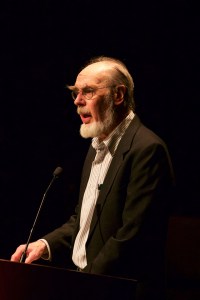
Eamon Grennan. Photo by Lee Waxman.
At the last heartfelt line, “Come back and wish on us,” from his poem “Ladybird and Mother,” the audience burst into spontaneous applause. His superstitious mother, he said fondly, always wished on the tiny red and yellow spotted beetles that the Irish call “ladybirds,” and we call “ladybugs.”
Many in the audience nodded sadly when hearing his elegy to the late, great Irish poet Seamus Heaney (Nobel winner and HoCoPoLitSo guest three times). The poem “Sudden Dark” describes how Seamus himself would have found the sharp shards of light in the dark of mourning.
“Pulling light out of dark,” Grennan explained, “poetry is about recognizing both sides constantly.”
Grennan even read from William Butler Yeats’ controversial and beautiful poem, “Easter, 1916,” about the Easter uprising 100 years ago this April, and called it “the most responsible political poem in English.”
And he stayed late, signing every last seeker’s book, especially his latest, There Now, and chatting with Irish, American and English alike in the lobby. Finally, about 10:15 p.m., he gave up the ghost, and asked for a ride to his hotel. Unflaggingly grateful and polite, he chatted in the car about the crowd, migrating back and forth to Dublin, and his daughter’s career as a visual artist before he and his cough disappeared into the lobby.
Susan Thornton Hobby
Recording secretary
Bonus: Below you can enjoy the episode of HoCoPoLitSo’s The Writing Life that Mr. Grennan recorded in 1995 when he last visited Howard County. In the video, he is in conversation with Terence Winch.
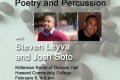
Presenting Beans with No Salt: a Performance of Poetry and Percussion with Steven Leyva and Josh Soto
 Beans with No Salt: Poetry and Percussion
featuring Steven Leyva and Josh Soto
Kittleman Room of Duncan Hall
Howard Community College
February 6, 4-6 pm (Get Tickets)
Join HoCoPoLitSo for a coffeehouse afternoon of poetry and music, flavored with a bit of Zydeco as a warm-up for Mardi Gras.
Baltimore poet and Little Patuxent Review editor Steven Leyva reads from his work, centered around his tuneful hometown of New Orleans. He will be accompanied by drummer Josh Soto on congas and drum set. Coffee and snacks will be served before and during the performance, and a question and answer session follows.
In Créole the word Zydeco could translate to “Green Beans,” but colloquially a better approximation would be “Beans with no salt,” which is a sly way of expressing hard times. The reciprocal movement between lack and plenty, famine and feast, often inspires innovation in literature and music, making the borders of genres porous. Using improvisation, audience participation and a bit of luck, Leyva and Soto seek to carve out a space in the ear and imagination where hard times breed a new music for the heart, and percussion becomes the poet’s blank page.
This event is presented by HoCoPoLitSo in partnership with the Columbia Festival of the Arts winter performance series, “Beyond the Blues.” Join us for Poetry and Percussion at 4 p.m. on Saturday, Feb. 6, 2016, at the Kittleman Room on the campus of Howard Community College. A book signing and reception will follow. Tickets are $15 general admission and $10 for students and seniors. They are available online through Brown Paper Tickets.

Eamon Grennan to read at 38th Irish Evening of Music and Poetry
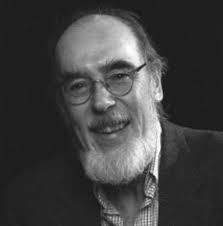 HoCoPoLitSo’s guest for its 38th Annual Irish Evening is the award-winning poet Eamon Grennan. He will read from his work starting at 7:30 p.m., February 19, 2016, at the Smith Theatre in the Horowitz Center for Visual and Performing Arts on the campus of Howard Community College. Grennan’s reading will be followed by Narrowbacks Eileen Korn Estes, Jesse Winch, Terence Winch, Linda Hickman, and Brendan Mulvihill on fiddle in a concert of traditional Irish music, with stepdancers from the Culkin School and Irish coffee and beer for sale in the lobby.
Starting with Wildly for Days in 1983, Grennan’s work has earned him much praise from the literary collective, including fellowships from the National Endowment for the Arts, the National Endowment for the Humanities, and the Guggenheim Foundation. Former U.S. Poet Laureate Billy Collins said of Grennan: “To read him is to be led on a walk through the natural world of clover and cricket and, most of all, light, and to face with an open heart the complexity of being human.”
Grennan has published more than twenty books of verse, along with translations and a collection of essays about modern Irish poetry; his latest is There Now (July 2015). His works have won the PEN Award for Poetry in Translation for Leopardi: Selected Poems (1997), the Lenore Marshall Poetry Prize from the Academy of American Poets for Still Life with Waterfall (2002), and Pushcart Prizes. His collection Out of Breath (2007) was nominated for the 2008 Poetry Now Award and he was a finalist for both the LA Times Book Prize for What Light There Is and Other Poems (1989) and So It Goes (1995) for the Paterson Poetry Prize.
Grennan follows other luminary Irish authors who have come to Howard County, including Frank McCourt, Eavan Boland, Hugo Hamilton, Paula Meehan, Colm Tóibín, Anne Enright, Colum McCann, and Emma Donoghue, to name a few. For 38 years, HoCoPoLitSo’s Irish Evening has recognized and celebrated the enormous impact of Irish-born writers on the world of contemporary literature.
General admission tickets are $35 each; available on-line at http://www.brownpapertickets.com/event/2465863 or by sending a check payable and self-addressed envelope mailed to HoCoPoLitSo, 10901 Little Patuxent Parkway, Horowitz Center 200, Columbia, MD 21044.

Expectations for “A Technicolor Life”, on Stage at Smith Theatre
Susan Hobby is a member of the HoCoPoLitSo board. Look for her Lit Up column here on the HoCoPoLitSo blog.
A play about three generations of stress in one household sounds like a downer: a divorced workaholic mother; two sisters, one shy and slightly chubby, one an embittered vet who lost her left hand in Irag; plus a grandmother dying of cancer.
So what are Marilyn Monroe and Jane Russell doing up on stage vamping while the ladies toss back wine coolers and wear neon wigs?
I’m eager to find out. Rep Stage is producing the world premiere of Technicolor Life, by Jami Brandli, that centers around this mainly female family. Maxine, a slightly awkward freshman in high school, just wants to help her sister, Billie, who returned from Iraq with no left hand, plus the psychic wounds that come from combat and military sexual assault.
Maxine’s mother is an overworked attorney who drinks a bit too much, whose husband left her for a younger woman a few years ago. And Franny, Maxine’s grandmother, shows up afte r being kicked out of the assisted living facility where she had been living. Turns out, she’s dying of cancer. But she’s also a live wire who insists the family do things together before she kicks off.
So they watch old movies — especially Gentlemen Prefer Blondes — and work makeover miracles. Billie’s not having it; she runs 10 miles a day and slurps from her “water” bottle of vodka to kill the pain. Maxine, with the help of her new imaginary Blonde friends, finds Billie a fellow vet to date, and finds her voice. Meanwhile, Franny is arranging her euthanasia with Canadian drugs and her going-away party. Throughout, high school student Maxine practices her vocabulary words (serendipity, debonair, unique) and does reports for school on amputation, assisted suicide and turret gunners. Doesn’t sound like a barrel of laughs, but the play reads tragic comedy. Things do get better.
The play captures the awkward efforts of Maxine, the rage of post-traumatic stress syndrome, the yearning for connection between family members.
An ingenious part of the text — since I haven’t seen Technicolor Life staged, I have to imagine it — is the “playing field,” a real space onstage that illustrates the imagination. The playing field becomes a dance floor, a makeover space, Iraqi combat reenactments and even Internet dating site brought to life.
Part of the Horowitz Center’s “Year of the Woman,” Technicolor Life runs Oct. 21 to Nov. 8 in Rep Stage. For tickets visit www.repstage.org.

 HoCoPoLitSo