
Home » Uncategorized (Page 12)
Category Archives: Uncategorized


April Wilde Readings to Feature Poets Bruce Jacobs, Naomi Thiers, Open Mic
Howard County’s monthly free reading series continues on the second Tuesday of each month. In April, the reading will feature poets Bruce Jacobs, Naomi Thiers, and an open mic — that means you, bring your work.
Wilde Readings is sponsored by HoCoPoLitSo and coordinated by Laura Shovan, Ann Bracken, Linda Joy Burke, and Faye McCray.

All are welcome, and everyone is encouraged to participate in the open mic. Please prepare no more than five minutes of performance time/two poems. Sign up in advance by calling the Columbia Arts Center, or on the sign-in sheet when you arrive. The number for the Arts Center is 410-730-0075.
Light refreshments will be served. Books by both featured authors and open mic readers will be available for sale.
Poets Bruce Jacobs, Naomi Thiers and you.
Hosted by Linda Joy Burke.
April 9, 2019 • 7:00 p.m.
Columbia Association Arts Center

Bruce A. Jacobs is a poet, author, and musician. He has appeared on NPR, C-SPAN, and elsewhere. His two books of poems are Speaking Through My Skin (MSU Press), which won the Naomi Long Madgett Poetry Award, and Cathode Ray Blues (Tropos Press). His most recent nonfiction book is Race Manners for the 21st Century (Arcade/Skyhorse). His work has been published by dozens of literary journals and sites, including Beloit Poetry Journal, Gwarlingo, Truthout, and the 180 More anthology edited by U.S. Poet Laureate Billy Collins. He lives in Washington, DC.
Naomi Thiers grew up in California and Pittsburgh, but her chosen home is Washington-DC/ Northern Virginia. She is the author of three poetry collections: Only The Raw Hands Are Heaven(which won the Washington Writers Publishing House award), In Yolo County, and She Was a Cathedral(both from Finishing Line Press.) Her poems, fiction, and essays have been published in Virginia Quarterly Review, Poet Lore, Colorado Review, Grist, Sojourners, and other magazines and anthologies. Former poetry editor of Phoebe, she works as an editor for Educational Leadership magazine and lives in a condo on the banks of Four Mile Run in Arlington, Virginia.
Give that poet a laurel wreath -To go with her leather jacket
Poetry scares people.
Poets Laureate? That sounds like they should be wearing circles of laurel leaves on their heads and reciting from hilltops. Super scary.
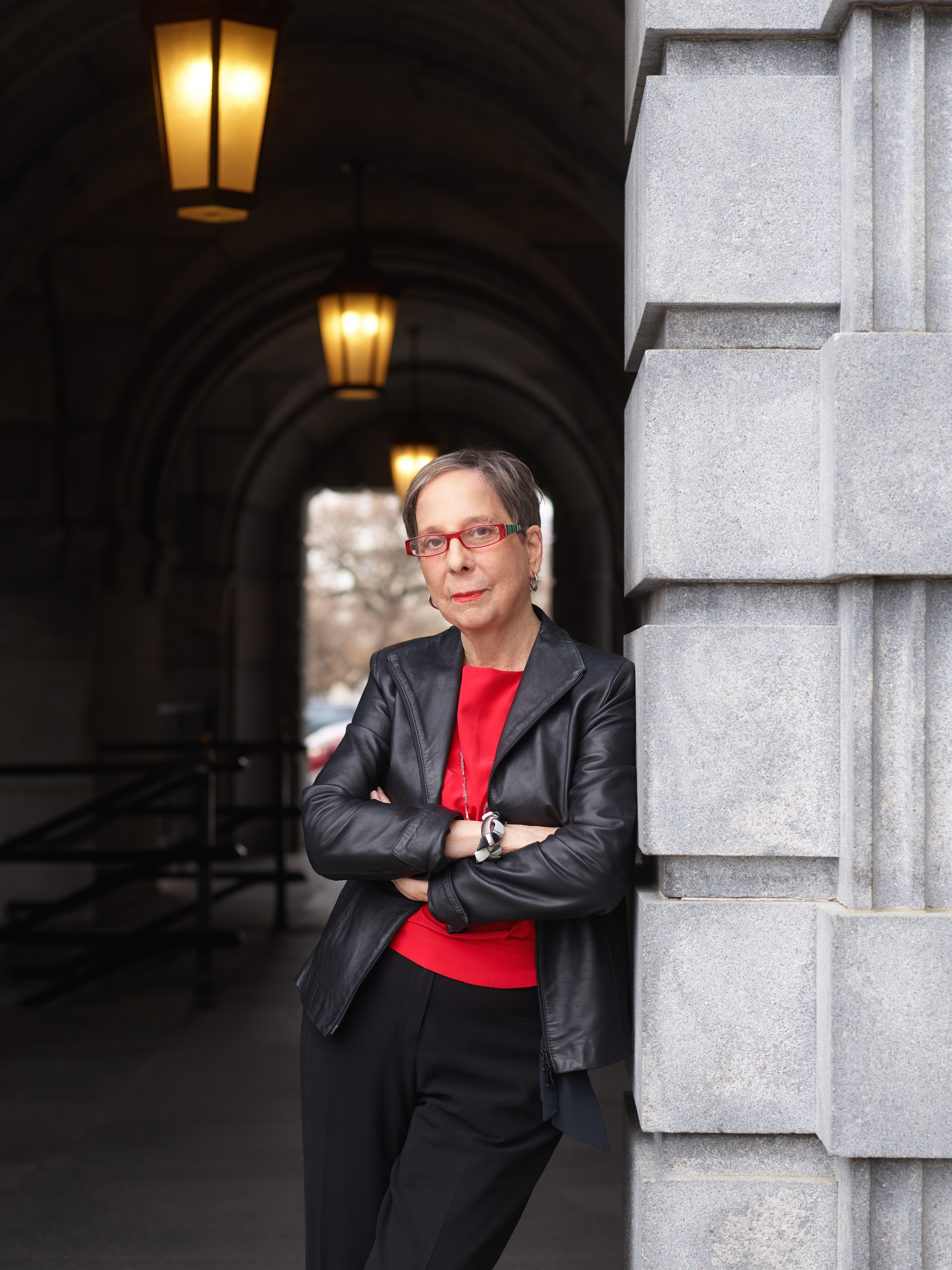
Photo credit Tony Lewis
The new Maryland Poet Laureate is the opposite of that image, though I would highly condone granting her a laurel leaf crown. Grace Cavalieri is more poetry’s grandma, albeit one who wears a leather motorcycle jacket and writes collections of poetry about Anna Nicole Smith.
“She is not a gatekeeper, but one who opens the gate and says, ‘Come in, you are welcome here,’ ” said poet Teri Ellen Cross Davis, head of the Poet Laureate Selection Committee, who introduced Cavalieri on the last day of February at her induction party in Annapolis. (And will offer a workshop and read with Beth Ann Fennelly at this year’s Blackbird Poetry Festival.)
After Davis and other dignitaries finished praising her, Cavalieri beamed at the audience, including her four daughters sitting in the front row. She explained that at their family home, “Poetry has always sat at the table.”
For more than forty years, Cavalieri has hosted “The Poet and the Poem,” an interview show on public radio, now carried by the Library of Congress. She’s written more than 20 books and chapbooks of poetry, had 26 plays produced on the American stage, and won honors like the Pen-Fiction Award, the Allen Ginsberg Poetry Award, and the inaugural Columbia Merit Award from Folger Shakespeare Library.
Those awards sound off-putting, but Grace’s speech to the gathered crowd of past Maryland Poets Laureate, friends, former students at Columbia’s 1960s experimental Antioch College, fellow poets, and Italian cousins wasn’t.
“Here’s what poetry does. It slows us down,” Cavalieri said. “Poetry is a shelter, a haven, it’s dreaming on a page. Poetry keeps us from being lonely. It’s a bridge. It makes us more human.”
 For young people, whom Cavalieri hopes most of all to reach with her message, poetry finds chinks in their armor, the defenses they’ve built up to navigate the world.
“Through writing, they find out who they are. Poetry is self-discovery. You find out where you’ve been and where you’re going,” she said. “I didn’t know who I was until I was 80, now I’m enjoying it very much.”
And after the laughter and applause died down, Cavalieri read one of her signature poems, about her grandparents’ Italian restaurant in Trenton, NJ. The poem’s topic? Something everyone loves – besides Grace – pizza.
Cavalieri came to HoCoPoLitSo’s very first event, on Nov. 19, 1974, with poets Carolyn Kizer and Lucille Clifton. And she started reading her work and teaching workshops with us in 1980, and was our poet-in-residence to the county schools in the 2002 to 2003 academic year. The students and teachers loved her for her energy and enthusiasm, which has not flagged a bit since then.
Cavalieri hasn’t stopped writing because she has this new laurel. Here’s her latest poem, about her latest job:
Terms of Office
for Lawrence J. Hogan, Jr. January 16, 2019
May our Governor hear the language of the people
as terms of his office.
“Language” simply means many people
Have come together to make words.
There are nearly 100,000 words in the English language
I’ve chosen exactly 246, but I want to shine them up
To speak about a man serving in high office;
A man who will walk by the beautiful waters
Of our bays, rivers, rivulets;
One who continues with inner strength
Clearing new paths with elasticity for every kind among us—
Who knows love and hope are not holiday greetings
But governing principles—
A man aspirational for humanity.
Language always leads us to the soul of each matter,
And today it rinses words clean, renewing meaning:
Independence of thought
An honorable nature
Clear vision
Calm in the eye of national storms.
From the rich bottom lands of southern Maryland
To the forested hills of our western state—
From the dynamic energy of northern Maryland
To his own hometown—
May our Governor’s inner spirit seek compassion before action,
May his wisdom see that the heart’s choice dictates the mind’s decisions,
May he be rewarded with radiant pride for his integrity.
In speaking of success, Ralph Waldo Emerson said:
“Each one has an aptitude to do easily some feat impossible to any other
And to do otherwise undermines the talents of all others.”
May Governor Hogan be rewarded with radiant pride for his integrity.
Grace Cavalieri
Maryland Poet Laureate
Susan Thornton Hobby
HoCoPoLitSo recording secretary
“He has these great books that give me feelings,” a young reader raves about Jason Reynolds
 When young adult bestselling author Jason Reynolds heard that HoCoPoLitSo’s archive of The Writing Life shows featured episodes with Amiri Baraka and Lucille Clifton, he shook his head in wonder. When he heard that HoCoPoLitSo’s web site had more than one hundred taped shows with literature’s rock stars, he said, “Oh, I’m going down that rabbit hole!”
And indeed, YouTube has offered scholars, readers, and writers an amazing opportunity – to learn about craft from contemporary literature’s greatest writers. Since 1985, HoCoPoLitSo has been preserving on video a series of half-hour conversations between diverse authors. Many of those writers have recently gone to afterlife rooms of one’s own: Baraka, Clifton, Richard Wilbur, Donald Hall, Gwendolyn Brooks, Frank McCourt.
No one has to set their DVR to catch the cable replays of these shows – just log onto YouTube.com/hocopolitso anytime. HoCoPoLitSo has spent more than ten years digitizing the brittle and fragile archival tapes to preserve those shows. The YouTube channel has garnered more than 1,100 subscribers and 400,000 views. And our latest upload, the show recorded with young adult author and poet Laura Shovan speaking with Reynolds, is already gathering raves.
One school administrator, after watching the show with Jason Reynolds, wrote, “This is a great conversation about author’s craft and decisions in a book (Long Way Down) that many of our students have read! Sharing with all my teachers.”
And a student reader wrote: “My language arts teacher met him a year ago and he signed two books for her and my teacher always pointed out the heart he put in the book and she always brags and says that this is going to be our favorite author and so far yes, he has these great books that give me feelings and before the Spider Man book came out, my teacher knew too.”
Reynolds is converting readers, just like HoCoPoLitSo wants to do.
Susan Thornton Hobby
Executive producer of The Writing Life
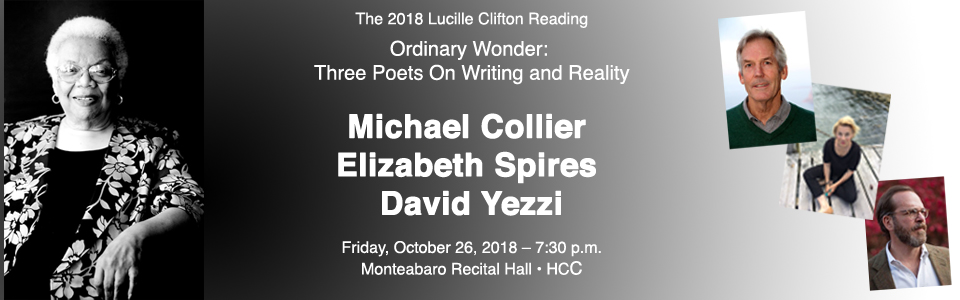
Poets Traveling Like Stars: Michael Collier, Elizabeth Spires, and David Yezzi

Tara Hart
Tara Hart is a Co-Chair of HoCoPoLitSo, and she is known for her beautiful introductions to the guest authors that we host. Below is her introduction to Michael Collier, Elizabeth Spirs, and David Yezzi. These authors read at the Lucille Clifton Reading Series on October 26, 2018 at Howard Community College’s Monteabaro Recital Hall. The introduction has been edited for the blog.
HoCoPoLitSo’s autumn reading series is named for Lucille Clifton, our late artistic advisor, distinguished master poet, and dear friend. We seek to craft a fall event each year that honors the caliber of her poetry and contributions to poetry, but also honors her spirit of connection, inquiry, and social justice, and her love for life and learning. She always let us know if HoCoPoLitSo was up to the mark and we know we would have had her fullest approval and blessing for the season opening event with three master poets Michael Collier, Elizabeth Spires, and David Yezzi.
These poets each have quite distinctive rhythms, tones, and subjects. But when I read their work in proximity to each other, fascinating connections emerge and start to tell a compelling story of the wonder of ordinary experience. When I say “wonder,” I do not mean it is all wonderful. But there is wonder in how many shades a life can hold, how many complexities and contradictions and paradoxes, and yes, how much darkness can be present yet still allow for light. In the work of these poets, you see free verse, but also elegantly structured quatrains, villanelles, and sonnets; there are some explicit references to other contemporary poets but also to King Lear, Keats, Emily Dickinson. These poets include a lot of snow in their poems, a lot of birds and flowers, dreams and ghosts, but also Instagram, humblebrags, and hashtags, anxiety medication, soap operas, game shows, videogames, even Patrick Swayze. There are terrifyingly timely poems about being a 21st century man with terrifying impulses. About guns, plagues, and tragedies in daylight. About those who abuse others’ trust and those who enable abusers. About inadequate rulers, about resistance, about the need to “stay human” amidst the news, the smartphones, and the loneliness.
These poets help us understand both the timeless and contemporary purposes of poetry, this singing and where it might come from. Using some of their own words now, we can see how poetry is “Like the weather that is never one thing.” It might be about making “bright things from shadows.” Poems might be stacks of perfectly balanced rocks or cairns, with words like roaring shells you hold up to your ear that say neither yes nor no, but to which we listen. Poets might be beggars with empty bowls peddling “poems that were never ours though we wrote them”; poets might write from bruised places or from the “place where a night/bird sings.”
All three poets’ work is full of wings (birds, ghosts, leaves, moths, bees, oars) “drumming and drumming.” They drum of ordinary regrets: our missed turns, going away for too long, getting lost, doing things that can’t be undone. Our desires, our clutter. Our “wingless feet.” Our ordinary worries: about children, about loss, about dying. “The terror of all that could befall me, you.”
These poets show us the nature of inquiry: “here in this place, there are no names on the map. There is no map.” They ask “What does it mean to be alive?” Why is “happiness so fleet”? “What is our hate made of?” “What will be left when each thing goes?” “Is it enough? To rest in this moment? To turn our faces to the sun?”
Finally, in Elizabeth Spires’ poem “Starry Night,” she gives us faith that the light of artists keeps travelling like stars, never darkening, never dying. As we stumble, they still shine, so we should keep looking up to them, working wonders.
A LONG WAY TO GO ON GUN VIOLENCE BY LAURA SHOVAN
This essay originally appeared on Nerdy Book Club and has been reposted here for HoCoPoLitSo readers with the permission of the author and Nerdy Book Club. The original posting can be found here: https://nerdybookclub.wordpress.com/2018/11/15/a-long-way-to-go-on-gun-violence-by-laura-shovan/
We woke up on Thursday morning to news of another mass shooting in America, this time at a California bar. It was college night. As the mom of two college students, I was shaken once again. It had only been eleven days since Jews were gunned down in their Pittsburgh synagogue. Twelve since a man killed two people at a grocery store after he was unable enter a predominantly black church nearby.
Writers and publishers are producing a growing number of books for children and teens about gun violence. In This Is Where It Ends, by Marieke Nijkamp, readers witness a mass school shooting through the eyes of several narrators. Marisa Reichardt’s Underwater offers a thoughtful study of a school shooting survivor who suffers from PTSD. The Hate You Give, by Angie Thomas — in which a girl witnesses the police shooting her best friend, a black teen — is now a movie.
These are important books. Kids need these stories as they struggle to understand what we are all struggling with: gun violence is impacting their generation. But what they also need are books that carefully examine our culture’s relationship to violence.

Photo credit: Yassine El Mansouri
Last weekend, a friend and I saw the John F. Kennedy Center for the Performing Arts’ production of Jason Reynold’s Long Way Down. The verse novel was adapted for the stage by Martine Kei Green-Rogers and directed by Timothy Douglas. The play follows the book’s plot: When his older brother Shawn is shot and killed, fifteen-year-old Will follows the rules handed down by the men in his family: “No crying. No snitching. Always seek revenge.” The story takes place as Will rides his building’s elevator – gun tucked into the back of his pants – down to the street, where he plans to shoot his brother’s killer. During that ride, the ghosts of past gun violence in Will’s life visit him, forcing him to look at how each loss has hardened him. He begins to question what he is about to do.
This production was, remarkably, a one-act, one-man show, with actor Justin Weaks playing not only Will, but also the people he has lost. That choice drives home an important point: Will carries each murdered friend and family member deep in his psyche. Each ghost’s visitation peels back a layer of Will’s armor, and we see him feeling emotions most boys are taught to hide: fear, grief, sadness. I won’t go into the wonders of the staging – how the coffin-like elevator was recreated, its mirrored walls reflecting the actor’s face as Will reflects on the people he’s lost.

Photo credit: Yassine El Mansouri
I am still trying to piece together my reactions to Long Way Down after reading the book, experiencing this production, and interviewing Jason Reynolds for a local television series called “The Writing Life.” What sets this book apart is that act of peeling back layers of grief. Readers connect with Will’s first-person voice straight away. We are already rooting for him to make a different choice, even as we understand his in-the-moment decision to punish the person who took his brother’s life. However, as Reynolds introduces us to the ghosts, the reader or audience member begins to understand intergenerational violence and how traumatizing it is for children, especially children of color.
I was grateful that after the standing ovation, a facilitator was on hand to help people process what we had just witnessed. As audience members shared their stories – best friends, siblings lost to gun violence – I was in denial. “Gun violence hasn’t touched me directly,” I thought. But of course, it has. My friend was at our local mall in Columbia, Maryland, during a shooting in 2014. She sheltered in place in a cramped store-room for hours before the all-clear was given. On New Year’s Day, 2017, my neighbor’s fifteen-year-old daughter – my daughter’s friend – was shot and killed by a classmate who had stolen a gun and broken into their house.
Another act of violence in our community was one of the inspirations for my recent middle grade novel, Takedown. On a winter evening in 2007, an ongoing argument between two groups of teens escalated. They went to an empty high school parking lot for a rumble. One boy, a highly-ranked wrestler in the county, brought a bat. He killed another teen that night. I remember sitting down with my son, who was ten years old at the time and part of the county’s tight-knit wrestling community. As a family, we talked about the idea that at any point that evening, the teens involved could have made another choice and walked away from the fight. In Long Way Down, Will’s elevator ride is his moment to decide whether he is going to walk away and step out of the cycle of violence.
Although I decided to tone down the violent moment in my story of a middle school girl who joins an all-boys wrestling team, writing about a traditionally male combat sport gave me an opportunity to look at this issue. And this week, I am reminded that our society is paying the price for celebrating violence among boys and men, whether we actively teach them to seek revenge, or we subtly look the other way under the guise of “boys will be boys.”
Books like Long Way Down are necessary, because they can help us talk with children and teens about the cost of violence, and what it means to walk away.
Laura Shovan’s debut middle grade novel, The Last Fifth Grade of Emerson Elementary, won several awards, including NCTE 2017 Notable Verse Novel, Arnold Adoff Poetry Award for New Voices honor book, and a Nerdy Book Club award for poetry. Laura’s second children’s novel, Takedown, is a Junior Library Guild and PJ Library selection. Look for her next book, A Place at the Table, co-written with author/activist Saadia Faruqi, in 2020. Laura is a longtime poet-in-the-schools in her home state of Maryland.
Power of Poetry – a guest post by Hiram Larew
Poetry doesn’t vote. It can’t rule. It sits on no juries. It signs nothing into law. It neither runs companies or organizes houses of worship. And, it never ever wins an Academy award or Olympic Gold Medal. Or, war. On all of these fronts that matter, poetry is powerless. And for that very reason, of course, it is incredibly powerful.
Poetry is our grins, our anger, your life, my death. It’s the birds that stitch air. It’s the soul of night, the feast of day, and that ever present caution that’s careless. Poetry doesn’t decide. It doesn’t provide. If it answers at all, it does so with questions. And, to be honest, poetry doesn’t care; it cares as deeply as wells do, yes, but it never brings you water. It wants nothing from you except wanting – this is probably its most gifting power.
And it soars, when allowed to, over just about anything else we can imagine. It’s not the clouds above so much, but our need for them. Said all at once, poetry is powerful for what it cannot be, and for the dreams it wants.
If you should ever encounter a poem that makes you jump, ask yourself why. Most likely, the answer – if there is one – will be from so far-fully inside you that ancestors will wink.
Finally, poetry is really nowhere and so it’s just about everywhere around us. It lives in the corner of your eye. It watches everything from the side. Poetry is the best glancer of all. It also aches with whatever is gone. And, it cheers – even raves – for what may never be. All to say, thank goodness – and badness – for poetry, and for our never being completely sure how powerfully potent it really is.

image used with permission by Hiram Larew
Hiram Larew’s work has appeared most recently in Little Patuxent Review, FORTH, vox poetica, Poetry Super Highway, Poets & Artists, Every Day Poems, Lunaris Review (Nigeria), Amsterdam Quarterly, and The Wild Word. Author of three collections, he’s been nominated for four national Pushcart prizes, is a member of the Shakespeare Folger Library’s poetry board, and organizes several events in Prince George’s County, Maryland and beyond including Poetry X Hunger and The Poetry Poster Project. He is a global hunger specialist, and lives in Upper Marlboro, Maryland.
This piece first appeared in Echo World, and subsequently in Poets & Artists, Tales from the Forest, Miriam’s Well (blog) and Huffington Post’s Thrive Global.
Joelle Biele brings poetry alive for HoCo students
a blog post by Anne Reis, HoCoPoLitSo Board Member
Poetry is alive and well at the Homewood Center, Howard County’s alternative school. I know this to be true because I am Homewood’s Media Specialist and for the past 10 years, with the support of HoCoPoLitSo, I have been able to host poetry workshops in my library.
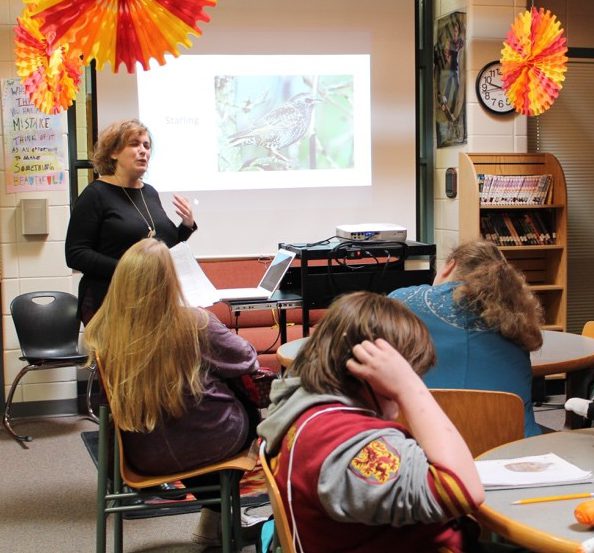 Students who attend Homewood have not succeeded in the comprehensive school environment. Poetry gives these students a safe and therapeutic way to express themselves and exposes them to the power of the written word. The transformative power of poetry was never more apparent than earlier this year when HoCoPoLitSo’s Writer-In-Residence, Joelle Biele came to our library for a visit.
From the moment that she greeted the students with her calm spirit and razor sharp intellect, she engaged them in a different way of thinking. With so much emphasis in school curriculum on STEM related subjects, students are rarely given the space or the time to think creatively.
Ms. Biele began her presentation by literally opening the space in the room with a Youtube video of Sandhill cranes migrating. The peaceful images of cranes in flight gave our students a moment of Zen and the background knowledge that they needed to understand her poem, Autumn. Ms. Biele challenged our students to think about what it means to write and the types of writing that they do in their daily lives. Is a text writing? Can a Facebook post be poetry? And from where does a writer find his or her voice?
Students were also asked to respond to the prompt called “I am.” Such an important question for every young person, and perhaps even more important for the struggling learners at Homewood: Who Am I? Who asks students such questions and who cares about their answers? The answer is loud and clear: poets!
For many of the students at Homewood the time spent with Ms. Biele was their first encounter with a poet, but hopefully it won’t be the last.
“imperfections of memory” – on not remembering books
There are so many books to read in this world and life is so short that I almost never reread a book. This week, though, I had to reread Julian Barnes’ novel, The Sense of an Ending. I had read it a couple of years ago, then I reread it to get ready for my book club discussion this week.

The thing is, though, I have this super power. Or a super weakness. It depends on how you see it, I suppose.
I have this ability to forget – almost completely – the plot of the book I’ve read or a movie I’ve seen. Sometimes, I watch a movie and half way into it – a whole hour later – I realize that maybe I’ve seen it? (Yes, with a question mark.) Sometimes I just keep watching… because I don’t remember what happens.
Although I might forget the plot – the who and the what – I often recall the feeling I had or the impression I got while reading a good book like The Sense of an Ending. And I remember loving Barnes’ effortlessly poetic (and smart) lines and being impressed with the compactness of a novel that delves pretty deeply into big questions about memory, history, regret, and “Eros and Thanatos.”
When I opened my copy of the novel this week, I was struck by how clean the pages were – no marks, no underlines, no comments. This is not usually how I read. I felt like this was a gift from my past self to this future self to come meet the novel for the first time again. This time, much was questioned (with question marks in the margins), noted (with underlines and asterisks), and commented on (with words like “how?” or “selfish”).
That old lesson I learned – the first lesson I learned as someone interested in studying literature – came back to me: look for patterns. Mr. Berkowitz at Wilde Lake High School taught us that one – look for recurring themes and patterns in imagery. Reading Macbeth, we had to write down in our “symbolism journal” every instance of different types of symbols or imagery. It was painstaking. It was beautiful.
In The Sense of an Ending, the theme of faulty memory is very clearly – almost obviously – woven into every aspect of the narrator’s telling of his story. Every few pages, he’d remind us that his telling “consists of impressions and half memories.” Recalling the letter from his friend, he says, “to be true to my own memory, as far as that’s ever possible […].” He talks about his life in terms of “the version I tell myself.”
So while reading this second time around, I complained out loud (to myself – because apparently I had forgotten), “How am I supposed to trust this guy?” And yet, I kept reading, to see what this man has to say and to find out what happened (as he’s trying to figure out what happened) and what happens. It’s like a self-punishing feat, isn’t it? Knowing that the narrator can’t be trusted, you just keep going along because he’s all you got.
And that is the beauty of this novel, of course.
For me, not remembering the plot, and only remembering the impression that it was mysterious and that it was poetic meant that I was in for a treat with The Sense of an Ending for the second time.
This is a novel I’d recommend to friends. It’s smart. It’s full of lines you’ll want to underline. Most importantly, it challenges us to question what we think we remember not only about own own lives (the plot) but also how we remember (or imagine) the ways we impacted the lives of others. In the name of “self preservation” – which Barnes’ narrator claims to be quite good at – what or whom do we save or hurt? When that “sense of an ending” approaches, what will we remember and how? And if we don’t have “corroborators” – something Barnes’ narrator is desperate to find – how will we know what we remember and don’t?
“Agains, I must stress that this is my reading now of what happened then. Or rather, my memory now of my reading then of what was happening at the time.” – Julian Barnes
An Incomplete History – LGBTQ Poetry Collection

Ryna with her wife Stephanie at the Women’s March in Washington DC in 2017
A guest post by Ryna May, Professor of English at Howard Community College:
October is LGBTQ History Month. When I think about LGBTQ history, I am of two minds and the poems included in the LGBTQ collection on Poets.org perfectly reflect that split. Some of the poems are so absolutely ordinary in their subjects, like the poem, “our happiness” by Eileen Miles, and on one hand, I think, that’s progress: the lives of LGBTQ people are written and expressed in the same way as other lives. That’s equality, right? Being a gay poet doesn’t mean that you have to write every poem about the experience of being gay.
But if we’re really talking about history, the conversation is incomplete unless we acknowledge that nothing is really the same. Some might say, hey, you won the right to get married, so what are you complaining about? That reminds me of the poem, “On Marriage” by Marilyn Hacker (1942) where the poet talks about the way in which LGBTQ people “must choose, and choose, and choose / momently, daily” to affirm their commitment to one another, “Call it anything we want” when society doesn’t quite know how to accept or handle this kind of “covenant.”
We talk a lot about “White Privilege” in cultural discourse, but we don’t talk a lot about “Mainstream Heterosexual Cisgender Privilege.” It exists. MHCP allows folks to do very ordinary things like hold hands in public without having to do a quick check of their surroundings. Put it this way: there are times when showing affection to my wife in public – just a peck on the cheek – feels like a dangerous political act.
If we’re talking about history, we have to acknowledge that being an LGBTQ person is a unique and still unequal experience in this country. There are subtle and unsubtle ways that society is set up to exclude and marginalize us. And some of the poems I browsed on Poets.org do address that fact. I find myself drawn more powerfully to these poems because I do want to acknowledge the difference that exits. A great example of this is “A Woman Is Talking to Death” by Judy Grahn. The poem was written in 1940, and the lines that jump out to me are:
this woman is a lesbian, be careful.
When I was arrested and being thrown out
of the military, the order went out: don’t anybody
speak to this woman, and for those three
long months, almost nobody did: the dayroom, when
I entered it, fell silent til I had gone; they
were afraid, they knew the wind would blow
them over the rail, the cops would come,
the water would run into their lungs.
Everything I touched
was spoiled. They were my lovers, those
women, but nobody had taught us how to swim.
I drowned, I took 3 or 4 others down
when I signed the confession of what we
had done together.
No one will ever speak to me again.
A friend of mine, Rob, hid the fact that he was gay the entire time he was in the Navy – it wasn’t just that he feared for his job, he also feared for his life, that other soldiers might threaten or harass him for being openly gay. He hid it until he completed his tour of duty, and then he came out to all of his friends. You might think that passing a law abolishing “Don’t Ask, Don’t Tell” would end this discrimination, but you would be wrong. This discrimination still exists in the military – though now the target has shifted from being gay or lesbian to being transgender. Grahn’s poem was written in 1940; it is 77 years later, and we are not there yet. And because we live in the age of vindictive executive orders, we are too afraid that the next step in the movement will be a step backward.
If we’re talking about history, we have to acknowledge that we’re still in the middle of the story right now. What started with Alan Turing, Barbara Gittings, Christine Jorgenson, Alan Ginsberg, Walt Whitman, the Stonewall riots, James Baldwin, and Harvey Milk has led us to the defeat of DOMA, Proposition 8, the victory of Edith Windsor, the success of Tammy Baldwin. But this complicated history also continues with events like the shooting in the Pulse nightclub and pronouncements that threaten the rights of transgender soldiers and that reinterpret Civil Rights laws to exclude protections for LGBTQ employees. Current events are going to write these poems, and I want to read those poems too, not just the ones that try to normalize our experience.
One of the happiest days in my life was November 6th, 2012. That was the day that voters in my home state of Maryland affirmed the right of gay and lesbian couples to marry, and I knew that I would marry my wife. Then, on June 26th, 2015, the United States Supreme Court ruled that we should be seen as equal under the law. In a stunning closing paragraph, Justice Anthony Kennedy wrote, “Their hope is not to be condemned to live in loneliness, excluded from one of civilization’s oldest institutions. They ask for equal dignity in the eyes of the law. The Constitution grants them that right.” To read that, you’d think that we are living in a new era, but in reality, it isn’t quite true.
In “Love Song for Love Songs,” Rafael Campo writes that it is “A golden age of love songs and we still / can’t get it right.” That’s what I think: If we’re going to talk about LGBTQ history and celebrate equality, we have to admit that, despite so much progress in the last few years, the last ten months have shown us that we still have so far to go. Sharpen your pencils – there is so much more to come.

Of Stars and Hurricanes, Words and Moths
Like the moths that flit thickly around their outdoor lights in rural Virginia, the words must fly around Carrie Brown and John Gregory Brown’s house on the campus of Sweet Briar College. Because not only Carrie and John are writers, but so is their daughter Molly McCully Brown.
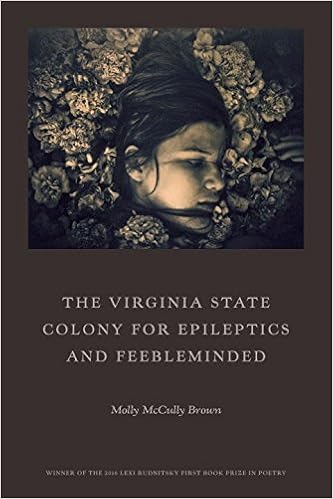 Family lore holds that a tiny Molly used to wake in the middle of the night and call for her mother or father because a poem was waiting and she couldn’t yet write well enough to capture it. And she had two parental examples of how to live an adult life: Catch those words swooping around and write them down.
Molly’s first book of poetry won the 2016 Lexi Rudnitsky Prize, and starting in September, she’ll work as the inaugural Jeff Baskins Fellow at the Oxford American magazine.
John Gregory and Carrie Brown are returning to Columbia, the town where their family story started, for a reading to celebrate the fiftieth anniversary of the founding of this town. The pair of novelists met while working at the storied Columbia Flier, and then began their family and their careers as authors.
They’ll read together at an event June 4 at Slayton House that HoCoPoLitSo is calling “Of Stars and Hurricanes: Two Columbia Novelists Return.” Carrie Brown’s newest novel, The Stargazer’s Sister, centers on the life of eighteenth-century astronomer Caroline Herschel, while John Gregory Brown’s 2016 book A Thousand Miles from Nowhere follows a man fleeing the wreckage of his life in New Orleans after Hurricane Katrina.
Both authors’ main characters, while living in different centuries and countries, seek redemption, for a way to save themselves.
 In her opening chapter, Carrie Brown writes that Caroline thinks “a girl was not taught anything that could save her in the larger world.” Desperate to escape an abusive mother and repressive poverty, Caroline is rescued by her elder brother, William Herschel, an astronomer who, with Caroline’s help, discovers Uranus and myriad comets. Carrie explains that the relationship of the siblings – in which Caroline so closely cares for her brother that she sometimes feeds him bits of bread and cheese while he keeps both hands and his eyes on the telescopes he manufactures – was “fertile material” for a novel.
The Boston Globe writes, “Carrie Brown takes up the real life saga of the Herschels and breathes fresh life into it in her lyrical and riveting new novel … .”
“Historical fiction fills in the spaces where history is silent,” Carrie explained at a recent reading in Baltimore. Carrie tells the Herschels’ story, massaging it into the arc of fiction, to “tell the other truth of their story.”
 John Gregory Brown’s fiction is based in history – the horrible story of Hurricane Katrina – but is invented whole cloth. A former New Orleans professor loses his way, buys a store that becomes a gathering spot and exchange depot, then flees north ahead of the hurricane winds. “I am a wrecked ship,” the protagonist says in the novel. He winds up at a rural Virginia hotel owned by an East Indian widow, then discovers a community willing to lend him aid and an epic poem that might save his soul. The Boston Globe calls his book “…a tale of redemption that is both believably prosaic and incredibly, quietly moving … .”
The two novelists will read together and answer questions at this event, which also honors Ellen Conroy Kennedy, the founder and longtime executive director of HoCoPoLitSo, and her husband and longtime supporter and board member of HoCoPoLitSo, for their decades of contributions to Columbia’s cultural life.
For tickets, visit http://www.brownpapertickets.com/event/2725249.
For more information about Carrie Brown, visit http://authorcarriebrown.com/
For more information about John Gregory Brown, visit http://jgb.blog.sbc.edu/about/
For more information about Molly McCully Brown, visit https://mollymccullybrown.com/
— Susan Thornton Hobby
Recording secretary


