
Home » Uncategorized (Page 13)
Category Archives: Uncategorized


Free Screening (tomorrow): Robert Bly: A Thousand Years of Joy
Thursday, March 9, 2017 –
from 7-8:30 pm
Miller Branch of the Howard County Library
Let us know you are coming: register through the Howard County Library or call 410-313-1950.
Robert Bly: A Thousand Years of Joy – Official Trailer (2014) from Haydn Reiss on Vimeo.
Join the Howard County Library and HoCoPoLitSo for a special screening of the documentary filmA Thousand Years of Joy, which charts the path of revolutionary poet Robert Bly from Minnesota farmer’s son to radical anti-Vietnam War activist to wild man of the 1990’s men’s movement. Best known as the author of the bestseller Iron John, which launched a million men drumming in the woods, Bly has been both celebrated and vilified, but above all has persisted in championing the power and importance of poetry in today’s America.
Robert Bly was a guest of the Howard County Poetry and Literature Society in June of 1997. During his visit, co-sponsored by the Columbia Festival of the Arts, he led a workshop at Howard Community College, presented a reading in the Smith Theatre and taped an edition of The Writing Life with Cornelius Eady.
Reading Recap: On the coattails of her words – Carolyn Forché
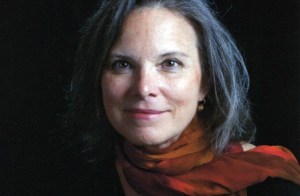
© Don J. Usner / Blue Flower Arts
When poetry lovers attended a Carolyn Forché reading Oct. 30, they probably expected gorgeous wordplay. But beyond the language, the world’s troubles — even those we didn’t know about — were laid bare.
Should we expect any less from the writer who coined the phrase “poetry of witness”?
At HoCoPoLitSo’s most recent event in the annual fall Lucille Clifton Reading Series, Forché gave HoCoPoLitSo audiences an exclusive — a reading from her yet-unpublished manuscript, In the Lateness of the World.
The whole world crept into the theater on the coattails of her words: the refugees fleeing Syria in flimsy rubber boats and her grandmother’s crossing of the Atlantic to reach Ellis Island, the siege of Sarajevo and the resistance of the Russian poet Pushkin.
Despite being thick into recovery from pneumonia, Forché delivered a forceful reading of her work, and answered questions for half an hour after the reading with the audience about how she helps translate poetry from Vietnamese, Bulgarian and Arabic, the tradition of oral poetry and human rights around the world. Even in the questions from the audience, in which one poetry lover talked about the thousands of annual deaths along the Rio Grande, the world’s woes were evident.
Author of two collections of poetry of witness, including the seminal Against Forgetting: Twentieth-Century Poetry of Witness (1993) and the more recent Poetry of Witness: The Tradition in English, 1500 to 2001 (2014), Forché has always been both a human rights advocate and a poet.
During the afternoon’s taping of HoCoPoLitSo’s The Writing Life, a thirty-minute writer-to-writer talk show hosted by Grace Cavalieri (also the host of the Library of Congress’ The Poet and the Poem: https://www.loc.gov/poetry/media/poetpoem.html), Forché talked about her beginnings, and about “my poet’s responsibility.”
She talked with Cavalieri about winning a Guggenheim, meeting someone in California who talked with her about El Salvador, and about voyaging to Central America to find out what was happening. Turns out, it was death squads, the military dictatorship’s brutality and an impending revolution. She began writing to Amnesty International, and putting poems on paper. Those experiences gave rise to her book The Country between Us (1981), which became that rarest of birds, a poetry bestseller.
At the tail end of the question session after her reading, a student asked, “What would you tell young poets of witness?”
“Stay open, stay awake,” Forché said, and don’t think you have to travel the world to find trouble. There’s plenty here at home. “Enlarge your capacity for empathy.”
“Poetry,” she told Cavalieri during The Writing Life taping, is “the natural prayer of the human soul,” and can work to heal the world.
Let’s hope.
— Susan Thornton Hobby,
Recording secretary
Eamon Grennan Delights the 38th Annual Irish Evening Crowd.
Eamon Grennan’s voice from the stage was low, intimate and slightly scratchy, as if he were whispering his poems into your ear. It was a lovely effect, one which the audience quickly took a shine to, but induced by Grennan’s terrible respiratory affliction.

Eamon Grennan at the book signing table. Photo by Lee Waxman.
Sick as a dog, Grennan traveled to Columbia anyway, and read at HoCoPoLitSo’s 38th Annual Irish Evening of Music and Poetry last Friday. He knew, as a small organization with little fat in our budget, that HoCoPoLitSo would be floored if he didn’t read. So he coughed backstage, and before and after taping his appearance on The Writing Life (HoCoPoLitSo’s literary talk show), popped cough drops, mopped his nose and soldiered on.
HoCoPoLitSo, and its audience Feb. 19, was grateful, for his reading, his gentle humor and his poems about his native country and ours, the one he adopted fifty years ago. He still migrates every year between Poughkeepsie, where he taught for forty years at Vassar, and the west of Ireland.
Her Excellency Anne Anderson, the Irish ambassador, introduced Grennan as “deeply rooted in Ireland, yet totally versed in the international tradition.” Grennan, she said from the stage, “finds the extraordinary in the ordinary, and sacredness in the small moment.”
Judges agree. Poet Robert Wrigley noted, on awarding Grennan the Lenore Marshall Poetry Prize, that “Grennan would have us know—no, would have us see, feel, hear, taste and smell—that the world, moment by ordinary or agonizing moment, lies chock-full with its own clarifications and rewards.”
Grennan has a special way with poems about the natural world; several in the audience commented afterwards how much they loved “Listen,” a ruminative poem about cow conversation. Friday night’s audience laughed and clapped for his preamble to his disquieting poem, “Rats,”: “I’m usually kind to animals,” he said, with a wry smile.
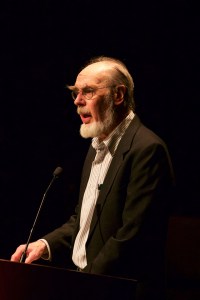
Eamon Grennan. Photo by Lee Waxman.
At the last heartfelt line, “Come back and wish on us,” from his poem “Ladybird and Mother,” the audience burst into spontaneous applause. His superstitious mother, he said fondly, always wished on the tiny red and yellow spotted beetles that the Irish call “ladybirds,” and we call “ladybugs.”
Many in the audience nodded sadly when hearing his elegy to the late, great Irish poet Seamus Heaney (Nobel winner and HoCoPoLitSo guest three times). The poem “Sudden Dark” describes how Seamus himself would have found the sharp shards of light in the dark of mourning.
“Pulling light out of dark,” Grennan explained, “poetry is about recognizing both sides constantly.”
Grennan even read from William Butler Yeats’ controversial and beautiful poem, “Easter, 1916,” about the Easter uprising 100 years ago this April, and called it “the most responsible political poem in English.”
And he stayed late, signing every last seeker’s book, especially his latest, There Now, and chatting with Irish, American and English alike in the lobby. Finally, about 10:15 p.m., he gave up the ghost, and asked for a ride to his hotel. Unflaggingly grateful and polite, he chatted in the car about the crowd, migrating back and forth to Dublin, and his daughter’s career as a visual artist before he and his cough disappeared into the lobby.
Susan Thornton Hobby
Recording secretary
Bonus: Below you can enjoy the episode of HoCoPoLitSo’s The Writing Life that Mr. Grennan recorded in 1995 when he last visited Howard County. In the video, he is in conversation with Terence Winch.
Expectations for “A Technicolor Life”, on Stage at Smith Theatre
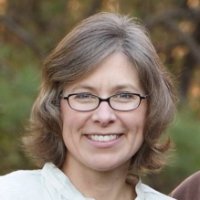
Susan Hobby is a member of the HoCoPoLitSo board. Look for her Lit Up column here on the HoCoPoLitSo blog.
A play about three generations of stress in one household sounds like a downer: a divorced workaholic mother; two sisters, one shy and slightly chubby, one an embittered vet who lost her left hand in Irag; plus a grandmother dying of cancer.
So what are Marilyn Monroe and Jane Russell doing up on stage vamping while the ladies toss back wine coolers and wear neon wigs?
I’m eager to find out. Rep Stage is producing the world premiere of Technicolor Life, by Jami Brandli, that centers around this mainly female family. Maxine, a slightly awkward freshman in high school, just wants to help her sister, Billie, who returned from Iraq with no left hand, plus the psychic wounds that come from combat and military sexual assault.
Maxine’s mother is an overworked attorney who drinks a bit too much, whose husband left her for a younger woman a few years ago. And Franny, Maxine’s grandmother, shows up afte r being kicked out of the assisted living facility where she had been living. Turns out, she’s dying of cancer. But she’s also a live wire who insists the family do things together before she kicks off.
So they watch old movies — especially Gentlemen Prefer Blondes — and work makeover miracles. Billie’s not having it; she runs 10 miles a day and slurps from her “water” bottle of vodka to kill the pain. Maxine, with the help of her new imaginary Blonde friends, finds Billie a fellow vet to date, and finds her voice. Meanwhile, Franny is arranging her euthanasia with Canadian drugs and her going-away party. Throughout, high school student Maxine practices her vocabulary words (serendipity, debonair, unique) and does reports for school on amputation, assisted suicide and turret gunners. Doesn’t sound like a barrel of laughs, but the play reads tragic comedy. Things do get better.
The play captures the awkward efforts of Maxine, the rage of post-traumatic stress syndrome, the yearning for connection between family members.
An ingenious part of the text — since I haven’t seen Technicolor Life staged, I have to imagine it — is the “playing field,” a real space onstage that illustrates the imagination. The playing field becomes a dance floor, a makeover space, Iraqi combat reenactments and even Internet dating site brought to life.
Part of the Horowitz Center’s “Year of the Woman,” Technicolor Life runs Oct. 21 to Nov. 8 in Rep Stage. For tickets visit www.repstage.org.

Join the World Poetry Party: a Celebration of Verse and Voice — June 26
 Friday, June 26, 2014 • 7:00 p.m.
Studio Theatre
Howard Community College
Come listen to the rich resource of world poetry
as poems are read in a variety of original
languages and then in English translation.
HoCoPoLitSo, in partnership with the Columbia Festival of the Arts and the Columbia Association, presents the World Poetry Party. On Friday, June 26, 7 p.m., come to the Studio Theatre in the Horowitz Performing Arts Center, Howard Community College, for a celebration of global verse. Poems in Spanish, Korean, American Sign Language, Italian, Polish, and Bulgarian will be performed in the readers’ native language and then in English. This free event is part of the June Columbia Festival of the Arts. Readers young and old from around the world will perform their own work, or the work of poets famous in their native languages.
Bulgarian poet and journalist Lyubomir Nikolov will be the master of ceremonies. Nikolov has published three poetry collections in Bulgarian; Summoned by the High Tide (Sofia, 1981), Traveller (Sofia, 1987), and Raven (Sofia, 1995).
If you have poetry for consideration, please submit poems and a brief biography (50 words or fewer) to hocopolitso@yahoo.com no later than June 10.
Susan Hobby Reviews Irish Evening and the Multitudes that are Emma Donoghue
Emma Donoghue contains multitudes.

Emma Donoghue. Photo by Lee Waxman
The Irish novelist writes from the point of view of a five-year-old imprisoned with his mother (Room), a French erotic dancer in 1870s San Francisco (Frog Music), a Victorian spinster enmeshed in a friend’s nasty divorce (The Sealed Letter), and a formerly destitute prostitute and fashion fiend of the eighteenth century (Slammerkin).
On Feb. 6, HoCoPoLitSo’s 37th Annual Irish Evening of Music and Poetry featured Donoghue and her various voices. The Dublin-born novelist read from two books, her blockbuster Room and her latest, Frog Music.
The audience ate it up. Donoghue’s voice flipped from character to character as she read from Frog Music. During the dialogue, Donoghue’s voice changed from the rough Irish of the spreading Irish-American family MacNamara — the youngest boy to the frazzled mother and the slightly drunken father — to the accented lilt of a French-born erotic dancer Blanche, to the husky farmer bartender next door.
And when she read from Room, Donoghue mimicked the open-faced innocence and twisted grammar of a five-year-old. As the screenwriter for the independent film of her novel, due out in the fall of 2015, Donoghue said she thoroughly enjoyed sitting on set, keeping her mouth shut, as the actors brought her novel to life.
In her first introduction for HoCoPoLitSo’s Irish Evening, new Irish Ambassador Anne Anderson explained that a recent gala theme, “Ireland: Legendary and Contemporary,” made her think of Emma Donoghue. “Emma is a natural cosmopolitan. She moves easily in time and space and between historic and contemporary space. … She is a vivid narrator for our time.”
Earlier in the day, that vivid narrator sat down with D.C. novelist Mary Kay Zuravleff to film an edition of The Writing Life, HoCoPoLitSo’s writer-to-writer talk show (www.youtube.com/hocopolitso). The two writers laughed and talked about Donoghue’s work, which includes a dozen books of fiction, literary criticism, numerous short stories, plus several plays and radio dramas.
Donoghue spent her first 20 years in Dublin, “that early marinating leaves a mark,” she laughed, as the youngest of eight children.
“It made us competitive and loquacious,” she said. “It was a big and noisy, bookish house. My dad is a literary critic (Denis Donoghue, the Henry James professor at New York University).”
Her books, Donoghue explained, are “fiction that walks arm in arm with fact.”
Frog Music tells the story of a real unsolved murder from the point of view of Blanche, the “burlesque (to put it generously) dancer,” Donoghue says, a woman who is a new friend to the murder victim, Jenny Bonnet. Bonnet was, Donoghue says, “the ideal murder victim; she was born trouble.” The victim, a cross-dressing frog-catcher for San Francisco’s restaurants in the 1870s, and most of the characters in this novel, are based in a history that Donoghue meticulously researched.

Laura Yoo gets her book signed by Emma Donoghue. Photo by Lee Waxman
Room is the least fact-based of her novels, Donoghue told the audience, but did take its premise from a real headline — a young Austrian woman kept captive by her father, Josef Fritzl, who sired seven children with her and kept three of those children imprisoned as well. Donoghue says she thinks of Room as part fairy tale, part science fiction and “a bit like a nightmare.” Five-year-old Jack tells the story — imprisoned with his mother, Jack doesn’t know there is more to the world than the room in which they are captive, thanks to the protective, magical world his mother builds with him in their small space.
Donoghue said that she doesn’t like to repeat herself, so she sets up new challenges for herself. Her next project is a book for the middle school market — “I’m far more scared of them as an audience,” she laughed. They might throw spitballs, she laughed.
Friday night’s listeners didn’t throw anything but applause Donoghue’s way. And they clapped (and some danced) through the second half of the evening, the concert of traditional Irish music and step dancing by Narrowbacks and young dancers from the Culkin School.
The Irish Evening is a long-standing tradition that helps raise money for HoCoPoLitSo’s programs for adult and student audiences. We need your support to produce these kind of events. Please consider clicking our “donate” button on this page.
Susan Thornton Hobby
Recording secretary
Howard County Poetry and Literature Society board
This Thursday: The 4th Annual Blackbird Poetry Festival

Festival Poets: Kim Addonizio, Mother Ruckus, Naomi Ayala, Michael Cirelli
Featuring the Nightbird Reading, Poetry in Harmony, and a day of workshops, talks, and readings, even the “Poetry Police,” the 4th Annual Blackbird Poetry Festival returns Thursday, April 26th, to the campus of Howard Community College, this year presenting Kim Addonizio, Michael Cirelli, Naomi Ayala and Mother Ruckus.
Nightbird Reading
The Nightbird reading, the day’s main event, is a coffee house style reading with music from Mother Ruckus (spoken word poet Gayle Danley and songstress Sahffi) and readings from Michael Cirelli, the nationally renowned slam poet, and Kim Addonizio, “one of our nation’s most provocative and edgy poets.”
Last year’s Festival presented Martín Espada in the evening reading for which local blogger Tom Coale proclaimed it was, “the most engaging and thoughtful live entertainment that I’ve seen since leaving the storm-swept streets of New Orleans,” where culture bubbles up from living rather than ordaining down from academy. High, high praise. Read that blog post here.
Tickets for the Nightbird reading, which includes refreshments, are $10 for students, $15 general admission, available at the door or online at brownpapertickets. The Nightbird Reading starts at 7:30 in Duncan Hall room 150, aka The Kittleman Room. The event is sponsored in part by Alpha Phi Alpha Fraternity, Division of English/World Languages and Office of Student Services, Howard Community College and the Sheraton Columbia.
Workshops, Talks, Readings
Throughout the day on the campus of HCC, a number of workshops, readings and talks will occur. Kim Addonizio will speak to a creative writing class in a private session; Michael Cirelli will meet with students and the community in an open session presenting a talk on “Hip-Hop Poetics, Education, 50 Cent & The Olive Garden.” An early afternoon reading will feature the Festival poets as well as readings by students, faculty and local writers. See the schedule below.
Festival events actually begin off campus when Naomi Ayala will present to teachers during the Howard County School System’s Professional Development Day.
The Poetry Police
Warning: April 26th is National Poem in your Pocket Day. Get caught on the community college campus by the Poetry Police without a poem and you’ll find yourself with a citation. Simple math: No Recitation Material = A Citation.
While it’s a bad thing, it is not that bad a thing. The jovial officer will likely provide you with a poem so you don’t get caught again. Actually, if you are caught and you produce a poem to share, you’ll find yourself rewarded for good civic behavior.
Need a poem, click here to find a variety to choose from, print one out to carry around.
Festival schedule:
- 9:30 – 10:30 Naomi Ayala speaks at Howard County School System (HCPSS) Professional Development Day Session I
- 10:40 – 11:40 Naomi Ayala speaks at HCPSS Prof. Dev. Day Session II
- 10:00 Poetry Police start to patrol HCC at campus looking for National Poem in Your Pocket Day violations
- 11:00 – 12:20 Kim Addonizio meets with HCC’s Creative Writing Class (closed)
- 11:00 – 12:20 Michael Cirelli meets with students and community (open and free)
- 2:30 – 4:30 Readings by: Naomi Ayala, Michael Cirelli, Kim Addonizio and regional poets, HCC students and faculty (open and free)
- 7:00 Doors open for “Poetry in Harmony,” a coffee house style reading
- 7:30 – 9:30 Readings by Michael Cirelli and Kim Addonizio, and a performance by musical group Mother Ruckus, which includes performance poet Gayle Danley and songstress Sahffi. ($15, $10 for seniors and for students with an id)
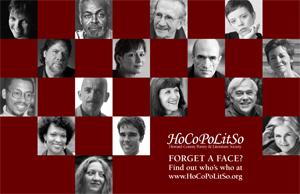
Just Who is Who? And the Annual Report.
Did you forget a face in the Annual Report post card? Click the image below to go the Annual Report page where you will find the answers you seek, as well, the 2011 Annual Report highlighting HoCoPoLitSo’s past year accomplishments.
While you are here, consider making a tax-deductible end-of-the-year donation supporting HoCoPoLitSo. It’s the easiest of ways to help ‘make HoCoPoLitSo happen’ and launch us forward into a new year of achievement. Just click the PayPal Donate button and off you go. Thank you so very much for your support.

Welcome
Welcome to HoCoPoLitSo’s WordPress-based website. Look around, you’ll find a growing amount of information on the organization, its events and activities, its history and its plans, as well as ways to support this renowned literary non-profit.

