Home » Event (Page 6)
Category Archives: Event



Presenting Marilyn Chin — Tenth Annual Blackbird Poetry Festival — April 26
The Fierce Revolution of Marilyn Chin
HoCoPoLitSo and HCC’s Tenth Annual Blackbird Poetry Festival

Marilyn Chin
Award-winning poet and author Marilyn Chin headlines the tenth annual Blackbird Poetry Festival for HoCoPoLitSo and Howard Community College (HCC). Born in Hong Kong and raised in Oregon, activist poet Chin unflinchingly explores the intersection of the Asian and American worlds.
The Blackbird Poetry Festival, held April 26, 2018, on the campus of Howard Community College, is a day devoted to verse, with student workshops, book sales, readings, and patrols by the Poetry Police. The Sunbird poetry reading, featuring Ms. Chin, as well as Washington, D.C., poet and educator Joseph Ross, local authors, and Howard Community College faculty and students, starts at 2:30 p.m. Ms. Chin will read from and discuss her poetry, including her most recent work, Hard Love Province, during the Nightbird Poetry Reading, starting at 7:30 p.m. in the Smith Theatre of the Horowitz Center for Visual and Performing Arts. Hard Love Province won the 2015 Anisfield-Wolf National Prize for Literature that confronts racism and examines diversity. Former winners of this prize include Martin Luther King, Jr. and Malcolm X, Toni Morrison and Maxine Hong Kingston, Gwendolyn Brooks and Oprah Winfrey. Nightbird admission tickets are $20 each (seniors $15 and students $10). Click here for tickets.
Marilyn Chin co-directs the MFA program at San Diego State University and has won numerous awards for her poetry, including from the Radcliffe Institute at Harvard, the Rockefeller Foundation, the National Endowment for the Arts, Stegner Fellowship, the PEN/Josephine Miles Award, four Pushcart Prizes, the Paterson Prize, and many others.
Chin is the author of four poetry collections: Hard Love Province (2014), Rhapsody in Plain Yellow (2002); The Phoenix Gone, The Terrace Empty (1994); and Dwarf Bamboo (1987). She is also the author of a novel, Revenge of the Mooncake Vixen (2009). Pulitzer Prize-winner and Anisfield-Wolf juror Rita Dove noted about Hard Love Province, “In these sad and beautiful poems, a withering portrayal of our global ‘society’ emerges – from Buddha to Allah, Mongols to Bethesda boys, Humvee to war horse, Dachau to West Darfur, Irrawaddy River to San Diego.” In his review of The Phoenix Gone in The Progressive, Matthew Rothschild said Chin “has a voice all her own — witty, epigraphic, idiomatic, elegiac, earthy…She covers the canvas of cultural assimilation with an intensely personal brush.” Booklist contributor Donna Seaman described the tone of Rhapsody in Plain Yellow as “Chin paces the line demarcated by the words Chinese American like a caged tiger, fury just barely held in check.”

Joseph Ross
Joseph Ross’s newest collection of poems, Ache, was published in 2017. Sarah Browning, director of Split This Rock, noted “The poems in Ache do just that, they ache – from the wounds inflicted by racism, from history’s ravages. The wail, the poems insist, ‘is the language/inside every tongue.’ Joseph Ross’s moral vision is unsparing, truth-telling, fierce.”

Mike McCormack to read at HoCoPoLitSo’s 40th Irish Evening of Music and Poetry
HoCoPoLitSo’s guest for its 40th annual Irish Evening on February 9, 2018 is the award-winning novelist and short story writer Mike McCormack, whose latest novel is a tour-de-force in a single sentence. McCormack’s reading will be followed by new and traditional Irish music by Narrowbacks featuring Jesse and Terence Winch, with stepdancers from the Culkin School. Irish coffee, Guinness and other beverages and snacks will be offered for sale beginning at 7 p.m. and during intermission.
 Mike McCormack’s most recent novel, Solar Bones, won the 2016 Goldsmith’s prize, given to fiction with “qualities of creative daring,” and was longlisted for the 2017 Man Booker Prize. The book, which takes place in the mind of a middle-aged Irish civil engineer, has little punctuation and no chapter breaks, and Goldsmith’s chair of judges Blake Morrison said of the book, “its subject may be an ordinary working life but it is itself an extraordinary work.”
The Guardian subtitled their review “an extraordinary hymn to small-town Ireland.” The Times U.K. named Solar Bones one of the best fiction books of 2017 and noted that the novel, “follows meandering memories of his wife, his adult children and his work; these simple materials make for a beautiful and strangely compulsive read.” The Wall Street Journal also listed it as one of the best new books of 2017. Former Irish Evening guest novelist Colum McCann wrote, “With stylistic gusto, and in rare, spare, precise and poetic prose, Mike McCormack gets to the music of what is happening all around us.”
 In 1996, McCormack won the Rooney Prize for Irish Literature for his first collection of short stories, Getting It in the Head. His novel Notes from a Coma was shortlisted for the Irish Book of the Year Award in 2006; in 2010, John Waters of The Irish Times described it as “the greatest Irish novel of the decade just ended.” Val Nolan noted in an article in Ariel (April 2012) “McCormack’s fiction is cerebral and often surreal, depicting a west of Ireland that moves beyond narrow, realistic interpretations and into spaces that exist outside of government and history.” McCormack has also published the novel Crowe’s Requiem (2012) and a short story collection, Forensic Songs (2012).
McCormack joins the long list of illustrious Irish authors HoCoPoLitSo has brought to Howard County audiences, including Frank McCourt, Colm Tóibín, Anne Enright, Colum McCann, and Emma Donoghue. For 40 years, HoCoPoLitSo’s Irish Evening has celebrated the substantial impact of Irish-born writers on the world of contemporary literature. The evening program begins at 7:30 p.m. in the Smith Theatre of the Horowitz Center for Visual and Performing Arts on the campus of Howard Community College. General admission tickets are $35 each; available on-line at http://www.brownpapertickets.com/event/3099986 or by sending a check and self-addressed envelope to HoCoPoLitSo, 10901 Little Patuxent Parkway, Horowitz Center 200, Columbia, MD 21044. Each ticket purchased by January 15, 2018, includes a complimentary adult drink.
HoCoPoLitSo works to cultivate appreciation for contemporary poetry and literature and celebrate culturally diverse literary heritages. The society sponsors literary readings and writers-in-residence outreach programs, produces The Writing Life (a thirty-minute writer-to-writer talk show), and partners with the public schools and cultural organizations to support the arts in Howard County, Maryland. For more information, visit www.hocopolitso.org.
Click here to download a pdf of this press release.

Wrap-up your holiday shopping at smile.amazon.com/ch/52-1146948 and Amazon donates to Howard County Poetry & Literary Society.


Life, Death, and Social Media: Staying Human in the Digital Age with Author Laurie Frankel
Laurie Frankel’s Goodbye For Now
A Howard County Book Connection Event
Wednesday, November 1, 2017 • 1 p.m.
Rouse Community Foundation Student Services Hall, Room 400
Howard Community College
10901 Little Patuxent Parkway
Columbia, MD 21044
 If you could connect with your beloved dead through technology, would you? Laurie Frankel’s novel, Goodbye for Now, is a love story with technology at its heart. Join us to hear Frankel read from her ground-breaking book at HoCoPoLitSo’s series celebrating ground-breaking poet and HoCoPoLitSo artistic advisor Lucille Clifton. Gather with a group of curious minds for this intriguing discussion. The New York Times said Frankel’s book, “extends the reach of technology just beyond our fingertips, where it feels possible.” This program is brought to you by the Howard County Book Connection; a partnership between Howard Community College, the Howard County Public Library System, and the Howard County Poetry & Literature Society (HoCoPoLitSo). A book signing will follow. Tickets not required.
Seniors can request transportation by calling 410.715.3087. For other accommodations, call 443.518.4568 by October 16
This event is free. Click here to register and let us know you are coming.
facing the chaos of truth: Tara Hart on the Poetry of Tyehimba Jess

Tara Hart, Co-Chair of HoCoPoLitSo Board of Directors and Professor of English at Howard Community College
A blog post by Tara Hart, Co-Chair of HoCoPoLitso Board of Directors
Especially at this time, when the arts are so clearly at risk of losing national support, we are so grateful to live in a community composed of people who value what poet Marilyn Nelson calls “communal pondering” of meaning, who value spacious perspectives.
At the ninth annual Blackbird Poetry Festival, we were dazzled all day by the presence of two important master poets, E. Ethelbert Miller and Tyehimba Jess, who conducted student poetry workshops in the morning, charmed us over lunch, inspired a variety of eager new poets and poetry lovers in a free open reading of many voices, taped a TV interview for our show The Writing Life, and finally, after we squeezed them up into balls and rolled them towards overwhelming questions, we let them have a dinner break and catch their breath before Mr. Jess took the stage for the last time for the Nightbird Reading.
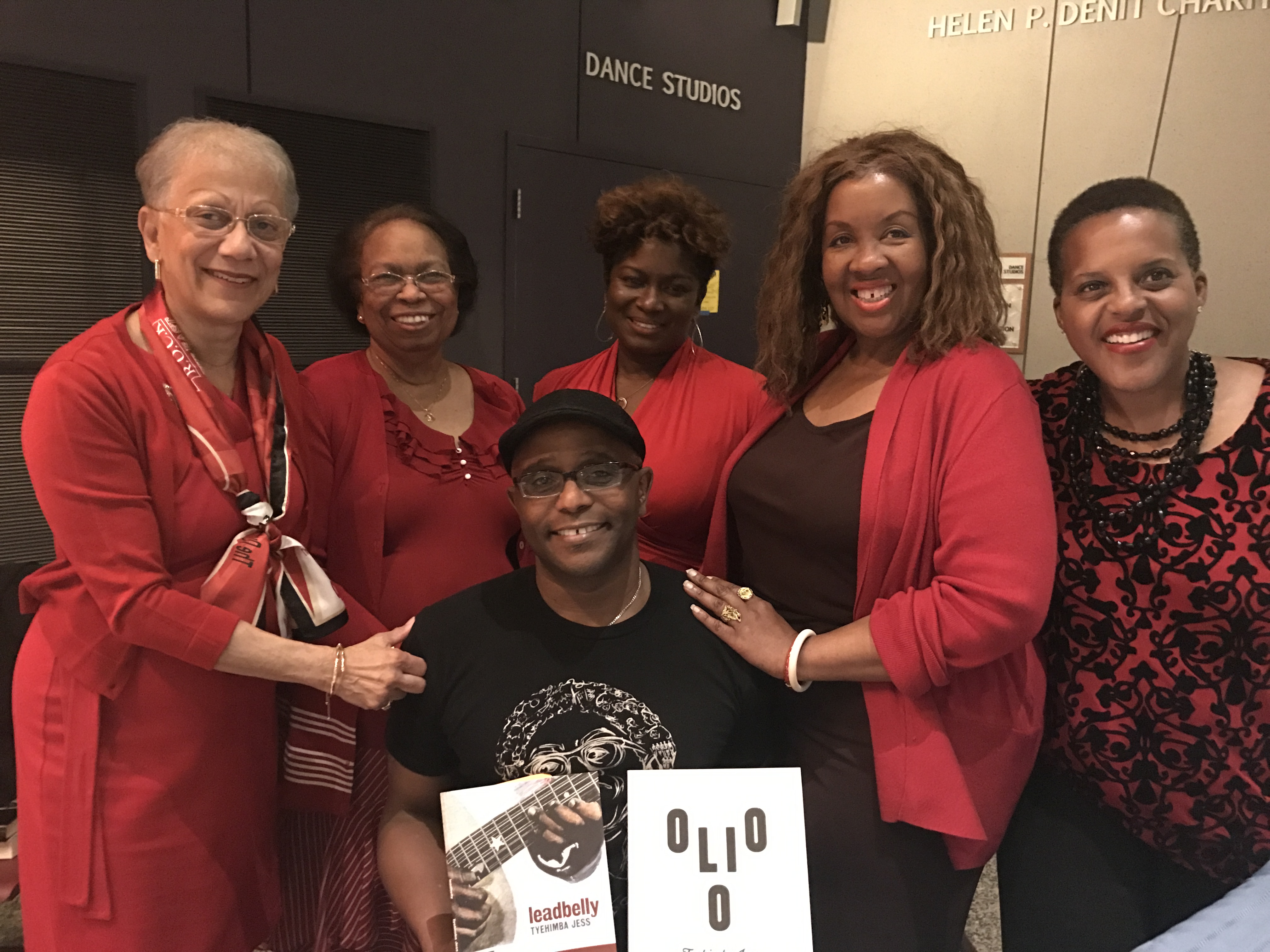
Tyehimba Jess at Blackbird Poetry Festival @ Howard Community College’s Smith Theatre
It was my honor to introduce Pulitzer Prize winning poet Tyehimba Jess to the Howard County community. Years ago, at one of the wonderful Dodge Poetry Festivals held bi-annually in New Jersey, Tim Singleton and I and several other HoCoPoLitSo board members did our usual reconnaissance to see who we thought we should invite for you. During one debriefing, I remember Tim saying, “Tyehimba Jess, Tyehimba Jess!” and I said “Yes! I saw him too, he’s amazing. And his name sounds like a song, or a prayer.” And then when we finally did connect with Mr. Jess and he accepted our invitation to come, he said, “HoCoPoLitSo! It sounds like a dance!” So I think this music Jess and HoCoPoLitSo made that evening at Nightbird Reading was meant to be.
Tyehimba Jess is the author of two award-winning books Leadbelly and Olio, and their significance and groundbreaking nature are difficult to convey sufficiently. Olio, the collection of first generation freed voices from the post-Civil War era to World War I does, as those at Found Poetry Review said, “distract you from your preconceived notions about what poetry can be, what it can do, and, ultimately, what you think you know. More than a book (and many reviewers have commented at length about what a fantastic object the book is), Olio is an extended performance, a musical score, and an epic libretto…”
Olio is made up of poems that Mr. Jess directly invites us to read in our own way and in any order (you can read the lines straight across the page, or up one side and down the other). “Weave your own chosen way among these voices,” Jess invites. There are even instructions for turning some of the pages into a sort origami that allow you to make the poems and their meanings three-dimensional. You’ll find interviews, historical documents, lists, and hymns. He faces the chaos of truth, and of our own fickle, diverse, various ways of seeing and not-seeing, and makes it all sing. Truly it is both deconstructive, giving voices back to the silenced, the misunderstood, the invisible, the abducted and it is creative – weaving them back together into patterns and inviting the reader to weave them back in ways that they choose.
There are even other ways to read the poems – I think they also tell the story of what the poet himself is achieving. Even as the poet breathes life into these people from the past, his words illuminate the impact of his own art. I’m using his words now: They “show the world the gut meaning of grace.” They are “a hurricane of back and forth notes.” They are “the sound of one mallet against history’s pale fist.” They say, “listen to how we’re bound in unison, this is our story I want you to hear.”
In his poems, boxes and trunks packed long ago are opened up, and what we find makes us question everything we thought we knew.
In the collection Leadbelly, the poems ask, “how to weed graveyard from his garden of tongue? What rainbow of prayer to pull between teeth?” They ask how we might find “a place where I can dream drought into rain, pray storm cloud out of spotless sky” or find the hope that “our wondrous oneness exists”? They speak in the voices of women as well as men, and in the voices of the objects we tie our meaning to, like guitars, or streets.
Overall, I agree with Brigit Pegeen Kelly that “It is exhilarating to be invited into a world so large and muscular, so rooted in history, a world where so much is at stake.”
And, finally I must say that the work of Mr. Jess, as well as the Poetry Out Loud program itself, are the two best arguments I know of for sustaining the National Endowment of the Arts, if these tremendous artists and their work are the result of that small investment.
black nature – a reading for earth day and national poetry month
By Laura Yoo
April is National Poetry Month, and Saturday, April 22nd is Earth Day. And I have a book recommendation that can help celebrate both: Black Nature: Four Centuries of African American Nature edited by Camille T. Dungy.

Black Nature edited by Camille T. Dungy is edited by .
Black Nature offers a different perspective through which we might read, understand, and talk about the 93 black poets and their 180 poems included in this anthology. Dungy writes a compelling introduction in which she describes the noticeable absence of black writers from anthologies and discussions in ecocriticism and ecopoetics. She reminds us of the complex and unique connection that African Americans have to “land, animal, and vegetation in American culture”.
Despite all these connections to America’s soil, we don’t see much African American poetry in nature-related anthologies because, regardless of their presence, blacks have not been recognized in their poetic attempts to affix themselves to the landscape. They haven’t been seen, or when they have it is not as people who are rightful stewards of the land. They are accidentally or invisibly or dangerously or temporarily or inappropriately on/in the landscape. The majority of the works in this collection incorporate treatments of the natural world that are historicized or politicized and are expressed through the African American perspective, which inclines readers to consider these texts as political poems, historical poems, protest poems, socioeconomic commentary, anything but nature poems.
I want to test this new perspective, and with this in mind I turn to the poetry of Tyehimba Jess, the newly minted 2017 Pulitzer Prize in Poetry winner, who is coming to headline HoCoPoLitSo and Howard Community College’s annual Blackbird Poetry Festival on Thursday, April 27th. He will be reading and speaking with E. Ethelbert Miller during the Sunbird Reading. Notably, Miller’s “I am Black and the Trees are Green” is included in Dungy’s anthology.
Much of Jess’s acclaimed body of work illuminates on the African American experience. About Olio, Wave Books says, “Part fact, part fiction, Jess’s much anticipated second book weaves sonnet, song, and narrative to examine the lives of mostly unrecorded African American performers directly before and after the Civil War up to World War I.”
In an interview with LitHub about Olio, Jess spoke about the power and the politics of song: “To be able to sing under that kind of oppression I think, in a lot of ways, is the very essence of survival, of a people, of the ability to have to the hope to make something beautiful amongst so much wretchedness. That’s critical to the concept of human survival. And in this particular context, of African Americans working through slavery… that’s what we had.”
But in the context of Dungy’s Black Nature, I turn to Jess’s leadbelly with a different ear.
In “john wesley ledbetter,” Jess writes,
singing a crusade of axe and machete i take virgin texas territory by force, clear it of timber and trouble. each eastern twilight, i till top soil ’til sun plants itself back into that western horizon. i keep struggling against a brooding moon’s skyline until dark sleep is my friend again, a place where i can dream drought into rain, pray storm could out of spotless sky.
The poem goes on with, “there’s only one way out of slave time dues: hump this land down till it shrieks up a crop of cancelled debt into your wagon.” In this poem, we see an illustration of what Dungy describes as African Americans’ “complex relationship to land, animals, and vegetation.” She says, “African Americans are tied up in the toil and soil involved in working the land into the country we know today,” and she reminds us how they were “viewed once as chattel, part of a farm’s livestock or asset in a bank’s ledger.”
In “leadbelly: runagate,” Jess writes,
where water and land meet is shore, and on shore is iron in fists of jailers in sun of texas swamp. i wade into bubble and blue ink of red river, my head is shaven, bobbing, brown island of shine. […]
i want to let the water take me, i want to surrender to this river’s rock and swirl, come up clean and white as death itself, but the black in me breaks into blues, and i feel the coffle of their claws. i am stepping toward dry land, the dance of ankle chains, where i scream history into song that works itself into blood, sweat, memory.
The water in this poem reminds me of Dungy’s description of the “river” in Rita Dove’s “Three Days of forest, a River, Free”: it is “more than a moving body of water. It is a biblical allusion, a historical reality, a geographical boundary, a legal boundary, a decoy, the center of emotional and personal change, an aspiration, a metaphor: all these things at once.”

Tyehimba Jess’s leadbelly
As I re-see the poems in leadbelly with a different framework, I am reminded how the way we group, categorize, thematically arrange, and shelf literature can limit or expand our experiences of literature. We put the poems under one category or another, and it’s hard to imagine what else it can be.
Dungy’s Black Nature is important, because it acknowledges the African American perspective these 93 poets highlight while introducing what else their work is – and how that “what else” amplifies our understanding of their works. As Dungy says, Black Nature “encourage[s] readers to divert their gaze into new directions, demanding they notice new aspects of the world and accept alternative modes of description.”
To put it another way, a book like Black Nature is like a hearing aid. It can give us that extra power to hear poetry in an even more powerful way. It can help us turn up the volume on that work – perhaps turn up the bass or the treble and experience the poem in a myriad of ways.

Laura Yoo
HoCoPoLitSo Board member and Associate Professor of English at Howard Community College.
an English major goes to a literary reading for the first time

Author Belinda McKeon reading on stage at the 39th Annual Irish Evening – photo by Lee Waxman
A guest blog written by Christina Smith, a student in Professor Ryna May’s literature class at Howard Community College
—————————————
Admittedly, I had never attended a literary reading prior to the HoCoPoLitSo Irish Evening on February 10th. I hope that it is not too shocking that I say this, given that I am an English major. So, I am happy that I finally had the opportunity to experience a literary reading at the 39th Irish Evening held at the Smith Theater at Howard Community College.
Before I went I knew little about the program, only that the author would read from at least one of her two books, and that there would be Irish music and dancing for entertainment. Even though my friend Amy and I were probably some of the youngest people to attend that night, I did not feel awkward there. On the faces of the people there, you could tell everyone was having a fantastic time. The entire evening was a hit.
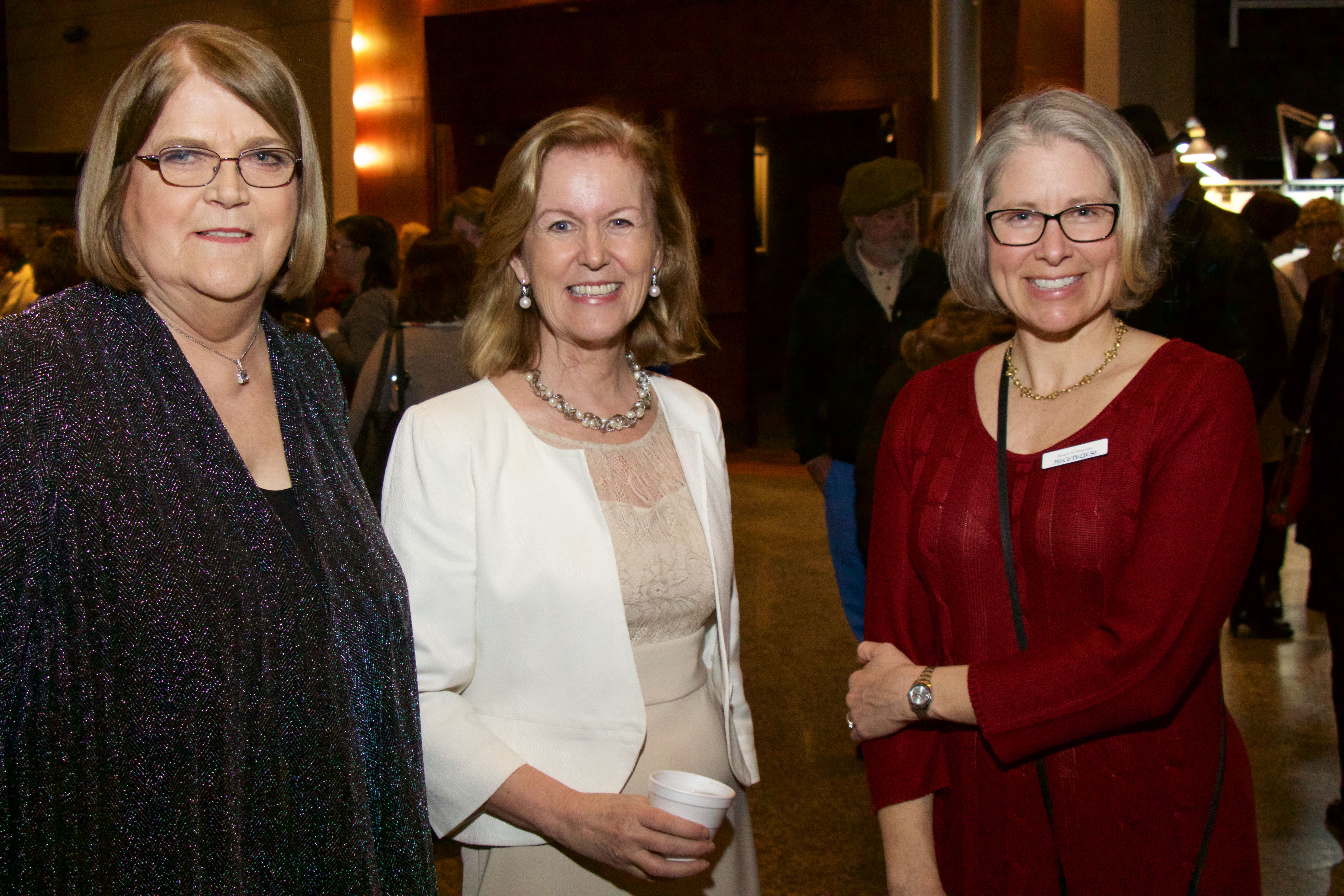
Catherine McLoughlin-Hayes, Ambassador Anne Anderson, and Susan Thorton Hobby at the 39th Annual Irish Evening- photo by Lee Waxman
I was shocked to see that the program boasted the Ambassador of Ireland, her Excellency Anne Anderson. She was very gracious, and it was impressive that Mrs. Anderson was able to join us for the Irish Evening despite her busy schedule. A list of her accomplishments made me feel lazy and slightly light-headed at the enormity of her dedication to civil rights and women’s right’s worldwide.
While I like to think myself well read, I had not been made familiar with Belinda McKeon’s work. It was a treat to have her read from both her books, Solace and Tender. I was quite taken with her reading from Tender as I could feel the insecurities that her characters suffered from, the anguish of unrequited love and how truly awkward it is to be a young 18-year-old. She was witty and kind with her characters, as though greeting an old friend. Hearing the author read her own work gives you an idea of how those characters really present themselves in her mind. From her reading, the audience got a feel that these characters were real, that they had pains, hopes, flaws, and humor.
I loved the reading from Tender so much that I even ordered it from Amazon when I got home. Now when I read it, I will have the added pleasure of knowing how the author intended for it to be read. And in a way I will be able to connect with the characters on a more personal level.
The evening wrapped up with a performance from the Narrowbacks and Irish step dancing by the Culkin School. The music was traditional Irish music, a perfect nightcap to a fantastic evening.
I admit that I got some strange looks when I told people about my Friday night, but it was definitely worth it to let my inner nerd have a fun evening. I look forward to attending more events produced by the HoCoPoLitSo.
And a big thank you to Professor May for making it possible for me and a plus one to attend.
By Christina Smith
Tyehimba Jess to read at HoCoPoLitSo’s 9th Annual Blackbird Poetry Festival
 HoCoPoLitSo’s guest for its ninth annual Blackbird Poetry Festival is award winning writer and slam poet Tyehimba Jess. The Blackbird Poetry Festival, to be held April 27, 2017, on the campus of Howard Community College, is a day devoted to verse, with student workshops, book sales, readings and patrols by the poetry police. The Sunbird poetry reading, featuring Mr. Jess, as well as Washington, D.C., writer and literary activist E. Ethelbert Miller and Howard Community College students, will start at 2:30 p.m. Mr. Jess will read from and discuss his most recent work, Olio, as well as leadbelly, winner of the 2004 National Poetry Series, during the Nightbird Poetry Reading, starting at 7:30 p.m. in the Smith Theatre of the Horowitz Center for Visual and Performing Arts. Nightbird admission tickets are $15 each (students and seniors are $10) available on-line at http://www.brownpapertickets.com/event/2551545 or by sending a self-addressed envelope and check payable to HoCoPoLitSo, 10901 Little Patuxent Parkway, Horowitz Center 200, Columbia, MD 21044.
Tyehimba Jess, Associate Professor of English at College of Staten Island, a Cave Canem and NYU alumnus, received a 2004 Literature Fellowship from the National Endowment for the Arts and a 2006 Whiting Fellowship. He is also a veteran of the 2000 and 2001 Green Mill Poetry Slam Team. With rare skill, Jess welds the immediacy of slam poetry with the craft of poetry on the page.
Jess is the author of two poetry collections: leadbelly (2004), a biography in poems of the legendary blues musician Huddie “Lead Belly” Ledbetter, and Olio (2016), about African American performers from before the Civil War up to World War I. About Olio, 2011 National Book award winner Nikky Finney said: “Tyehimba Jess is inventive, prophetic, wondrous. He writes unflinchingly into the historical clefs of blackface, black sound, human sensibility.” Jess’ fiction and poetry have appeared in many journals and anthologies including Angles of Ascent: A Norton Anthology of Contemporary African American Poetry, Beyond The Frontier: African American Poetry for the Twenty-First Century, Slam: The Art of Performance Poetry, American Poetry Review, and Ploughshares.
Ethelbert Miller, editor of poetry anthologies, author of two memoirs and numerous books of poetry, including his latest, The Collected Poems of E. Ethelbert Miller (2016), will read and offer workshops.
a taste of Ireland right here in Columbia

Belinda McKeon read from Solace and Tender at the 39th Irish Evening in Columbia, Maryland
A guest blog submitted by Cara Caccamisi, a student in Professor Ryna May’s literature class at Howard Community College in Columbia, Maryland
—————————————
Howard County Poetry and Literature Society’s 39th Annual Irish Evening, which took place at Howard Community College’s Smith Theater on Friday, February 10th at 7:30 pm, was an event of Irish pride and culture. Hosted by Columbia’s own Catherine McLoughlin-Hayes, the HoCoPoLitSo Irish Evening Chair, the evening was a great way to experience Ireland without leaving the state of Maryland.
The auditorium was filled with fascination, excitement, and anticipation from the many spectators, while musician Jared Denhard performed the Celtic Harp. Then, Ms. McLoughlin-Hayes came on stage to introduce the main event for the night. Her enthusiasm set the tone for the evening.
Ms. McKeon chose to read first from Solace which was awarded the Faber Prize and Irish Book of the Year. The passage she read described a conflicting relationship between father and son on a farm in Ireland. Ms. McKeon’s second reading was from her latest book, Tender, about two college friends who meet in Dublin and become close; it shows the transformation of friendship from being teenagers to becoming adults. In her unique and exhilarating story, Ms. McKeon depicts the friend’s difficult relationship as Catherine grows strong feelings for James, who is a homosexual. The book grows extra complicated as it is set in the 1990’s when being homosexual was not widely accepted.
Following the author were the Narrowbacks. The Narrowbacks name is a tribute to the term immigrant, as many of the band members have roots in Ireland and they are inspired by the band, Celtic Thunder. The group members consisted of brothers, Jesse and Terence Winch, Dominick Murray, and Linda Hickman, all of whom were apart of Celtic Thunder. Other members were Terence’s son, Michael Winch and Eileen Estes, daughter of Celtic Thunder’s lead singer.
Many of the songs performed consisted of main themes of nature, growing up as an immigrant, and love. One of the most memorable songs, “Childhood Ground”, was written by Terence Winch and sung by Eileen Estes. It remembers the time when the Bronx Expressway was built and shattered the homes of many Irish families, including Winch’s family home. Traditional Irish music is so distinctive as it combines poetry of hardships, life, and love with rare instruments, known in Ireland. The Irish step dancers from the Culkin School performed during some of the songs played by the Narrowbacks.
With the outstanding performance by the Narrowbacks and the talented step dancers, the audience was very well-entertained. The auditorium was filled with the sound of Ireland, and the spectators joined in on clapping hands and nodding their heads to the music. And Belinda McKeon, a truly brilliant writer, left the listeners craving more of the stories.
HoCoPoLitSo created an enjoyable evening and allowed the viewers a chance to spend an evening immersed in Irish culture.
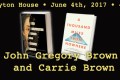
Carrie Brown and John Gregory Brown to Read in a Literary Celebration for Columbia’s 50th
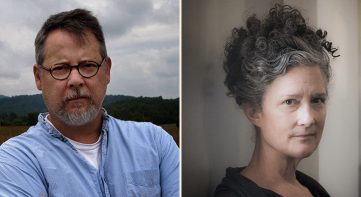 HoCoPoLitSo and Wilde Lake Community Association present Of Stars and Hurricanes: Two Columbia Novelists Return. Former Columbia residents Carrie Brown and John Gregory Brown will read from their work at a celebration of literature’s history in this planned city. HoCoPoLitSo will also honor two of Columbia’s own forces of nature, Padraic and Ellen Kennedy, for their work creating a literary life in Howard County during this special event on June 4, 2017. A reception will follow.
Of Stars and Hurricanes will be held on June 4, 2017, beginning at 4 p.m.at Slayton House Theatre, 10400 Cross Fox Lane, Columbia, MD 21044. Admission tickets are $20 each available on-line at http://www.brownpapertickets.com/event/2725249 or by sending a self-addressed envelope and check payable to HoCoPoLitSo, 10901 Little Patuxent Parkway, Horowitz Center 200, Columbia, MD 21044.
Ellen Conroy Kennedy, a National Book Award finalist and the founder and director emeritus of HoCoPoLitSo, and Padraic Kennedy, the “unofficial mayor” of Columbia for 25 years, as the Columbia Association president from 1972 to1997, are long term Wilde Lake residents. Their support for the literary arts as Columbia developed through the years will be honored during this special celebration.
The Browns met while working for the Columbia Flier, married at Oakland Manor and lived in Wilde Lake for more than ten years. Both Browns live in Virginia and teach at Sweet Briar College. John, the author of four novels, has honors including a Lyndhurst Prize, the Lillian Smith Award, the John Steinbeck Award, and the Louisiana Endowment for the Humanities Book of the Year Award. Carrie, the author of seven novels, has received a National Endowment for the Arts fellowship, a Barnes & Noble Discover Award, the Janet Heidinger Kafka Prize, the Great Lakes Book Award, and, twice, the Library of Virginia Award.
Carrie Brown’s most recent novel is The Stargazer’s Sister, historical fiction about the nineteenth-century astronomer Caroline Herschel, sister of the more famous astronomer William Herschel. The Washington Post listed The Stargazer’s Sister as one of the best 50 books of 2016. Carolyn Leavitt of the Boston Globe noted, “Brown’s writing is as luminous as the skies her characters contemplate.”
John Gregory Brown’s newest novel, A Thousand Miles from Nowhere, follows the path of a Hurricane Katrina survivor seeking redemption. The New York Times Book Review noted it was “ … a deeply humane look at the vulnerability of black lives, the changing contours of the New South and the restorative potential of literature in the aftermath of catastrophe.”
For more than 40 years, HoCoPoLitSo has nurtured a love and respect for the diversity of contemporary literary arts in Howard County. The society sponsors literary readings and writers-in-residence outreach programs, produces The Writing Life (a writer-to-writer talk show), and collaborates with other cultural arts organizations to support the arts in Howard County, Maryland. For more information, visit www.hocopolitso.org.
HoCoPoLitSo receives funding from the Maryland State Arts Council, an agency funded by the state of Maryland and the National Endowment for the Arts; Howard County Arts Council through a grant from Howard County government; The Columbia Film Society; Community Foundation of Howard County; the Jim and Patty Rouse Charitable Foundation; and individual contributors.
Belinda McKeon to read at HoCoPoLitSo’s 39th Irish Evening of Music and Poetry
HoCoPoLitSo’s guest for its annual Irish Evening on February 10, 2017 is the award-winning writer and playwright Belinda McKeon. McKeon’s reading will be followed by Narrowbacks Eileen Korn Estes, Jesse Winch, Terence Winch, Linda Hickman, and Michael Winch in a concert of traditional Irish music, with stepdancers from the Culkin School. The Narrowbacks will be performing music from their newly released This Day Too: Music from Irish America with Terence Winch, Michael Winch, & Jesse Winch. This is the first album featuring new material from Terence Winch-composer of many of the original Celtic Thunder’s best-known songs- in almost ten years. Irish beverages and snacks will be available.
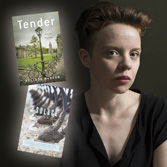 Belinda McKeon’s debut novel, Solace, won the 2011 Faber Prize and was voted Irish Book of the Year, as well as being shortlisted for the James Tait Black Memorial Prize. Her second novel, Tender, was shortlisted for the Eason Book Club Novel of the Year at the 2015 Irish Book Awards. The Irish Book Awards website noted “Brave, moving and powerfully told, Tender confirms Belinda McKeon’s status as one of the most exciting contemporary voices in Irish fiction.” About her second novel, Kirkus (starred review) said “Exquisite…Captures something essential about vulnerability, love and longing.” A Kind of Compass: Stories on Distance, edited by McKeon, was published in 2015. Her essays and journalism have appeared in the Irish Times, the New York Times, the Paris Review, the Guardian, A Public Space and elsewhere. As a playwright, she has had work produced in Dublin and New York. Fiona Wilson, The Times (U.K.), noted “McKeon is a superb and sophisticated writer, who captures the barely articulable feelings between young people on the brink of adulthood.”
 McKeon joins a long list of luminary Irish authors HoCoPoLitSo has brought to Howard County audiences, including Frank McCourt, Colm Tóibín, Anne Enright, Colum McCann, and Emma Donoghue. For 39 years, HoCoPoLitSo’s Irish Evening has celebrated the substantial impact of Irish-born writers on the world of contemporary literature.
The evening begins at 7:30 p.m. in the Smith Theatre of the Horowitz Center for Visual and Performing Arts on the campus of Howard Community College. General admission tickets are $35 each; available on-line at http://www.brownpapertickets.com/event/2716229 or by sending a check and self-addressed envelope to HoCoPoLitSo, 10901 Little Patuxent Parkway, Horowitz Center 200, Columbia, MD 21044. Each ticket purchased by January 15th includes a complimentary adult drink.
HoCoPoLitSo works to cultivate appreciation for contemporary poetry and literature and celebrate culturally diverse literary heritages. The society sponsors literary readings and writers-in-residence outreach programs, produces The Writing Life (a thirty-minute writer-to-writer talk show), and partners with the public schools and cultural organizations to support the arts in Howard County, Maryland. For more information, visit www.hocopolitso.org.
 HoCoPoLitSo